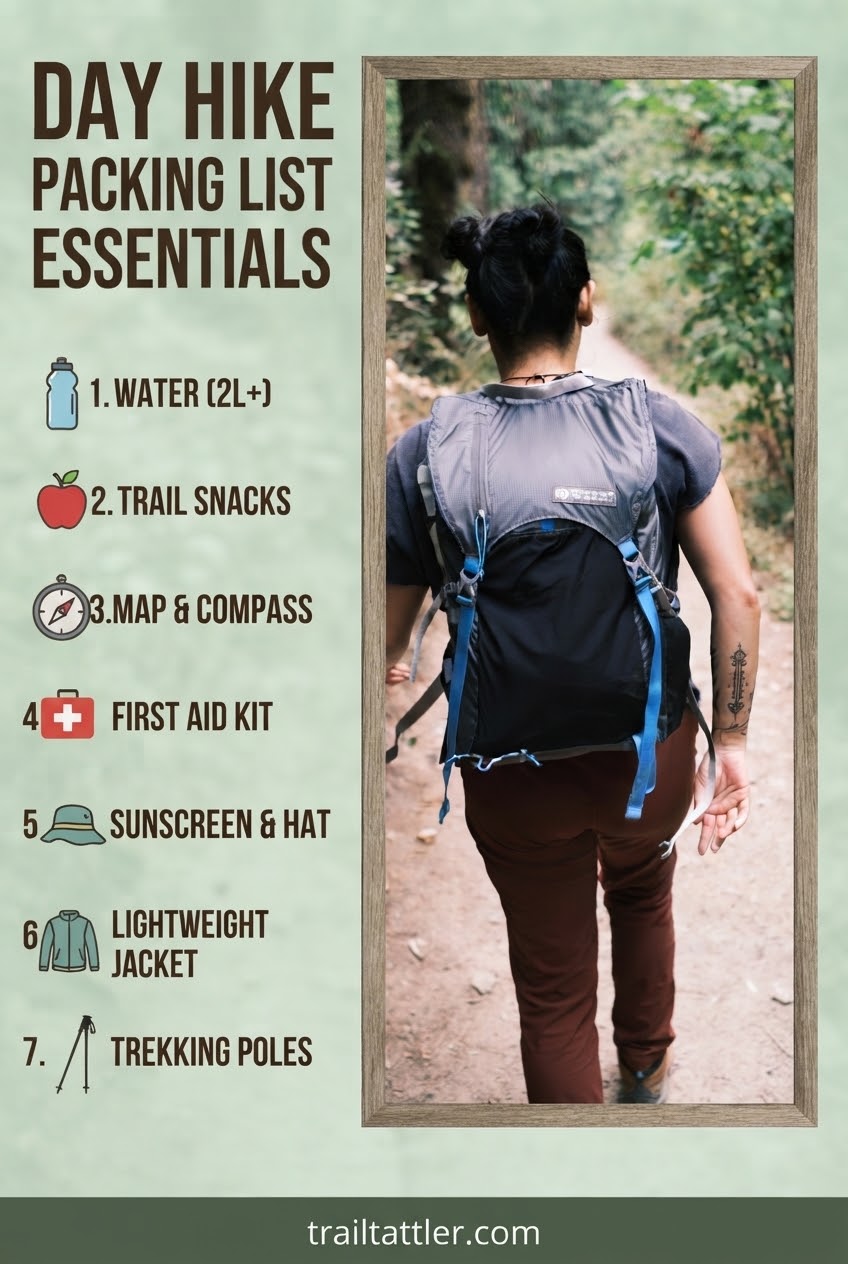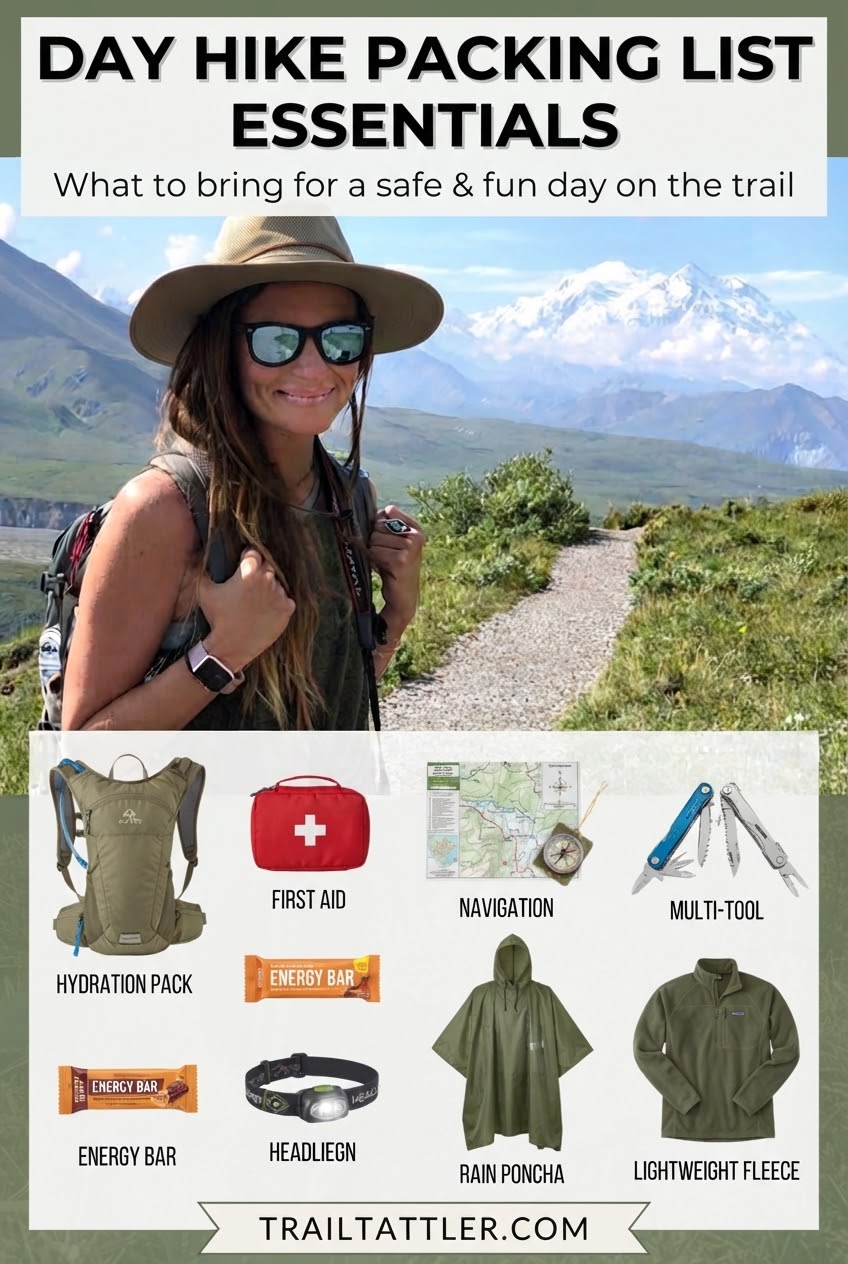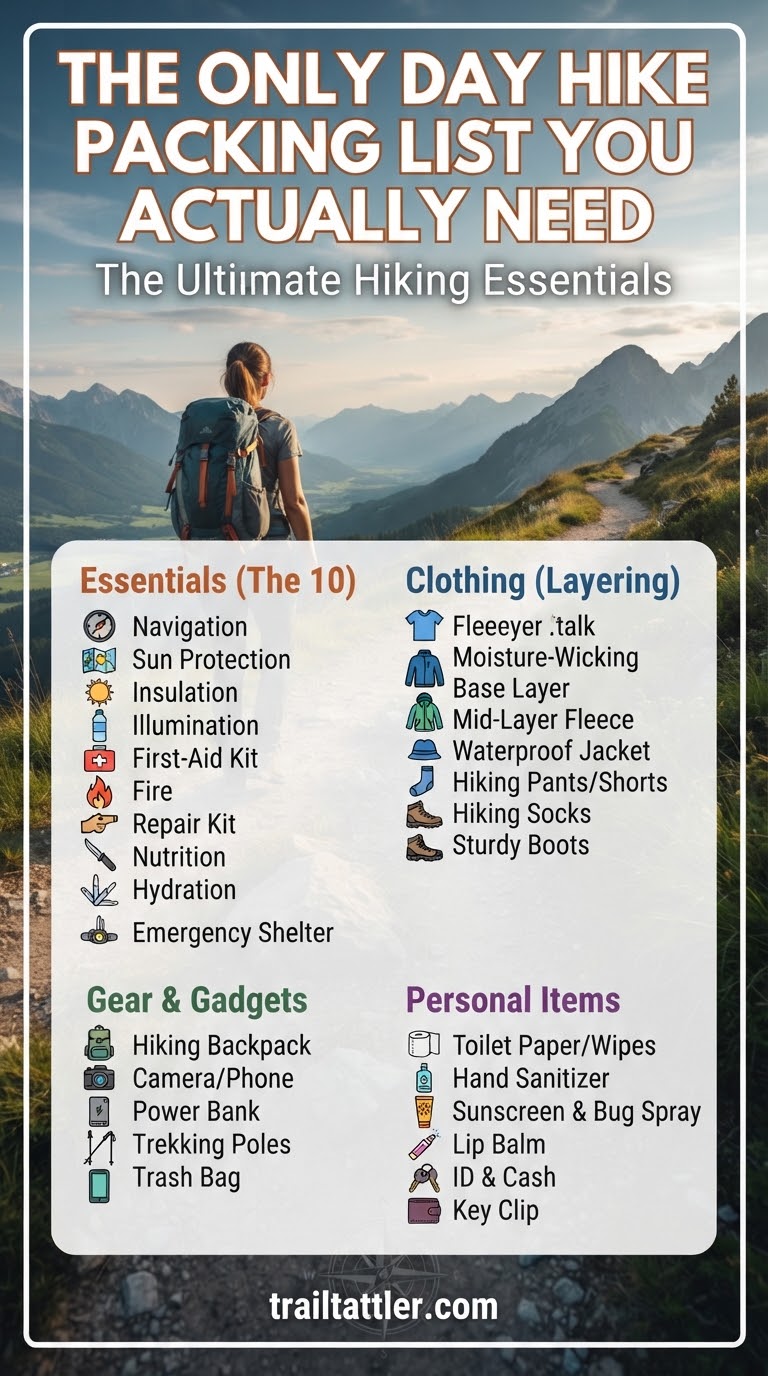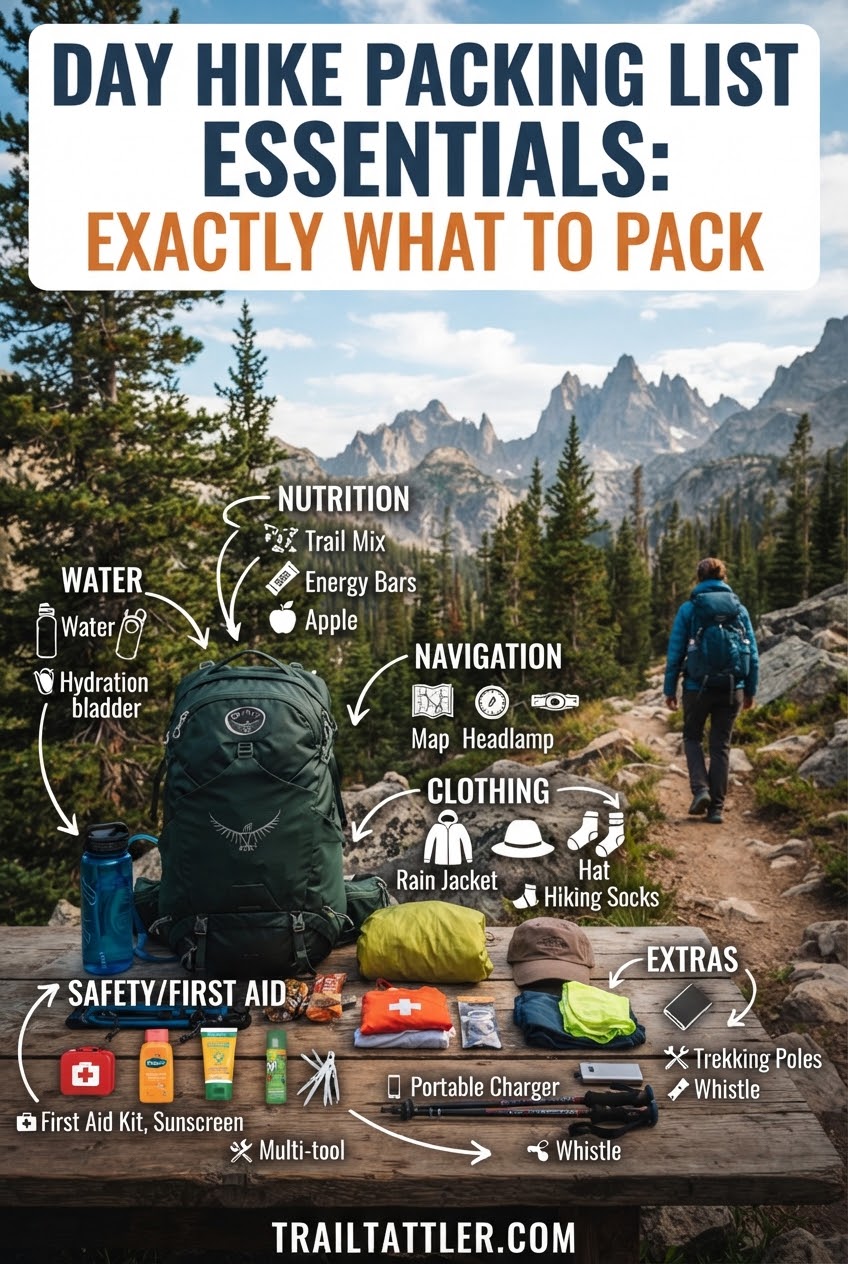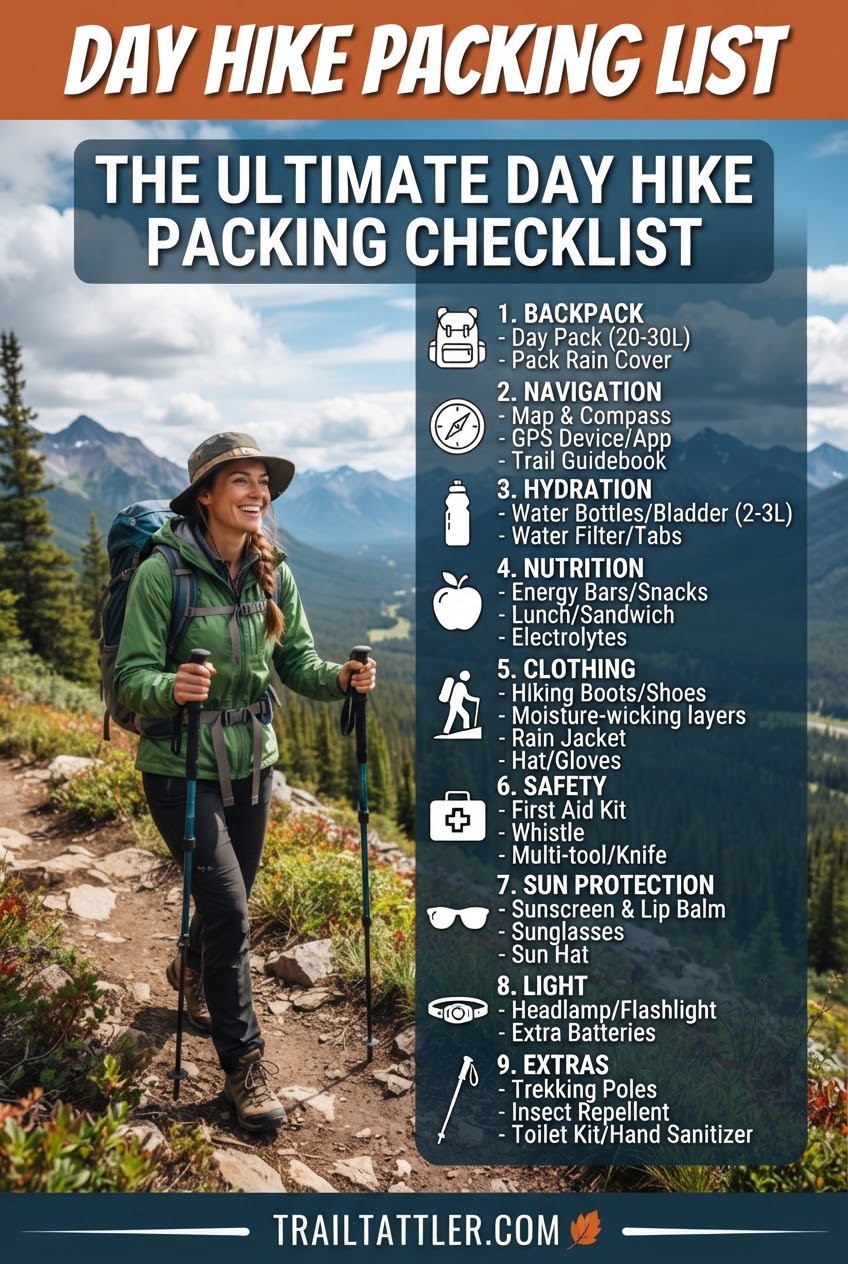
I have learned the hard way that a good day hike packing list is less about carrying everything and more about carrying the right things. After years of trail work, search and rescue volunteering, and enough early mistakes to fill a notebook, I now pack for the ordinary hike that suddenly becomes complicated. A short loop can turn into a late finish, a wrong turn, a storm, or a blistered walk back to the car. Here is what stays in my pack before I leave the trailhead.
Hiking Backpack: The Foundation of Your Day Hike Packing List
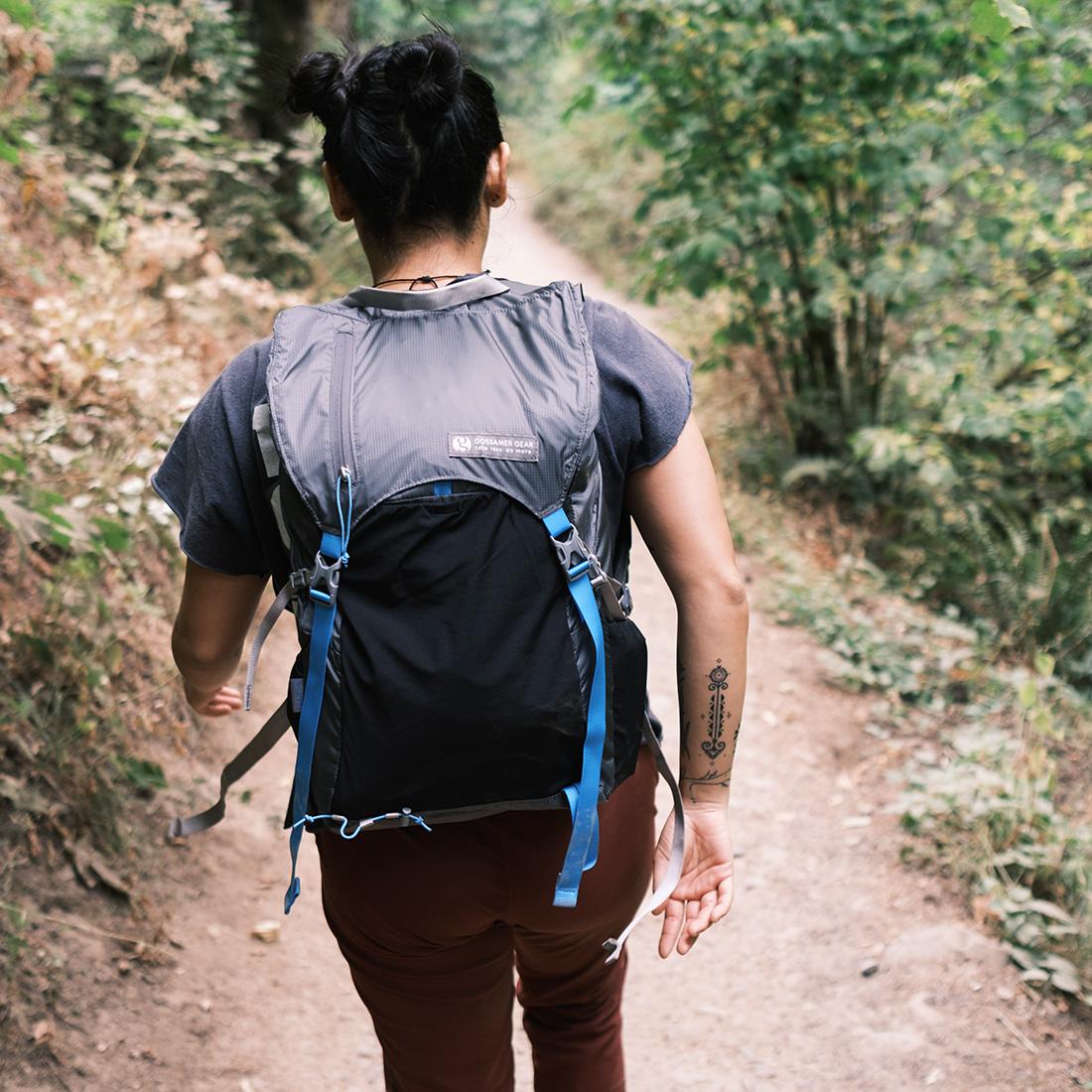
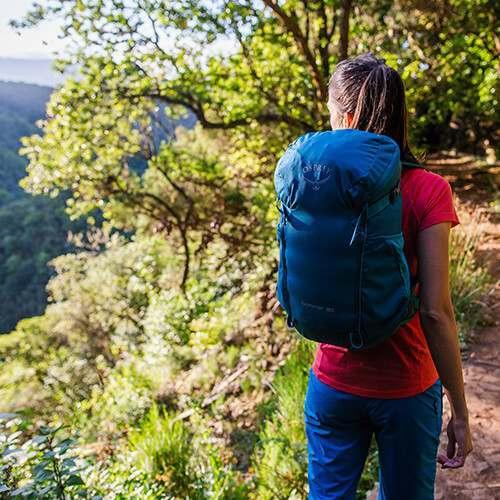
I start every day hike packing list with the backpack itself because a bad pack turns simple miles into a shoulder problem. I spent eight years in outdoor retail fitting packs and boots, and the biggest lesson was simple: the best gear is the gear that disappears while you are wearing it.
My day hike backpack basics
- Comfortable fit with a supportive hip belt for longer hikes
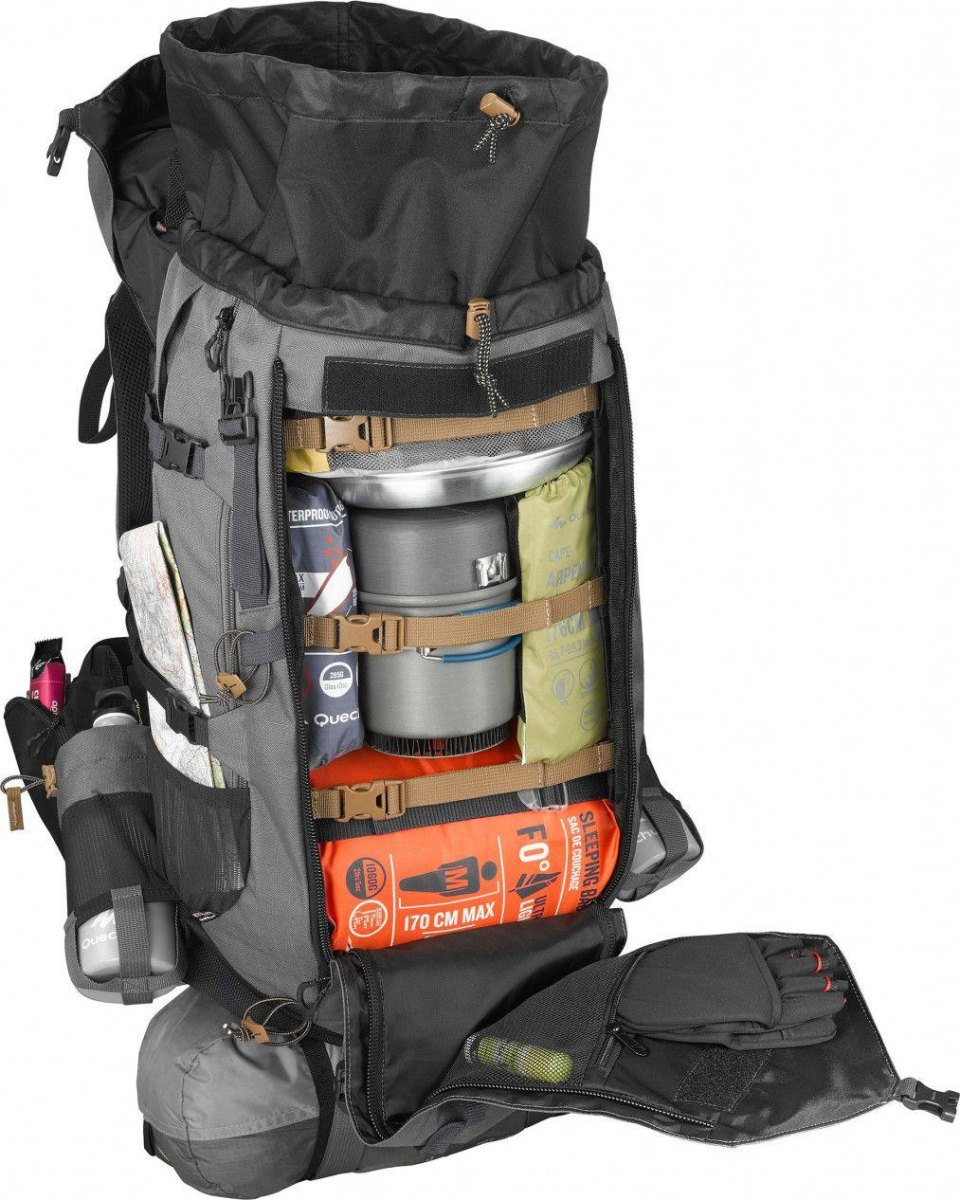
- Enough capacity for water, layers, food, and emergency gear
- Easy-access pockets for items I use while moving
- Weather protection for electronics and maps
For most day hikes, I prefer a pack in the 15–30 liter range. Short neighborhood-style trails need less, while exposed mountain routes or remote terrain require more room for extra layers and emergency supplies. I am not trying to win a lightweight competition; I am trying to avoid becoming a search-and-rescue story.
My packing trick
I keep a small emergency pouch permanently packed in my gear room. It means Tuesday hikes after Sam's long hospital shifts do not start with me hunting for a whistle or headlamp.
Water Supply and Hydration Gear
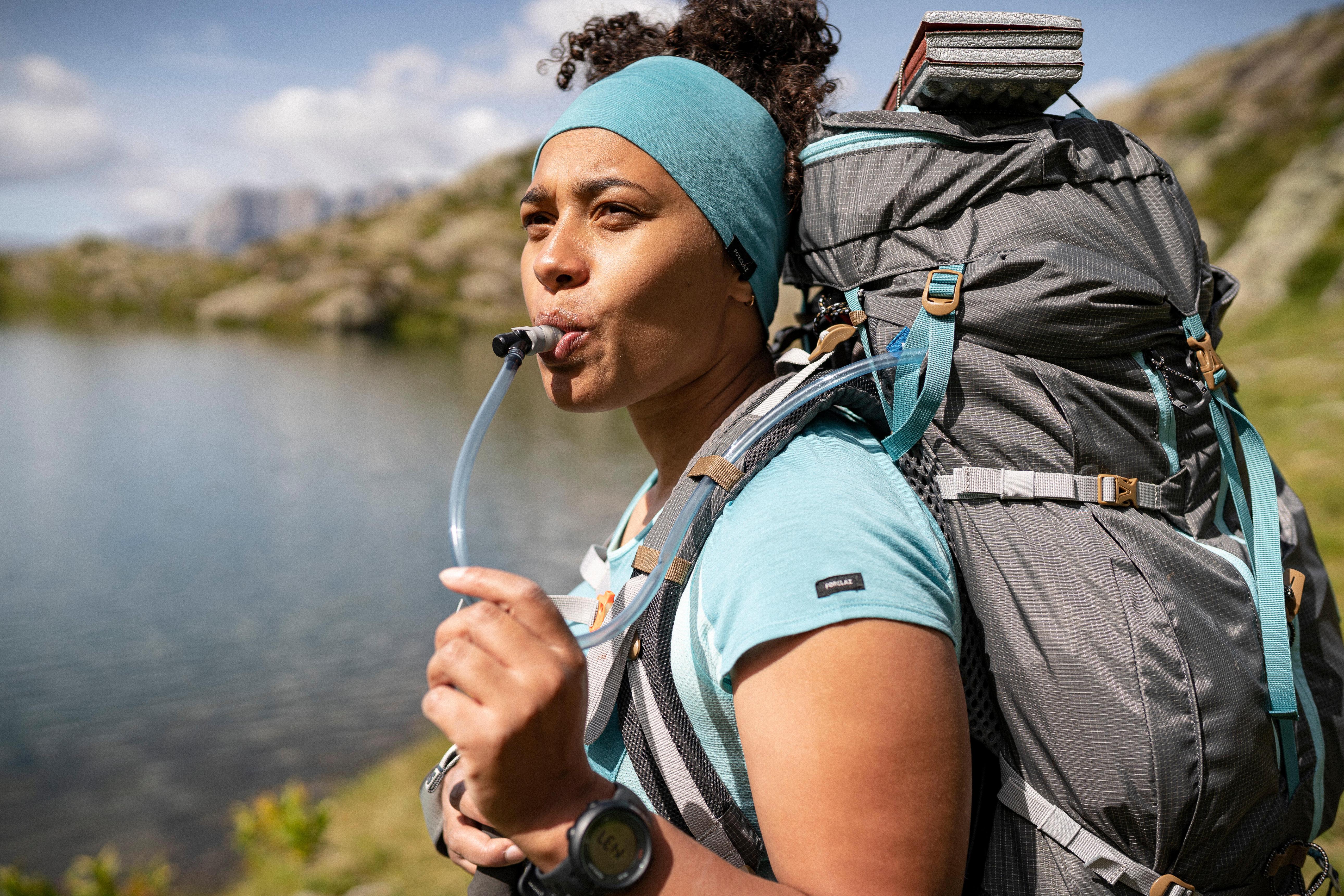
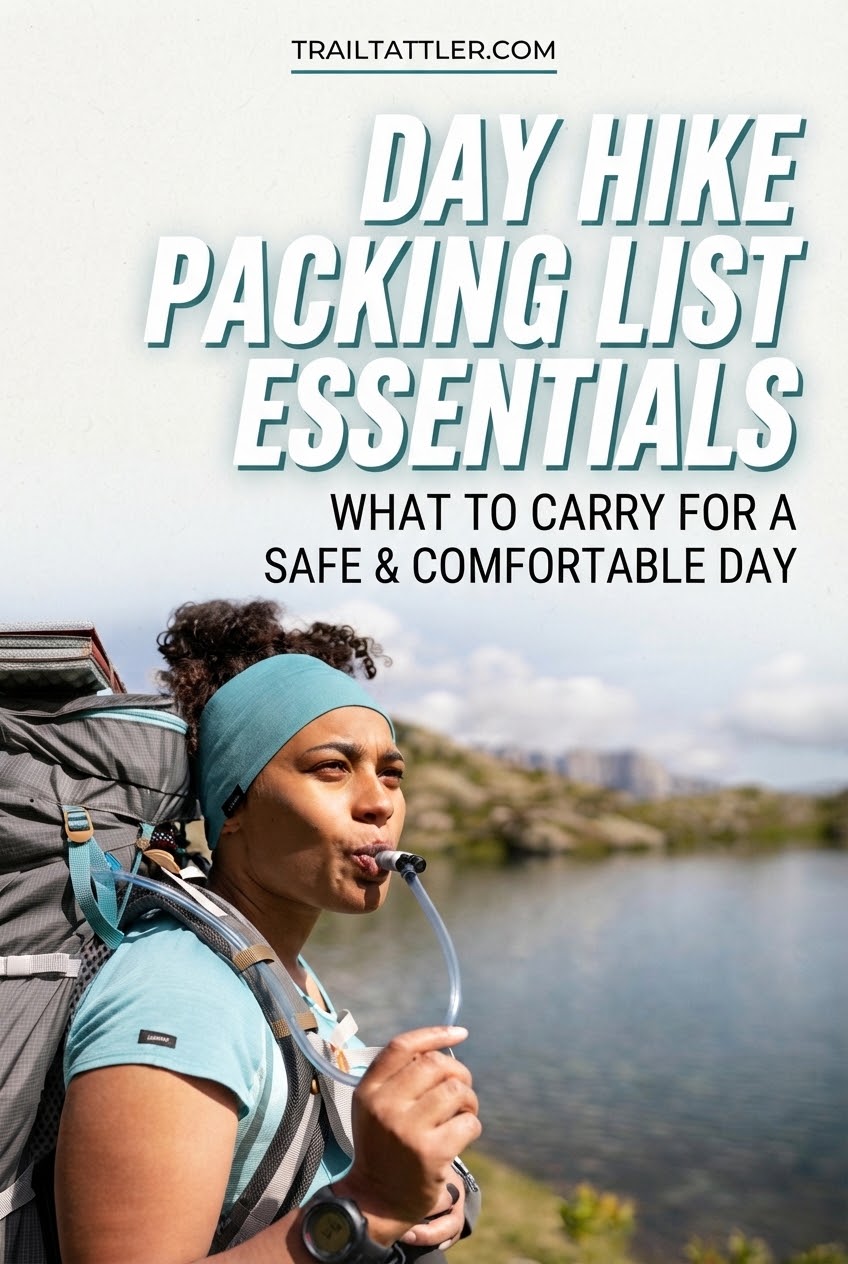
Water is the item I see people underestimate most often. A person can feel completely fine at the trailhead and be in trouble a few miles later when heat, elevation, and distance catch up. Hydration is one of the Ten Essentials systems recommended by organizations including the National Park Service, which also recommends planning water needs and carrying treatment options when appropriate.
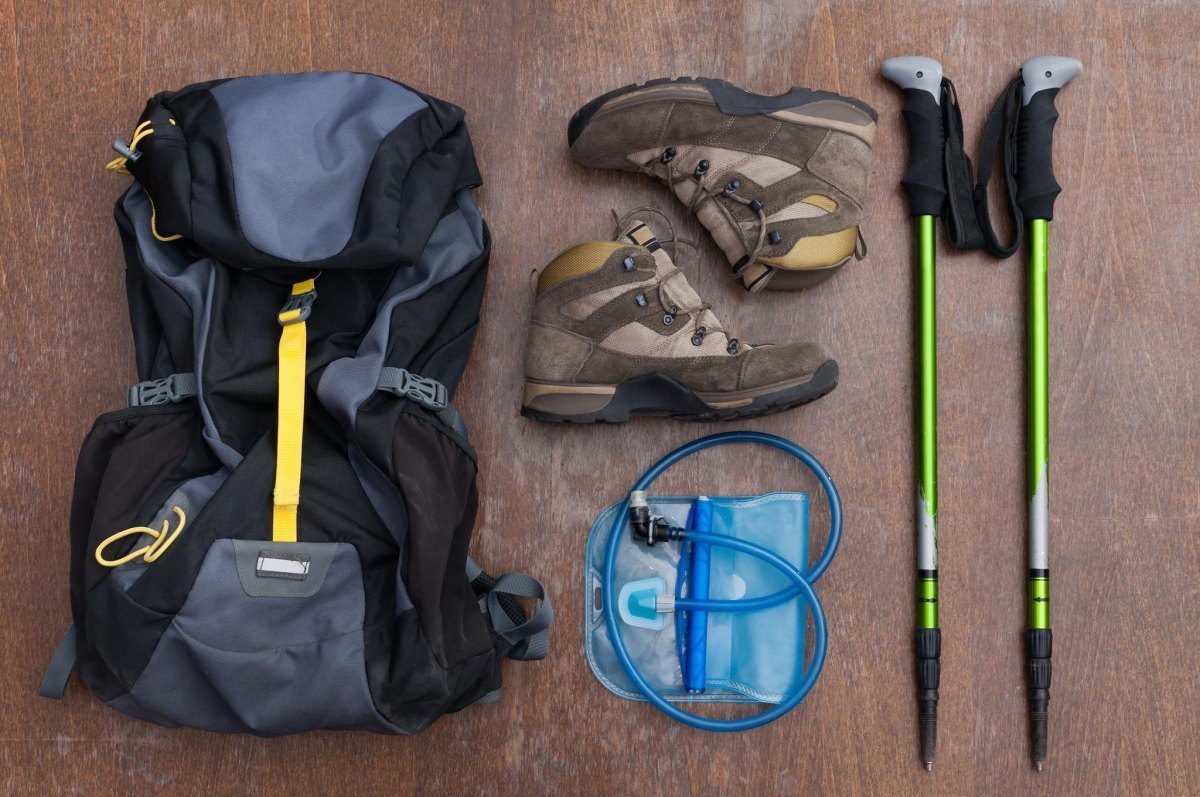
- Water bottles: Simple, durable, and easy to refill before a hike.
- Hydration reservoir: Useful when I want frequent small drinks without stopping.
- Water filter: Worth considering for longer routes with reliable water sources.
- Electrolytes: Helpful for hot, sweaty hikes where I am losing more than water.
I plan water based on the trail, temperature, pace, and available sources. I never assume a stream is safe to drink from just because it looks clean. Water treatment is not a place for optimism.
Avoid this mistake
Do not start a warm-weather hike with one small bottle because the trail description says "easy." Distance, humidity, sun exposure, and elevation gain tell the real story.
Navigation Tools and Trail Maps
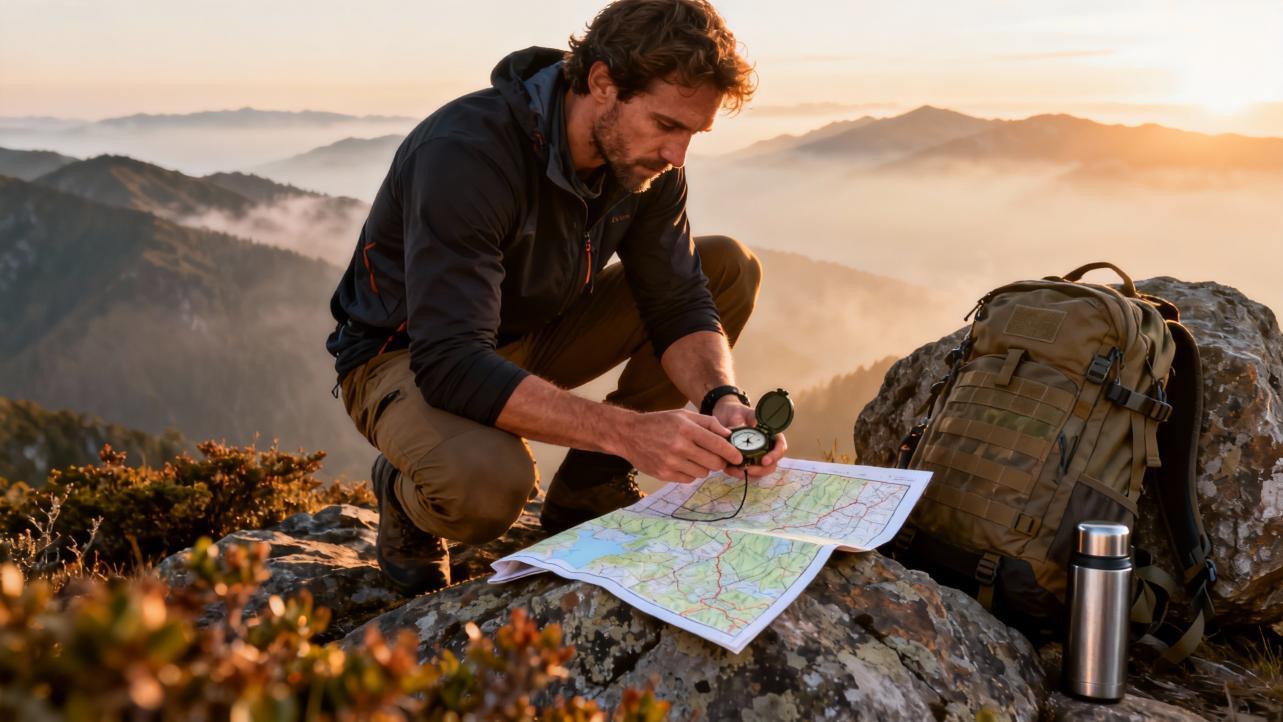
My phone is useful, but it is not my entire navigation plan. Batteries die, screens break, and some of the best trails in the Southeast still have wonderfully unreliable cell coverage. The Ten Essentials approach treats navigation as a system: map, compass, and appropriate electronic tools used together.
- Download. Save offline maps before leaving home because trailhead service is not guaranteed.
- Carry. Bring a paper map and compass when the route is unfamiliar or remote.
- Learn. Practice using navigation tools before you need them during bad weather or fading daylight.
I learned this lesson during my years volunteering with search and rescue. Most incidents are not dramatic wilderness adventures. They are ordinary outings where someone went farther than planned, lost the route, and discovered their phone battery was not a backup plan.
Weather Protection and Extra Clothing Layers
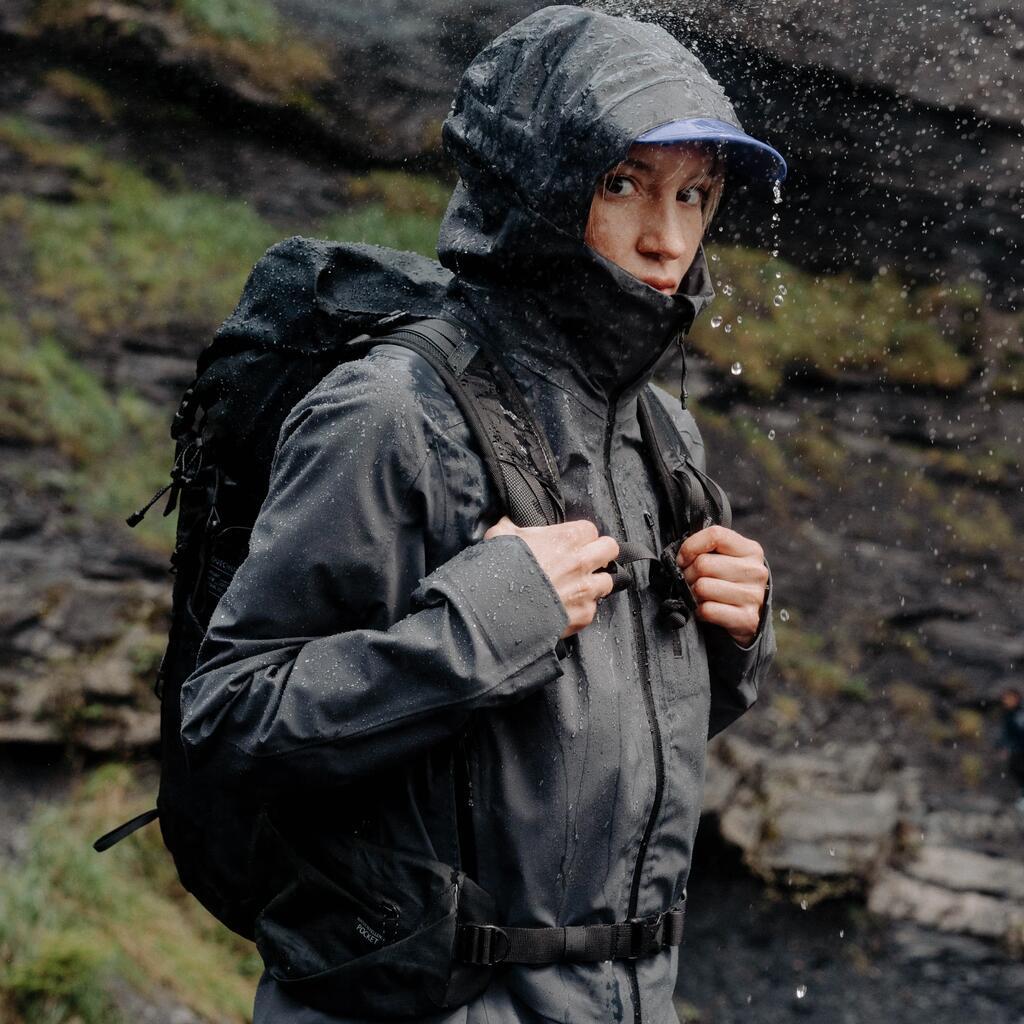
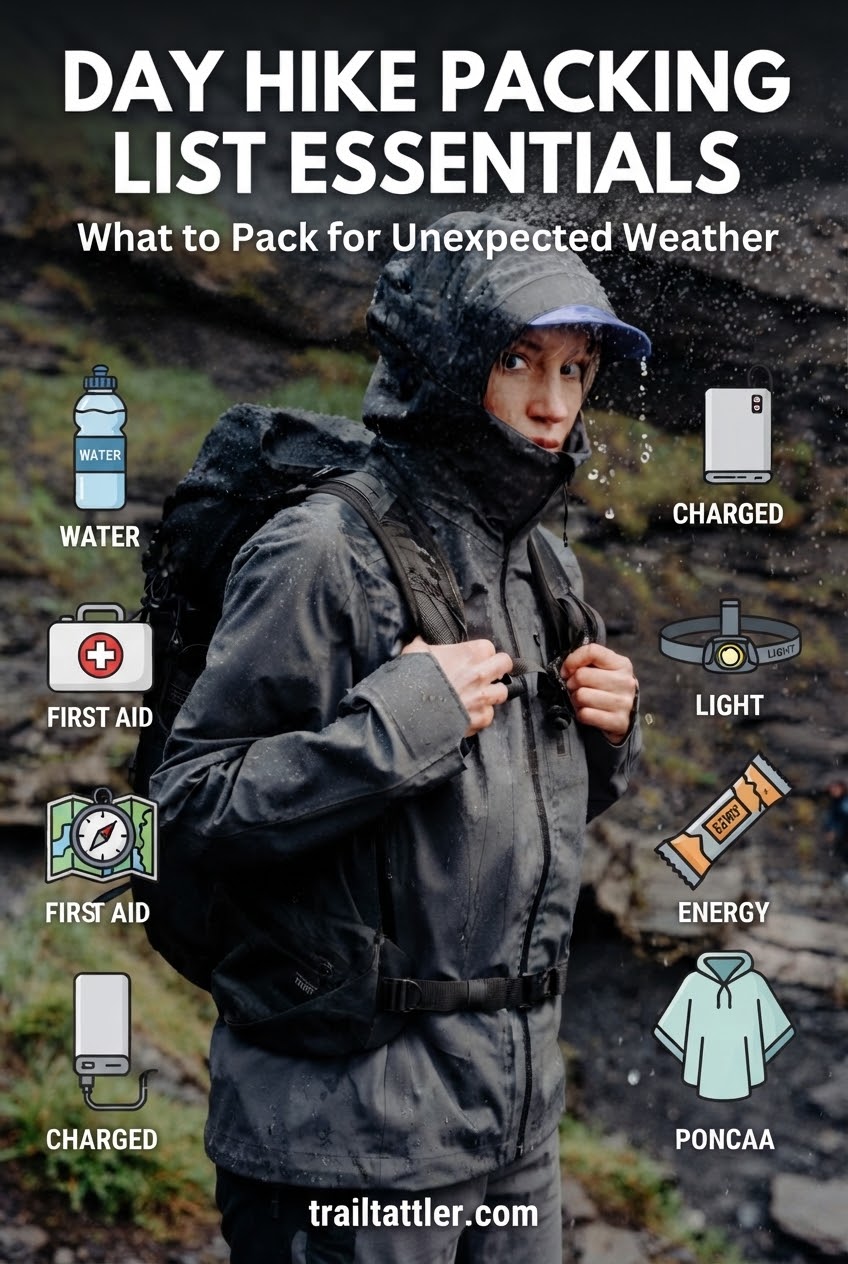
The forecast is a helpful suggestion, not a contract. Mountains create their own weather, and even lower-elevation trails can become uncomfortable quickly when rain, wind, or temperature drops arrive. Extra clothing is one of the Ten Essentials systems because unexpected conditions happen on normal hikes too.
| Condition | Layer I Pack |
|---|---|
| Cool mornings | Light fleece or insulated layer |
| Rain possibility | Packable rain shell |
| Windy ridges | Wind-resistant outer layer |
I avoid cotton for hiking after my first miserable Mount Monadnock trip in November wearing exactly the wrong clothing. Cotton feels fine at the parking lot and becomes a cold sponge once sweat and weather arrive.
Common packing mistake
Leaving the warm layer in the car because the morning feels comfortable is how hikers get caught when the afternoon changes.
Trail Snacks and Energy-Packed Food
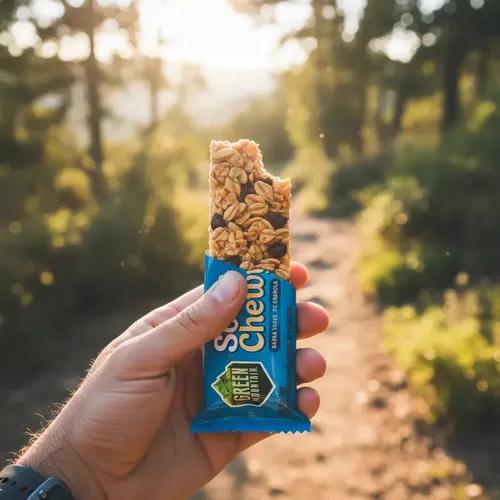
I pack food for the hike I expect and a little extra for the hike that does not go according to plan. A wrong turn, slower group pace, injury, or bad weather can stretch a few hours into a much longer day. Extra nutrition is part of the standard Ten Essentials framework.
- Energy bars or trail mix
- Nuts and dried fruit
- Salty snacks for hot-weather hikes
- A simple lunch for longer routes
- One emergency snack I do not eat casually
My retail years taught me that expensive outdoor food is optional. A peanut butter sandwich and grocery-store snacks can do the job. The important part is calories, convenience, and something you will actually eat after several miles.
Pack for the delay, not just the plan. Trails rarely care about your schedule.
Nico Ferreira, TrailTattler.com
First Aid Kit and Emergency Essentials
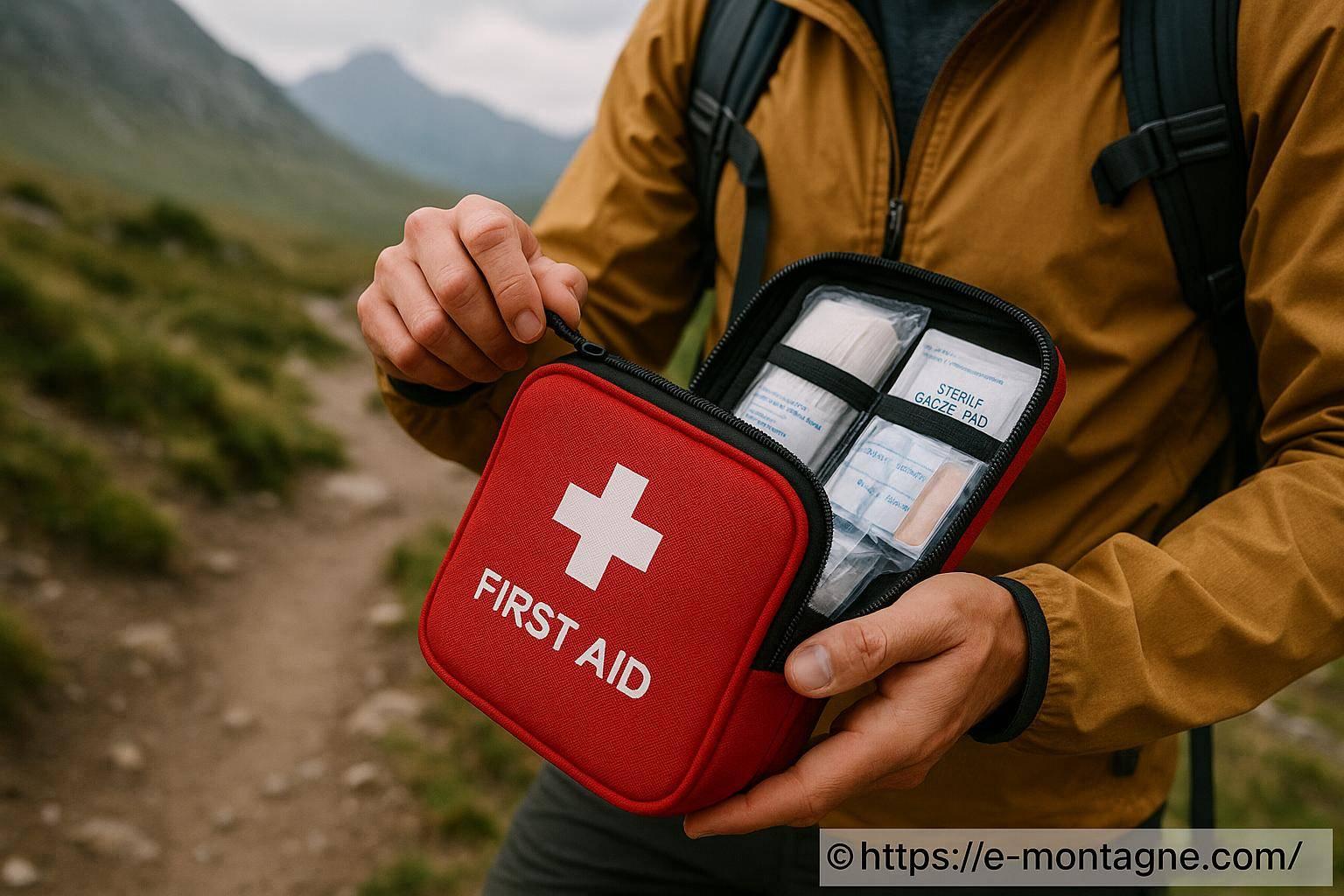
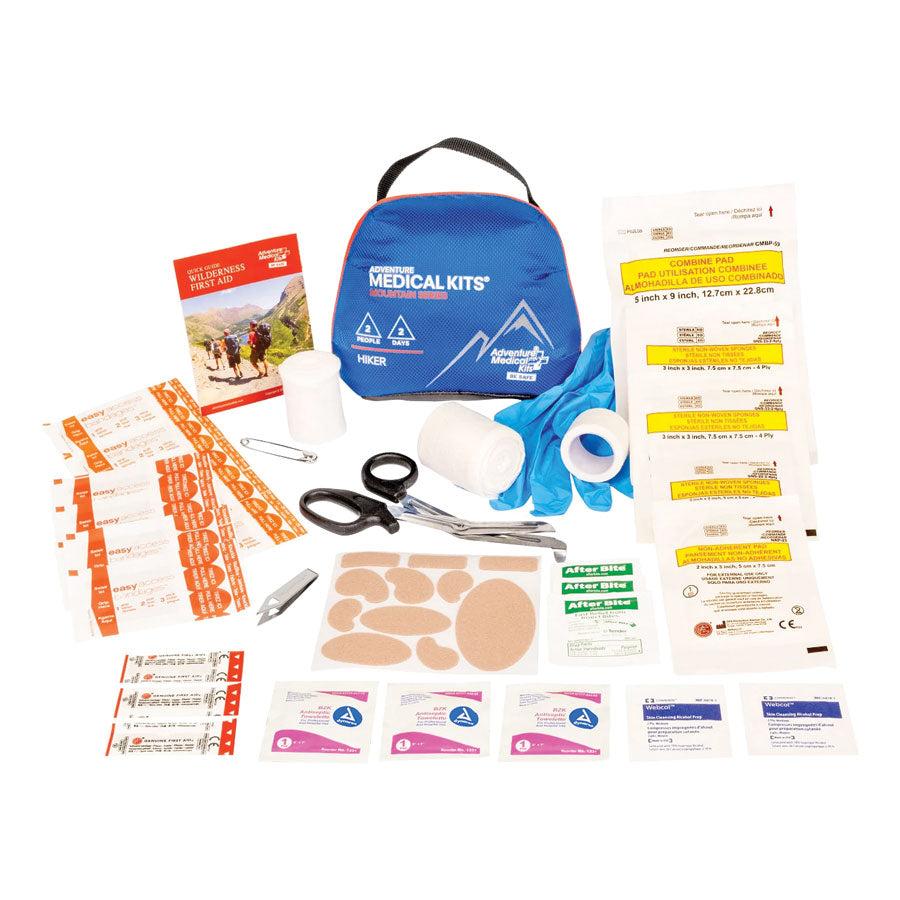
My first aid kit is not a miniature hospital. It is a small tool for handling common problems until I can get back safely or call for help. My Wilderness First Responder training shapes how I pack, but I am not a doctor, and serious injuries need professional medical attention.
What stays in my first aid pouch
I carry supplies for common trail problems: blister care, small cuts, basic wound protection, personal medications, and a few emergency items suited to the hike. I also carry a whistle and headlamp because getting stuck after dark changes the situation quickly.
- Headlamp: The item many day hikers skip and later wish they had.
- Whistle: A lightweight signaling tool.
- Repair items: Tape and small tools for gear problems.
- Emergency shelter: A lightweight option for unexpected delays.
The National Park Service includes first aid, illumination, repair tools, and emergency shelter among the Ten Essentials because these systems help hikers handle unexpected situations.
Sun Protection and Personal Safety Items
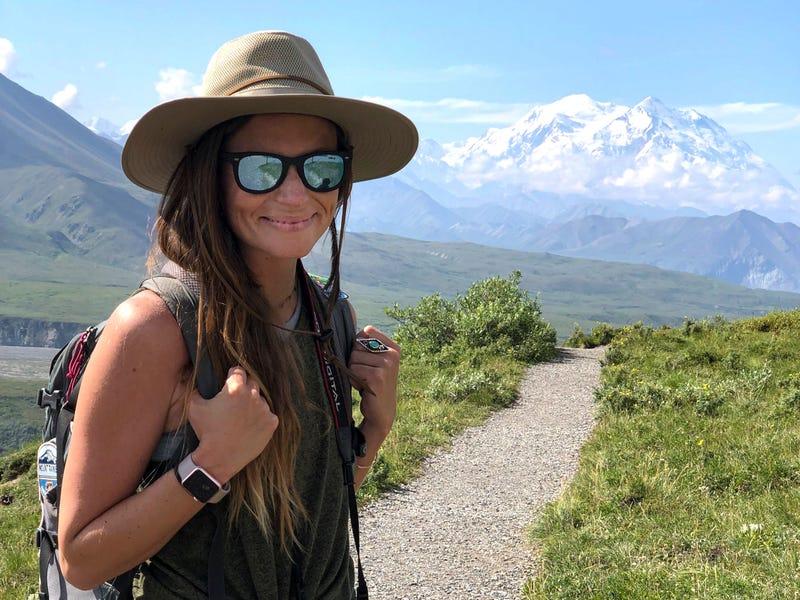
Sun protection is one of those things hikers remember after they forget it once. I have had enough bright sandstone hikes to know that exposed terrain can quietly drain energy long before you feel like you are struggling.
Items I pack
- Sunglasses
- Sunscreen
- Hat with coverage
- Lip protection
Things I avoid
- Relying only on shade
- Ignoring winter sun
- Assuming clouds block all exposure
I also tell someone where I am going and when I expect to return. It sounds basic, but it matters. Rescue teams need information, not guesses.
Footwear and Trail Comfort Essentials
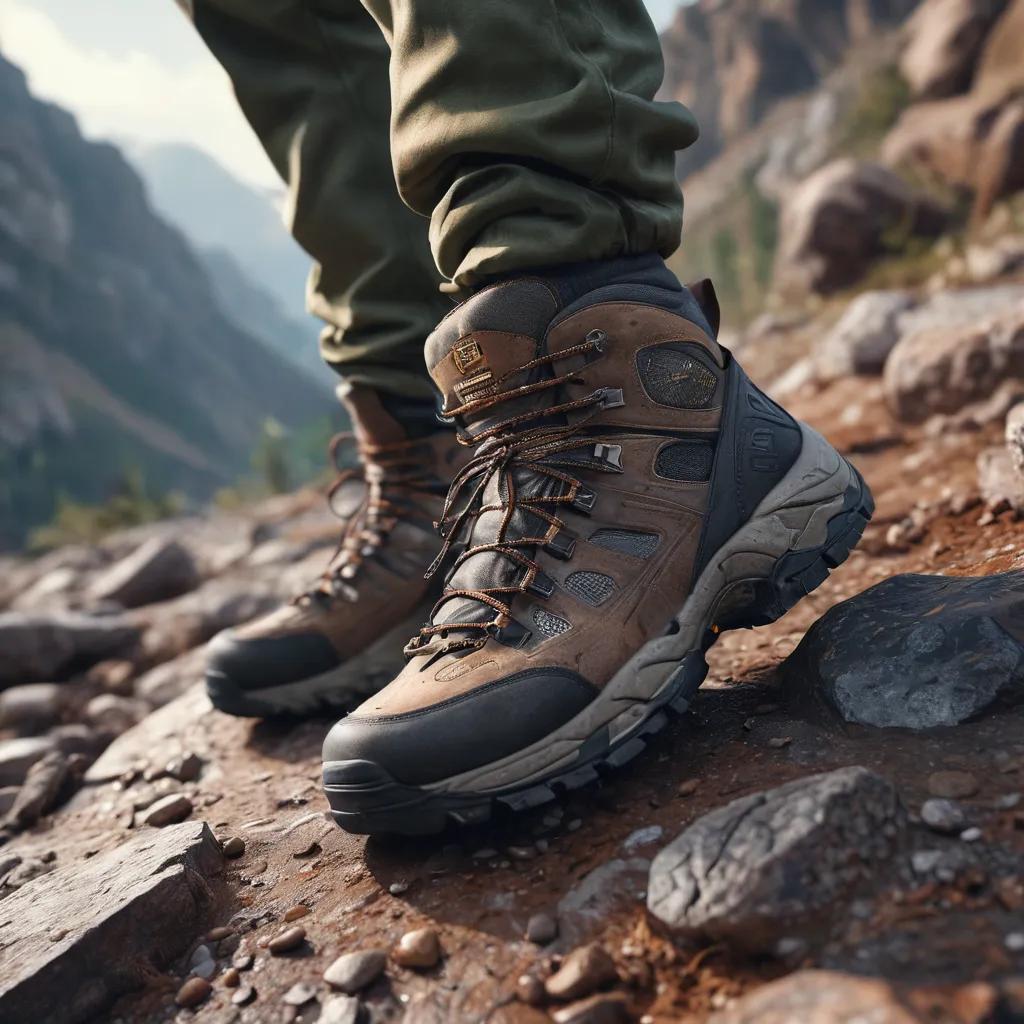
Your feet are your transportation system, so I give footwear more attention than almost any other item. During my years fitting boots, I saw plenty of expensive footwear fail because it simply did not match the person's feet or hiking style.
- Trail shoes: Great for lighter loads and maintained paths.
- Hiking boots: Useful when I need more structure, protection, or support.
- Socks: Moisture management matters more than brand names.
- Blister prevention: Small problems become big problems several miles from the car.
I also pay attention to trail surface. Rocky Cumberland Plateau routes punish feet differently than soft forest paths. The right footwear is not about looking like a serious hiker; it is about finishing the hike with feet that still work.
My final packing check is simple: water, navigation, light, layers, food, first aid, and the ability to handle a delay. The trail does not need you to be fearless. It needs you to be prepared.
More Pinterest Visuals