
Rain doesn't have to cancel a hike. It changes what goes in the pack, what you wear and how early you head for the car.
This checklist is sorted by category, with a one-line reason for each item. Fall makes it matter more: days are cooler, wetter and shorter. Start with the go/no-go check below, because the best-packed bag still can't fix a bad trail day.
Should You Hike Today? A Quick Go/No-Go Check
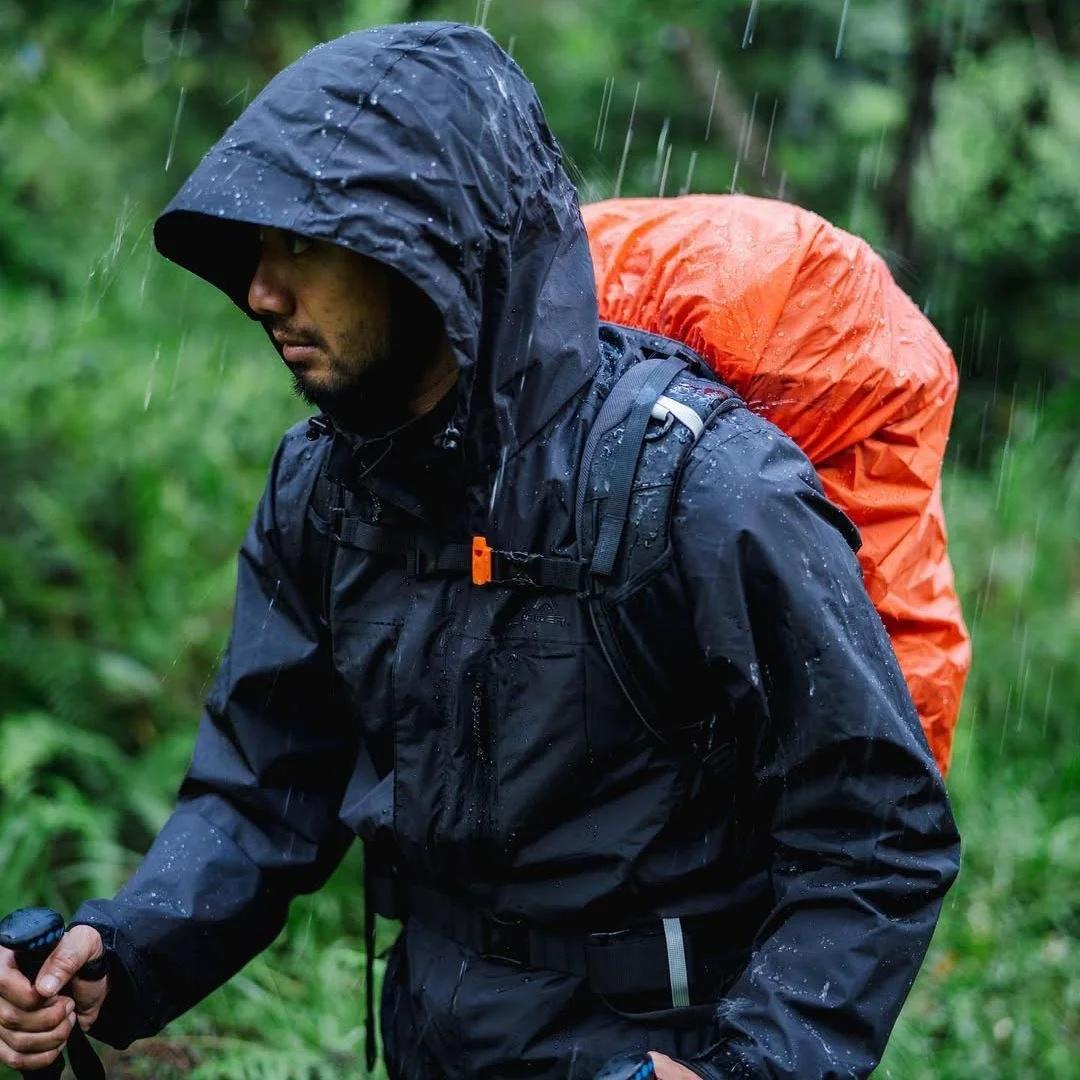
Decide before you pack. Look at the forecast for the trailhead area, not the nearest town, and think about how much rain has already fallen on that trail this week. Saturated ground is slower and slipperier than the forecast number suggests.
The National Park Service notes that it is easy to slip and fall on mountain trails and near water. Wet rock, roots and mud make that worse. Pick a route you can shorten, with a turn-back time set at home, because fall daylight runs out sooner than people expect.
Before you leave
- Forecast checked for the trailhead area, plus recent rain on the trail
- Route can be cut short if conditions worsen
- Turn-back time set, with fall's short daylight in mind
- Someone knows your route and when you'll be back
Skip or reroute if
There is lightning in the forecast, flash-flood risk, swollen stream crossings you'd have to wade, or a route through narrow drainages. A shorter, higher, drier trail is a good day, not a defeat.
1. What to Wear: Layers and Rain Gear
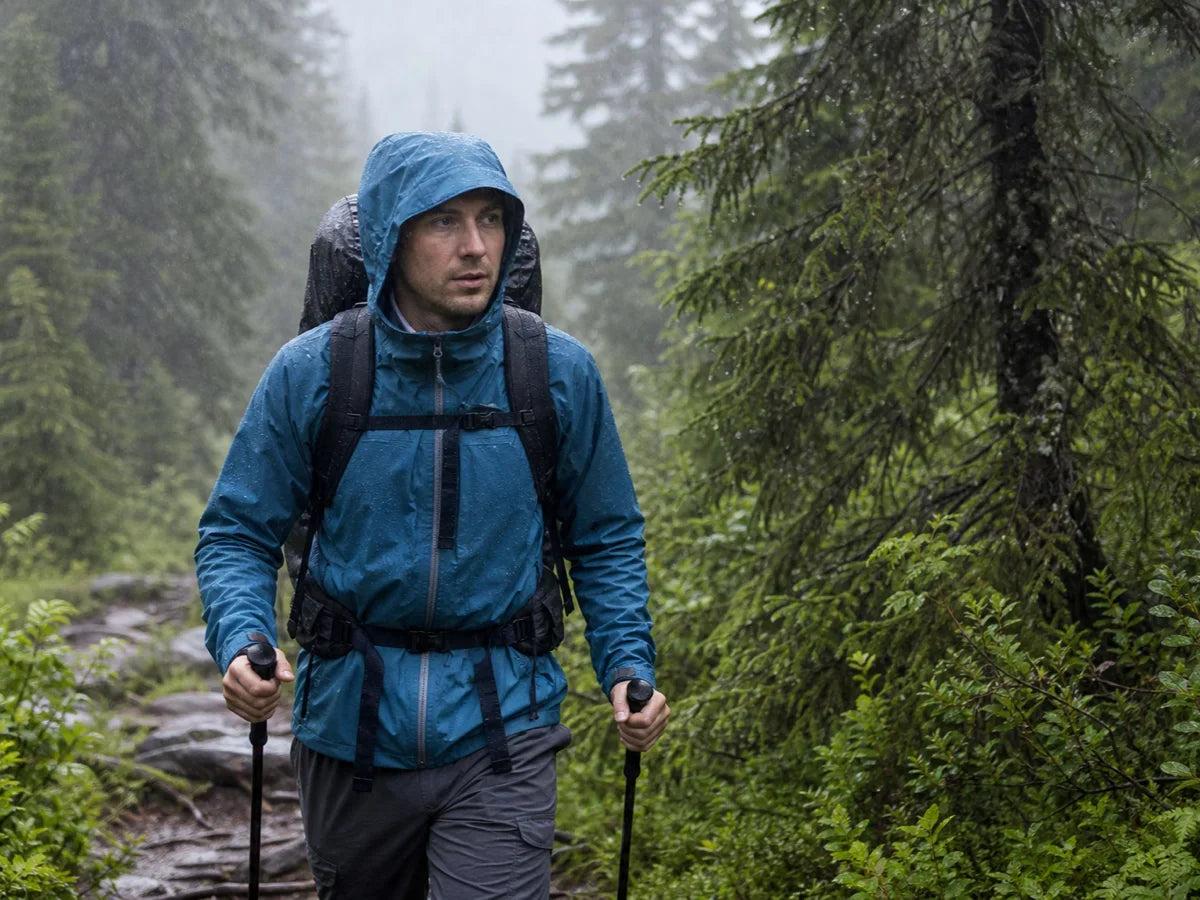
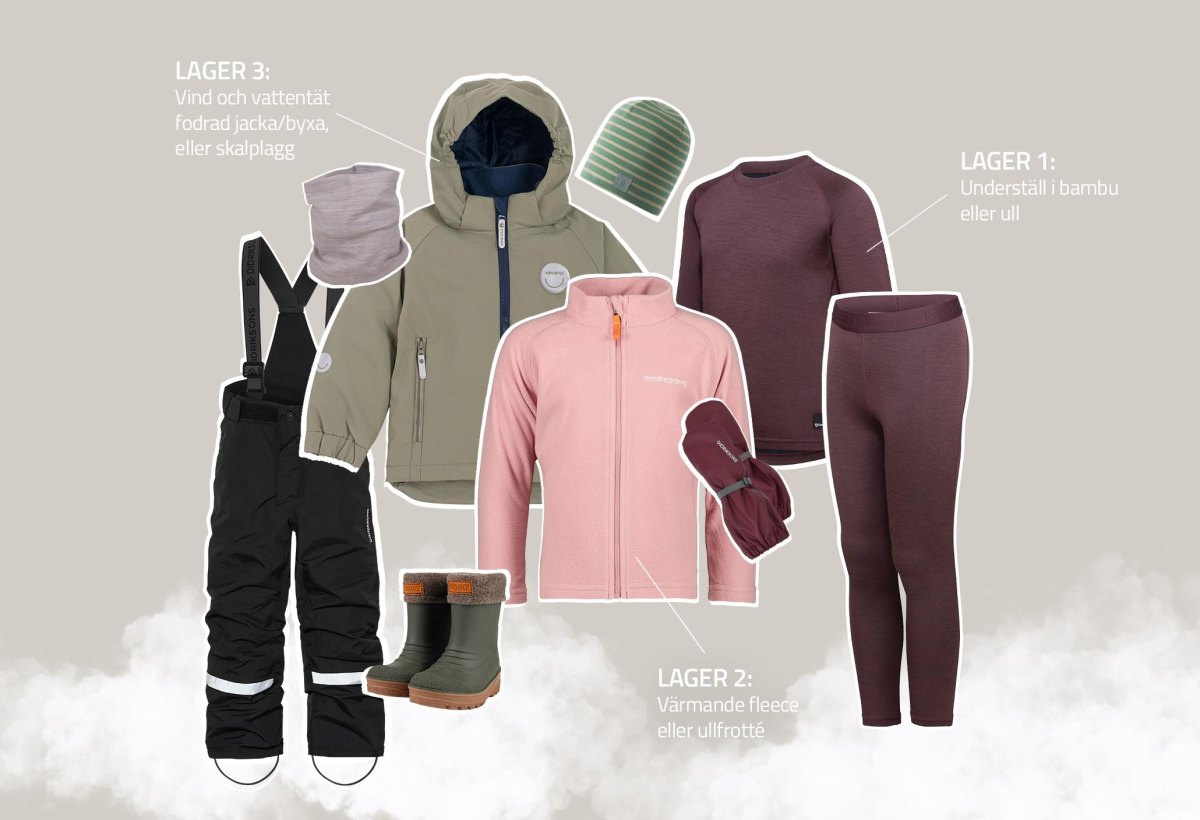
Build from the skin out, and keep cotton out of the system entirely. Cotton holds water, including sweat, and chills you; wool, nylon and polyester are the better choices. In wet weather the same goes for other absorbent fabrics: down, rayon, linen, flannel and hemp.
On the jacket, fully waterproof with an adjustable hood is the pick. Water-repellent can be enough on a short hike where you can turn back easily.
Clothing checklist
- Base layer, wool or synthetic: it moves sweat instead of holding it
- Fleece mid layer: insulates and dries faster than most alternatives
- Waterproof jacket with an adjustable hood: keeps rain off your neck and face
- Rain pants with ankle zips: easy to pull on over shoes
- Brimmed hat: keeps rain off your face
- Snug hat that fits under the hood: keeps your head warm under the shell
- Gloves: wet hands go numb fast
- Spare dry layer in a bag: your reset if you get chilled
Vent before you sweat
Open the jacket zips or drop the hood on climbs. Getting wet from inside is still getting wet.
2. Boots, Socks and Gaiters for Wet Trails
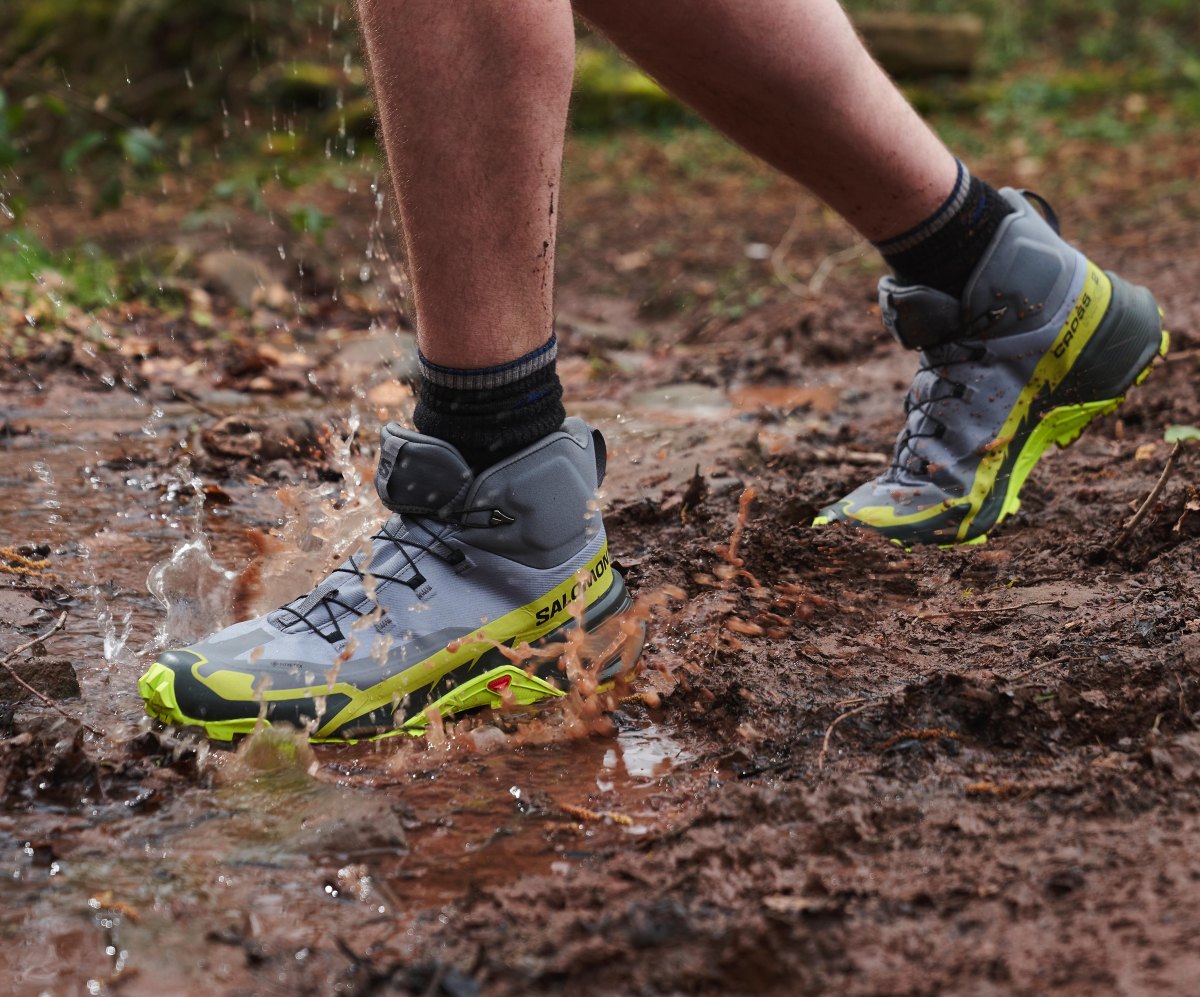
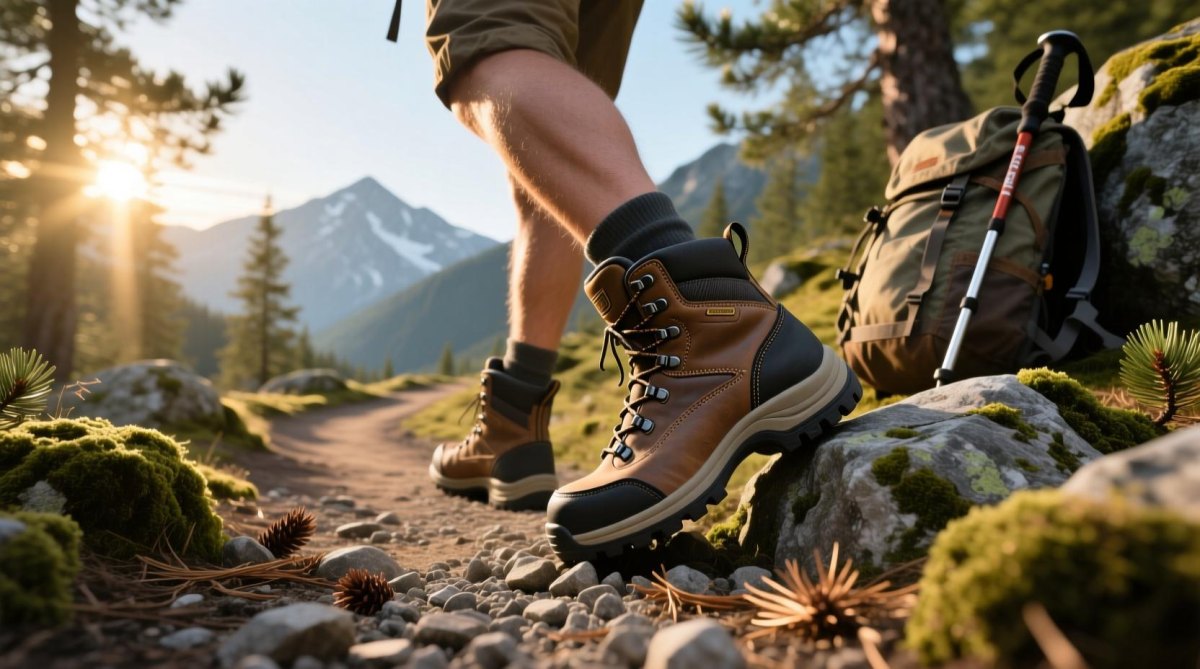
Grip matters more than anything else on the feet. Choose waterproof boots or trail shoes with a lugged sole for mud and wet rock; the mid-cut boots pictured here are churning through a muddy puddle, which is the job tread has to handle.
Be realistic about waterproofing: water coming in over the top soaks your feet whatever the lining is. Gaiters, or pant cuffs cinched over the boot, cut down what runs in.
Wet-feet basics
- Footwear: Waterproof boots or trail shoes, lugged sole
- Socks: Wool or synthetic, plus a spare pair
- Top entry: Gaiters or cinched cuffs
Packing notes
- Keep the spare socks in a dry bag, not loose in the pack
- Skip cotton socks: they hold water and chill you
- Change socks at a break if yours are soaked
3. What to Pack: Keeping Gear, Food and Maps Dry
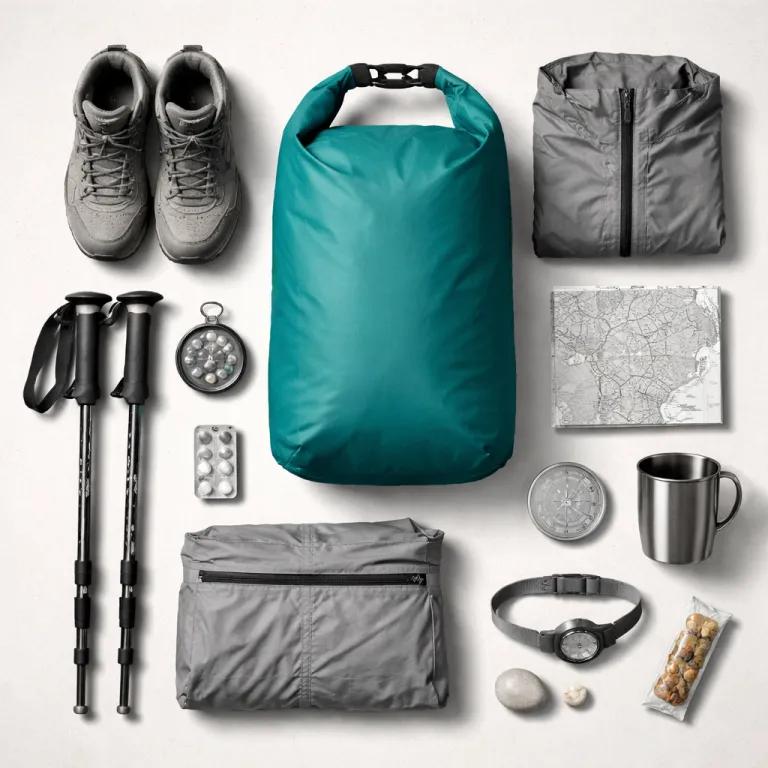
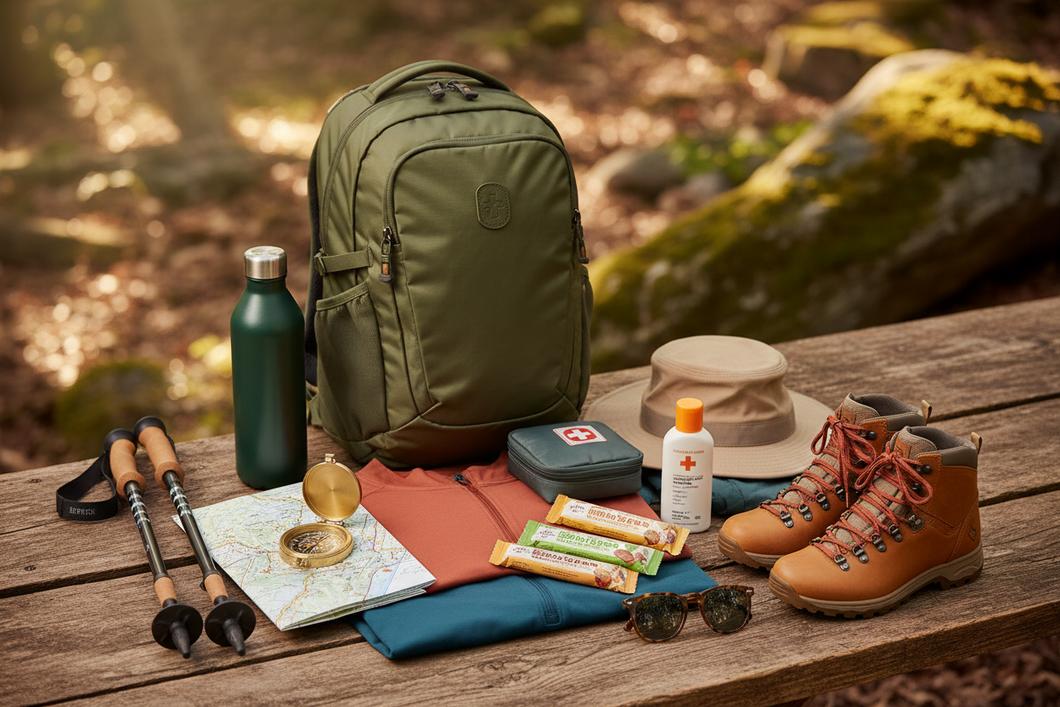
Start from the usual day-hike basics: pack, layers, footwear, food, water, map and compass, first-aid kit and knife or multi-tool. For rain, add an extra layer or two.
Then assume the pack will leak. Packs aren't truly waterproof: seams aren't sealed and zippers let water in during a downpour. A liner or dry bags fix that.
Pack checklist
- Pack liner or dry bags for clothes and food
- Water and extra snacks you can eat while walking
- Paper map in a zip bag, plus compass
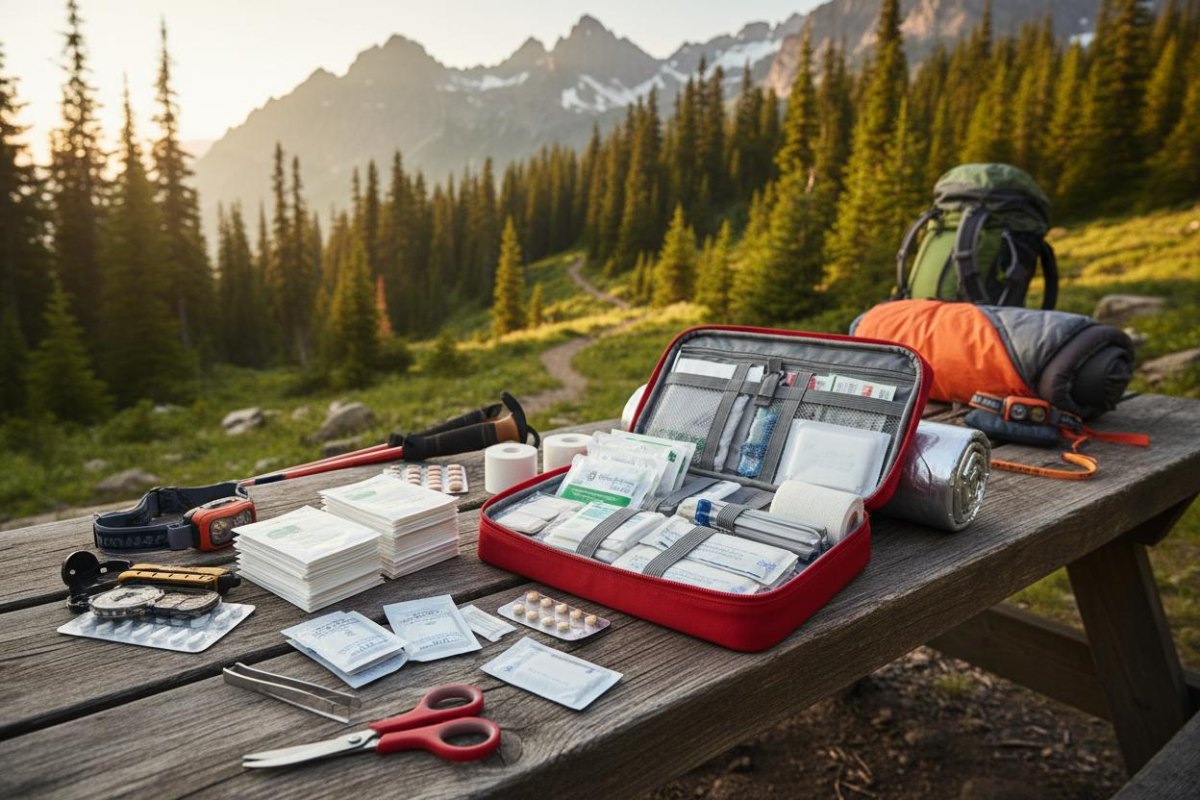
- First-aid kit and knife or multi-tool
- Extra layer or two
- Bandana or multitowel to wipe and dry gear
- Waterproof headlamp
- Trash bag as an emergency cover
Why each wet-weather item earns its place
| Item | Reason |
|---|---|
| Dry bag or liner | Seams and zippers let water in |
| Zip-bag map | Paper gets soggy and hard to read when soaked |
| Waterproof headlamp | Rainy days are darker |
| Trail snacks | You won't want to stop and unpack in the rain |
| Trash bag | Quick emergency cover |
4. Pack Cover or Dry Bags? Protecting Your Pack
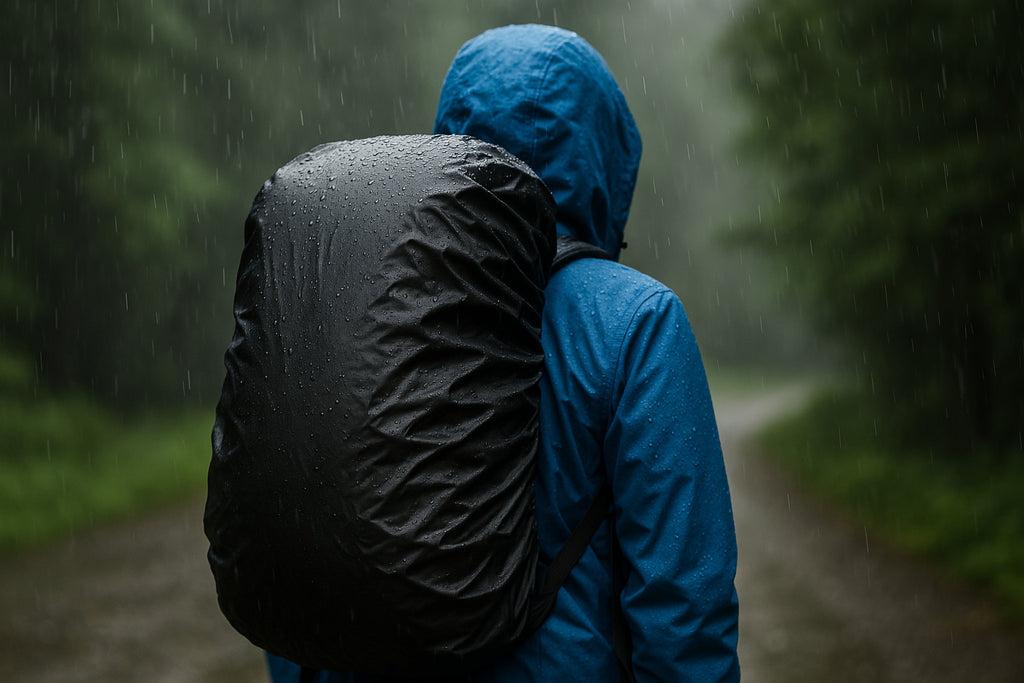
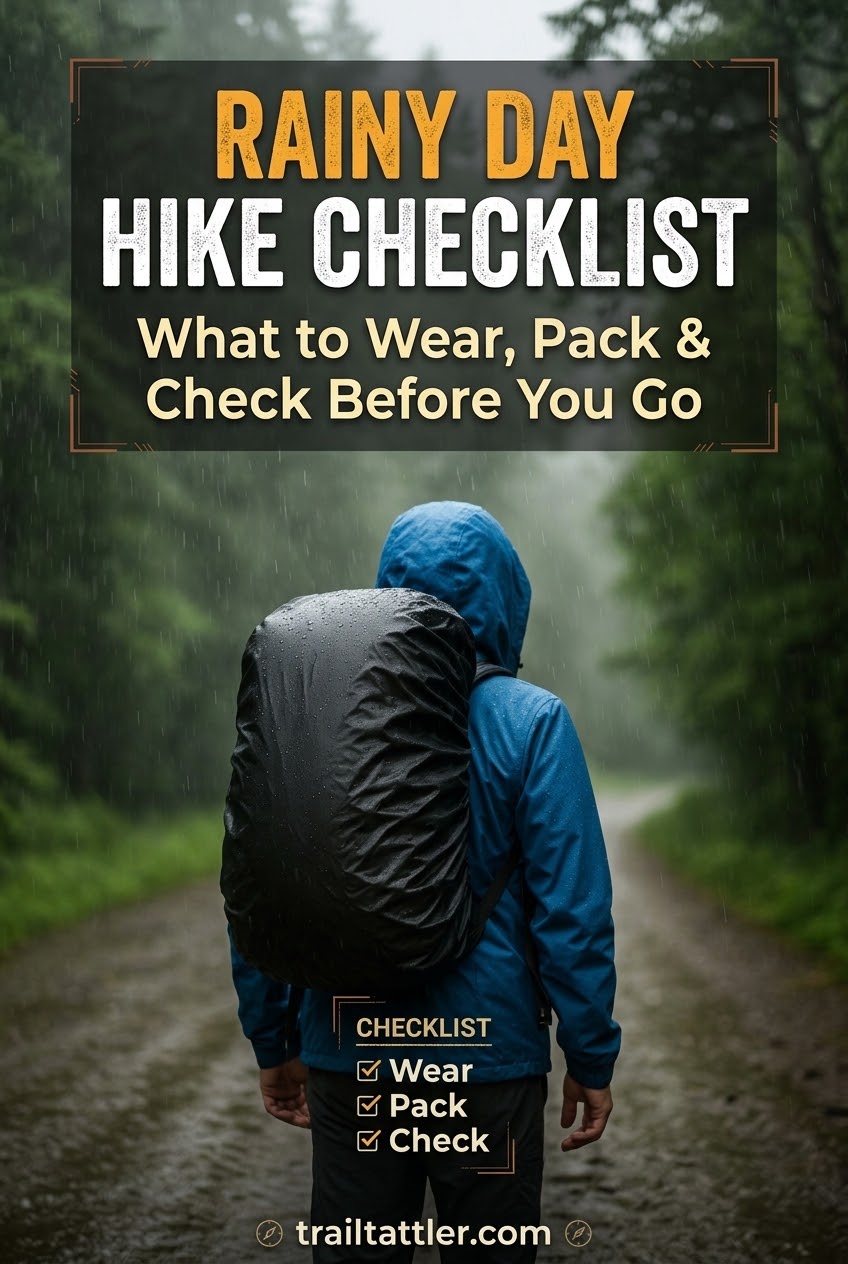
Use both if you can. A cover sheds rain off the outside, while dry bags protect what matters inside. Keep the spare layer at the top or in its own bag so you can reach it without opening everything up.
Cinch the cover snugly, since a loose one catches wind.
Pack cover
- Sheds rain off the outside of the pack
- Keeps the pack body from soaking up water
Limits
- Doesn't seal the pack
- Flaps in wind if not cinched
5. Phone, Camera and Electronics in the Rain
Your phone is often your camera, map and torch, and it hates water. Treat it as one item among several backups, not the plan.
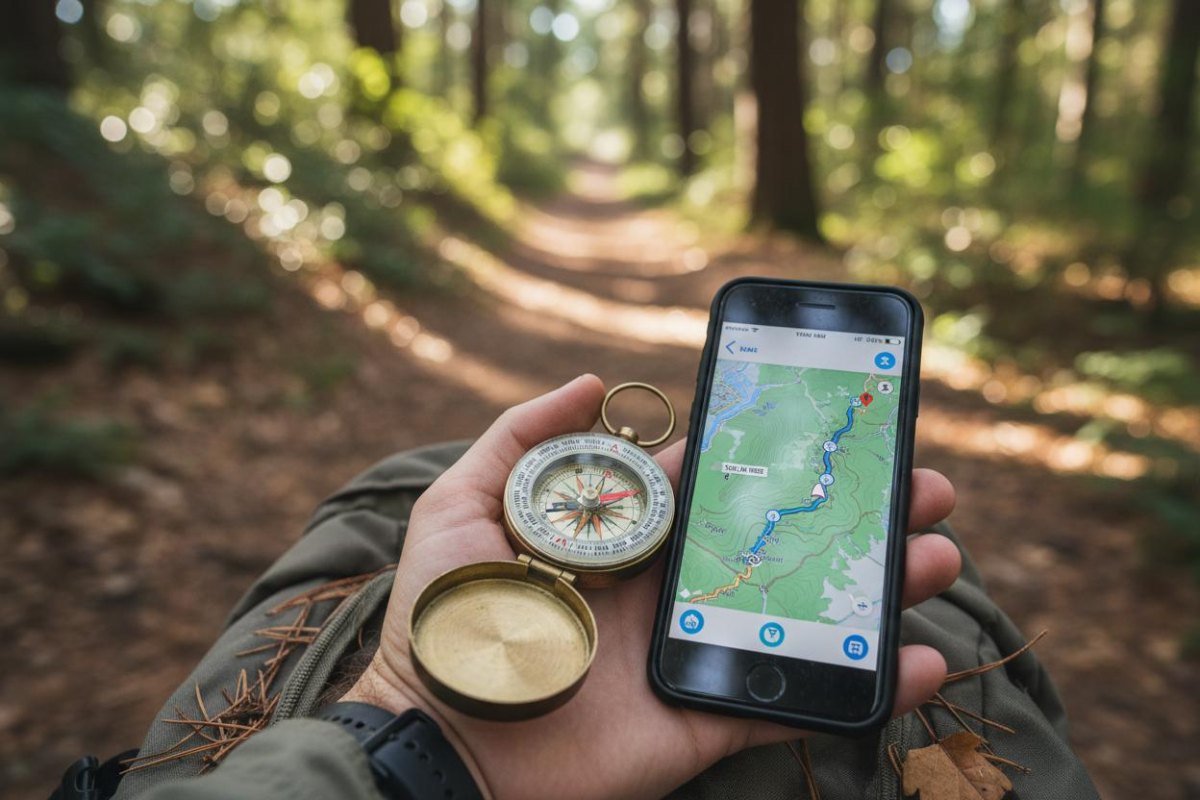
A zip bag or small pouch keeps rain off it while still letting you use it. Cold weather tends to drain batteries faster, so keep the phone close to your body and carry a power bank. Offline maps matter because signal is patchy on many trails, and the paper map covers a dead screen.
Electronics checklist
- Phone in a zip bag or small dry pouch
- Offline maps downloaded, with a paper map as backup
- Phone kept close to your body, since cold drains batteries faster
- Power bank packed
- Camera: lens cloth and a rain cover or bag
- Change lenses sparingly in the wet
- Headlamp as your light, not the phone
6. After the Hike: Dry and Care for Your Gear
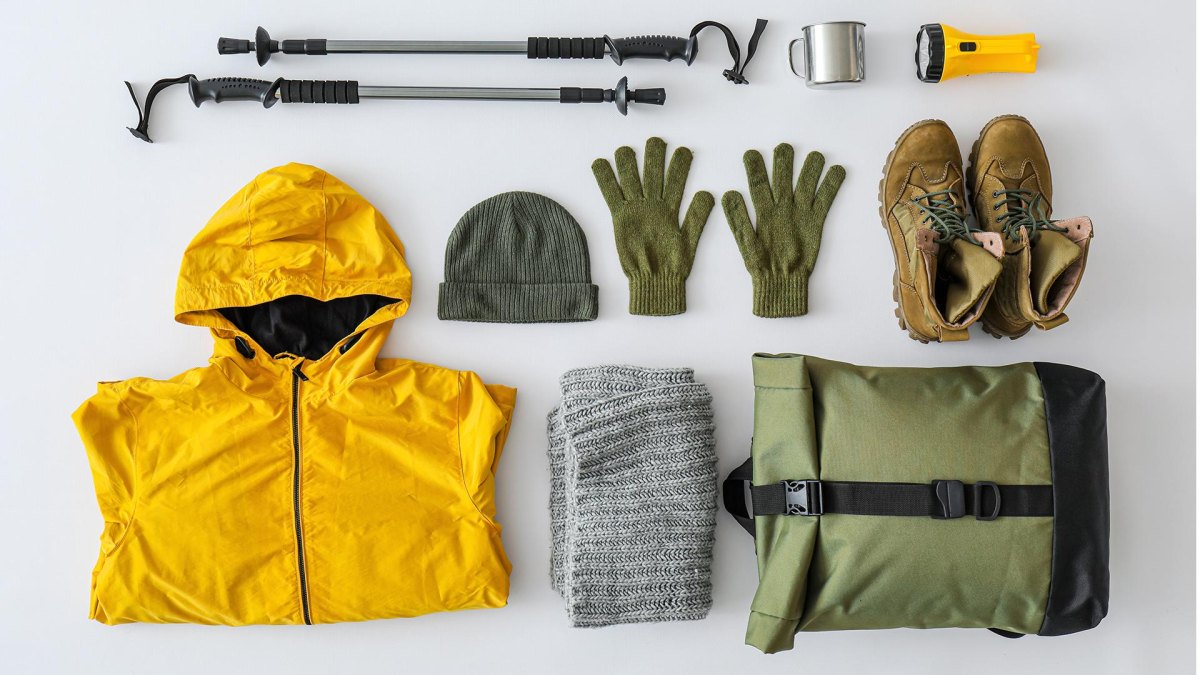
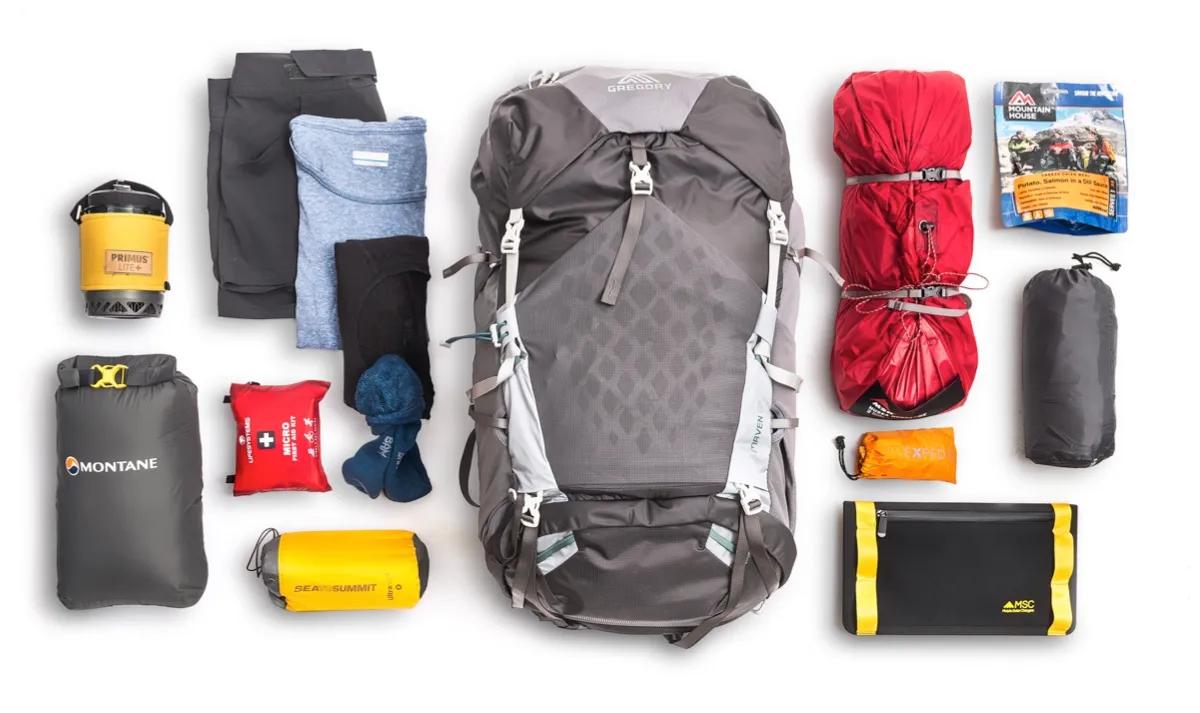
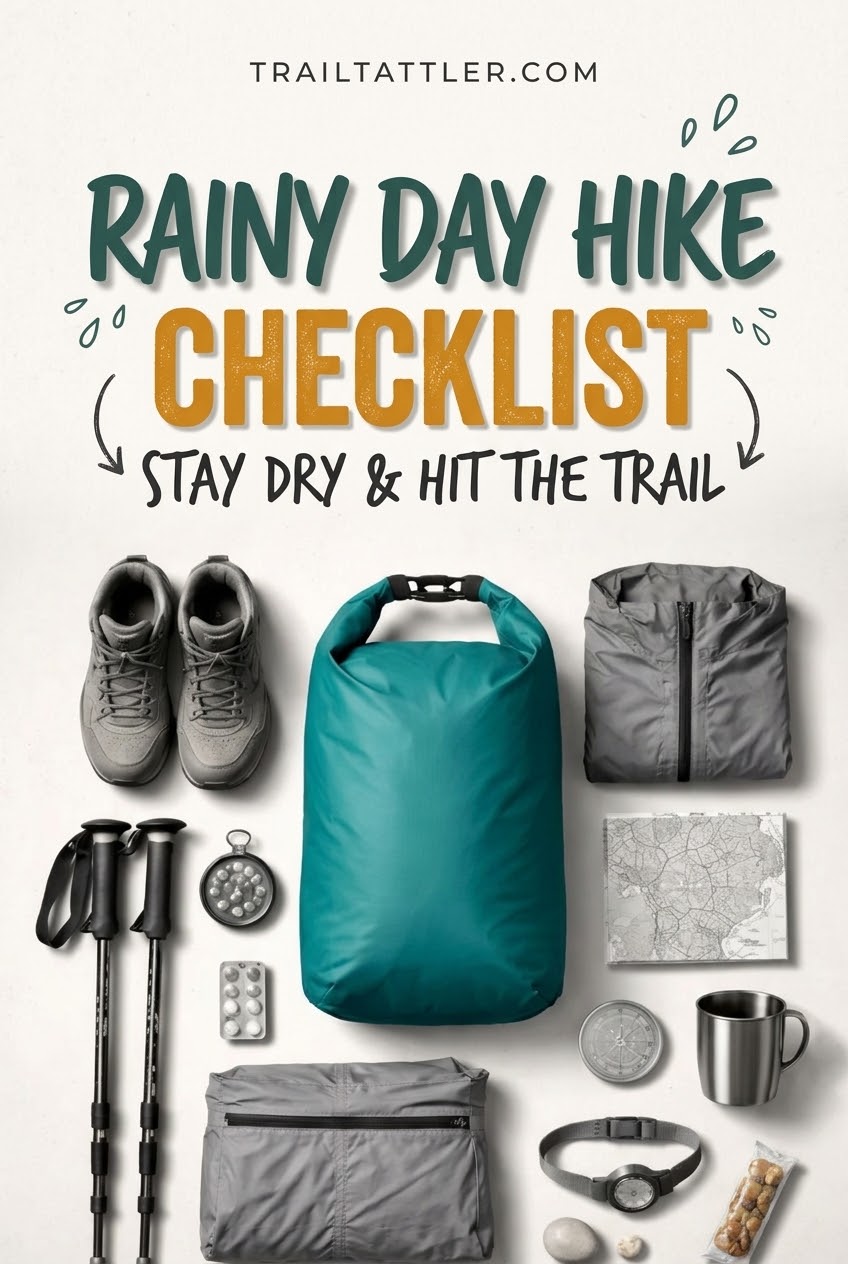
Gear that goes back in the closet damp comes out smelling like it. The jacket, gloves, hat, boots, pack and dry bags are what need attention; lay them out like the set pictured and work through them one at a time.
Post-hike routine
- Unpack right away; hang the jacket and pack to air dry.
- Pull the insoles out and dry boots away from direct heat.
- Rinse mud off boots and gaiters.
- Open the dry bags, wipe the insides and dry the pack cover.
- Restock snacks, headlamp batteries and spare socks.
Hypothermia: Staying Warm When You Are Wet
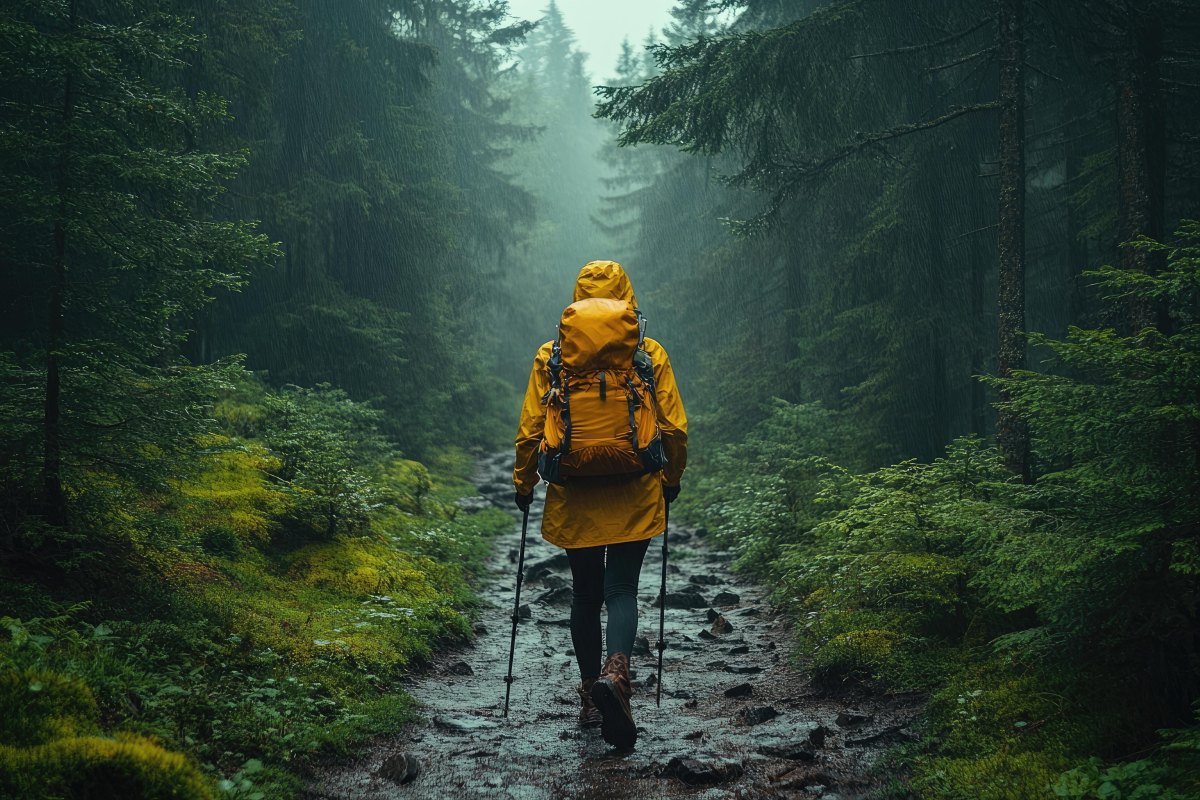
Cold doesn't have to be freezing. The National Park Service says the best prevention is not getting chilled and wet: wicking layers, no cotton or jeans, and always a waterproof layer. It can occur year-round.
NPS lists uncontrolled shivering, slow or slurred speech and memory lapse as symptoms. REI's shorthand is the "umbles": mumbling, grumbling, stumbling, tumbling.
If someone is struggling
Turn back early. If symptoms are more than mild, get out, call for help and see a doctor. This is recognition guidance, not medical treatment.
What to do at the first signs of chill
- Stop moving on and get out of the wet
- Add dry layers
- Eat and drink, and do it more often than you would on a sunny day
- Watch the whole group, not just yourself
Short Hike vs Long Hike: Scaling Your List
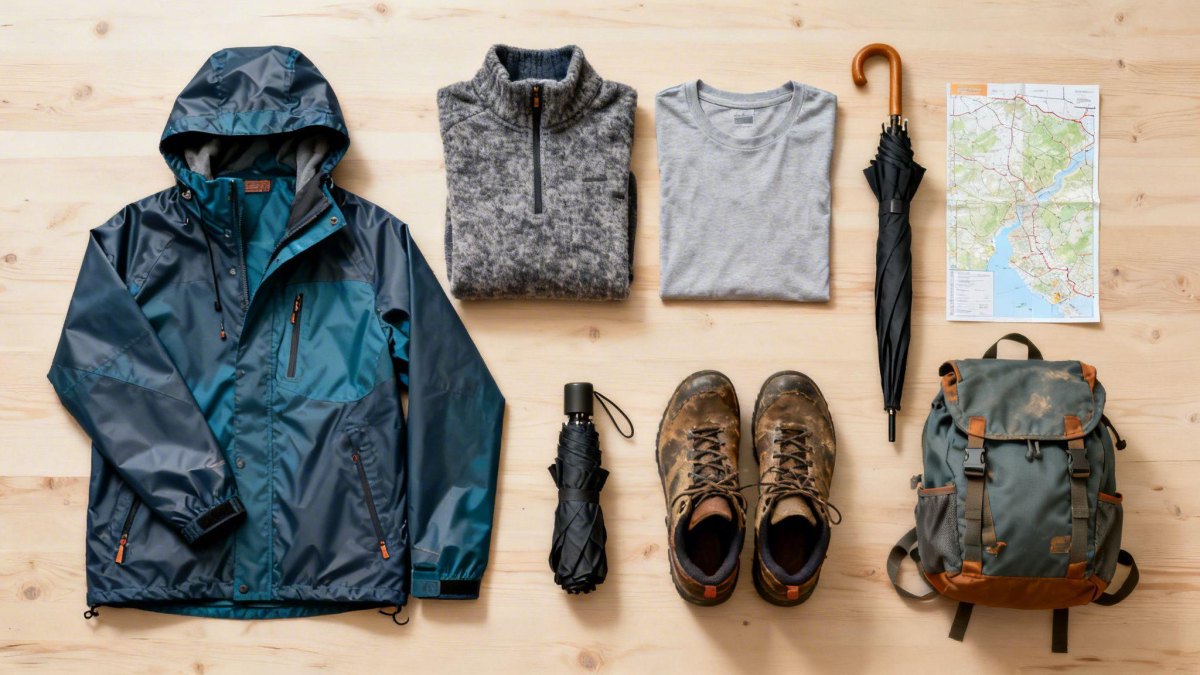
You don't need expedition kit for a loop near the car. Scale to how easily you can bail out: the harder it is to reach the trailhead, the more spare clothing and food earns its weight.
Scaling the list
| Item | Short, easy-to-bail hike | Long or remote hike |
|---|---|---|
| Jacket | Water-repellent may do | Fully waterproof |
| Pants | Optional | Rain pants |
| Insulation | One spare layer | Extra insulation |
| Feet | Spare socks optional | Gaiters, spare socks |
| Food | Snacks | More food |
| Kids | Extra dry layer, snacks | Shorter distance |
| Dogs | Towel | Watch for chill on cold wet days |
Walking Safely on Muddy, Slick Trails
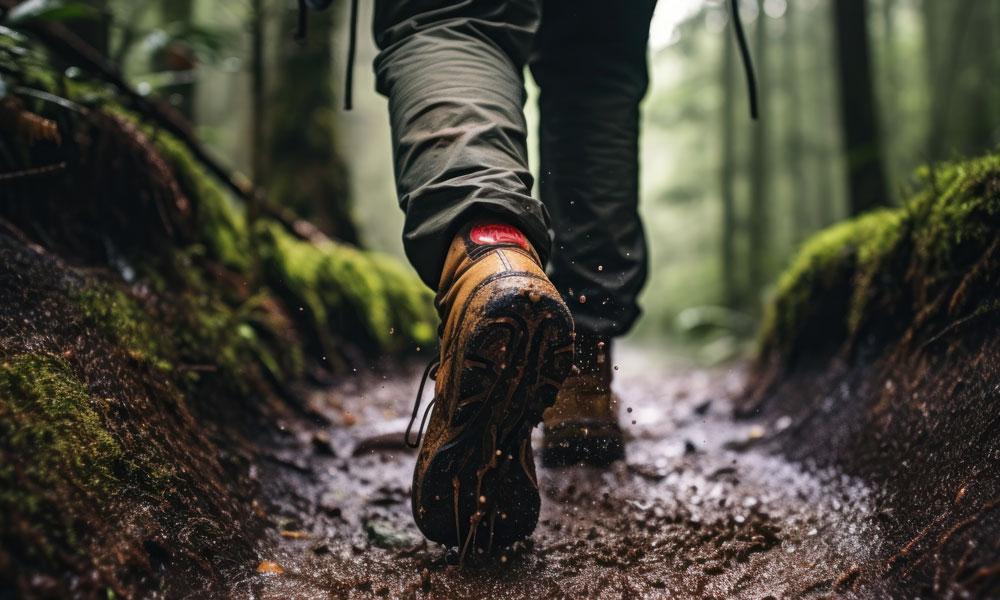
Wet ground changes how you walk, and technique costs nothing. Slow down and keep your weight over your feet, especially on descents.
Footing tips
- Take shorter steps and place your foot flat
- Use trekking poles for extra stability
- Treat wet roots, moss and logs as the slipperiest surfaces
- Check the mud on your soles afterwards: it shows why tread matters. Clean the boots after.
Fall Light and Timing: Plan for an Early Dusk
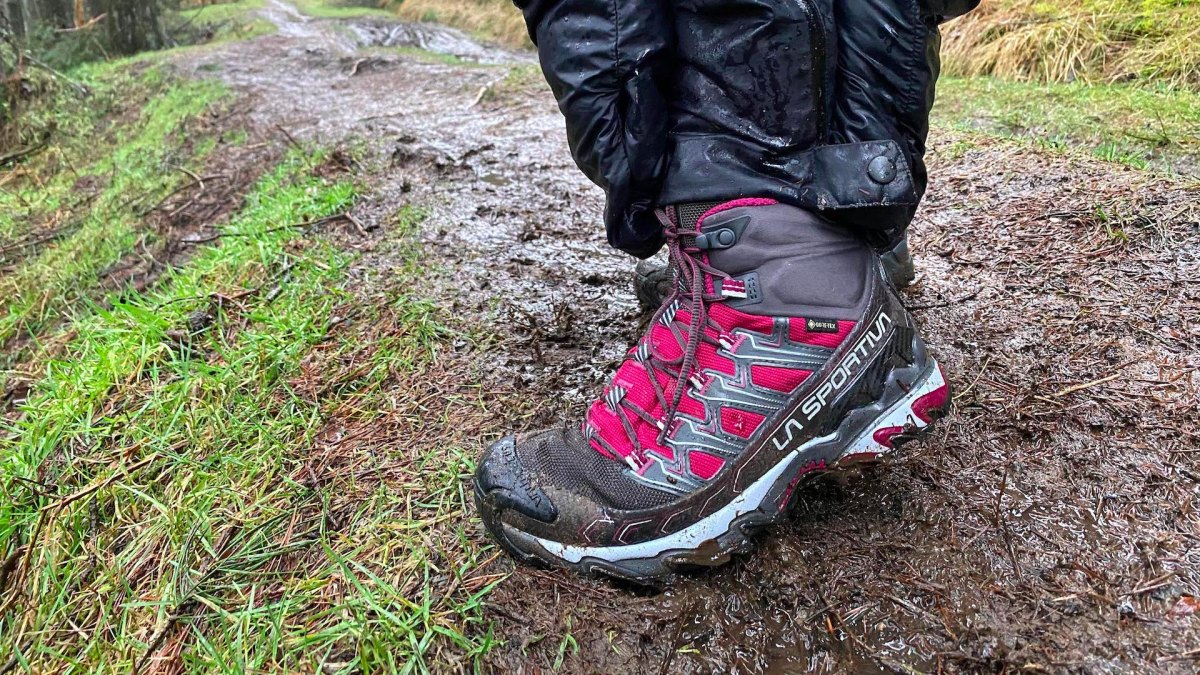
October rain days are dark before they're late. Plan to be finished before dusk, and treat the turn-back time as fixed, because heavy cloud makes the light fade earlier than the clock says.
Fall timing
- Carry a headlamp with spare batteries
- Set a turn-back time and keep to it
- Look for boots with a lugged sole that grip on wet grass and mud, like the muddy mid-cut boot pictured
Final Pre-Trailhead Check
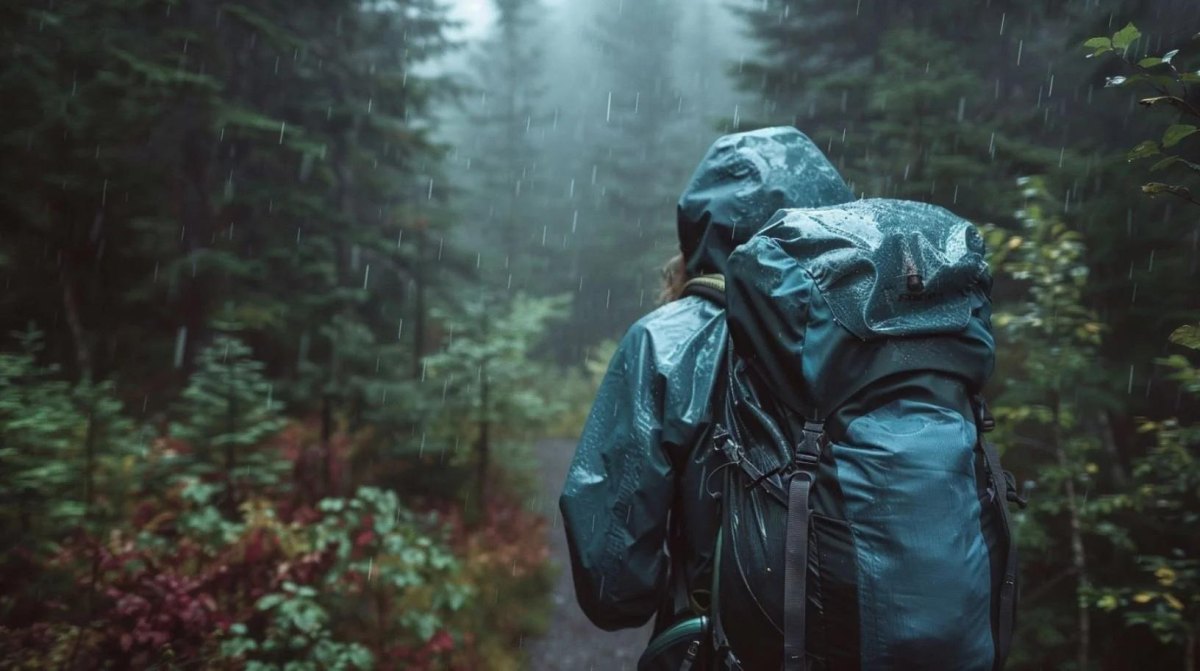
One last look in the parking lot, before you lock the car. Run through the list once, out loud if you're with someone. The dry bags inside the pack matter more than the cover outside.
At the car
- Cover on and cinched, hood adjusted
- Spare layer within reach, in its own bag
- Phone sealed
- Headlamp in the top pocket
- Turn-back time agreed
Pack for the wet, then go
Check conditions first, wear non-cotton layers under a waterproof shell, bag what must stay dry, and set a turn-back time you'll honor. Dry everything out the same day, and the list is ready for next time.
Frequently Asked Questions
Is water-resistant enough or do I need waterproof?
On a short hike where you can turn back easily, water-repellent can be enough. For anything longer or more remote, choose a fully waterproof jacket with an adjustable hood.
Do I need rain pants and gaiters?
Not for a short loop. On longer or remote hikes they help, and rain pants with ankle zips go on over shoes. Gaiters or cinched pant cuffs cut down on water running into your boots.
How do I keep my phone, map and food dry?
Put the phone and paper map in zip bags, and food and spare clothes in dry bags or a pack liner. Packs leak at seams and zippers in a downpour.
When should I turn back?
At your preset turn-back time, or earlier if there is lightning, a swollen crossing, or anyone shivering uncontrollably or slurring words. In fall, leave enough daylight to finish before dusk.
More Pinterest Visuals



 Backpacking Gear & Packing12 Wandern Für Anfänger Packliste – Alles Für Einen
 Family HikingHiking With Kids Checklist for a Safer, Happier Trail Day
 Hiking Destinations17 Best Autumn Hiking Trails In Canada For Fall Color Season
 Backpacking Gear & PackingHiking Emergency Gear Checklist for Safer Days on the Trail