

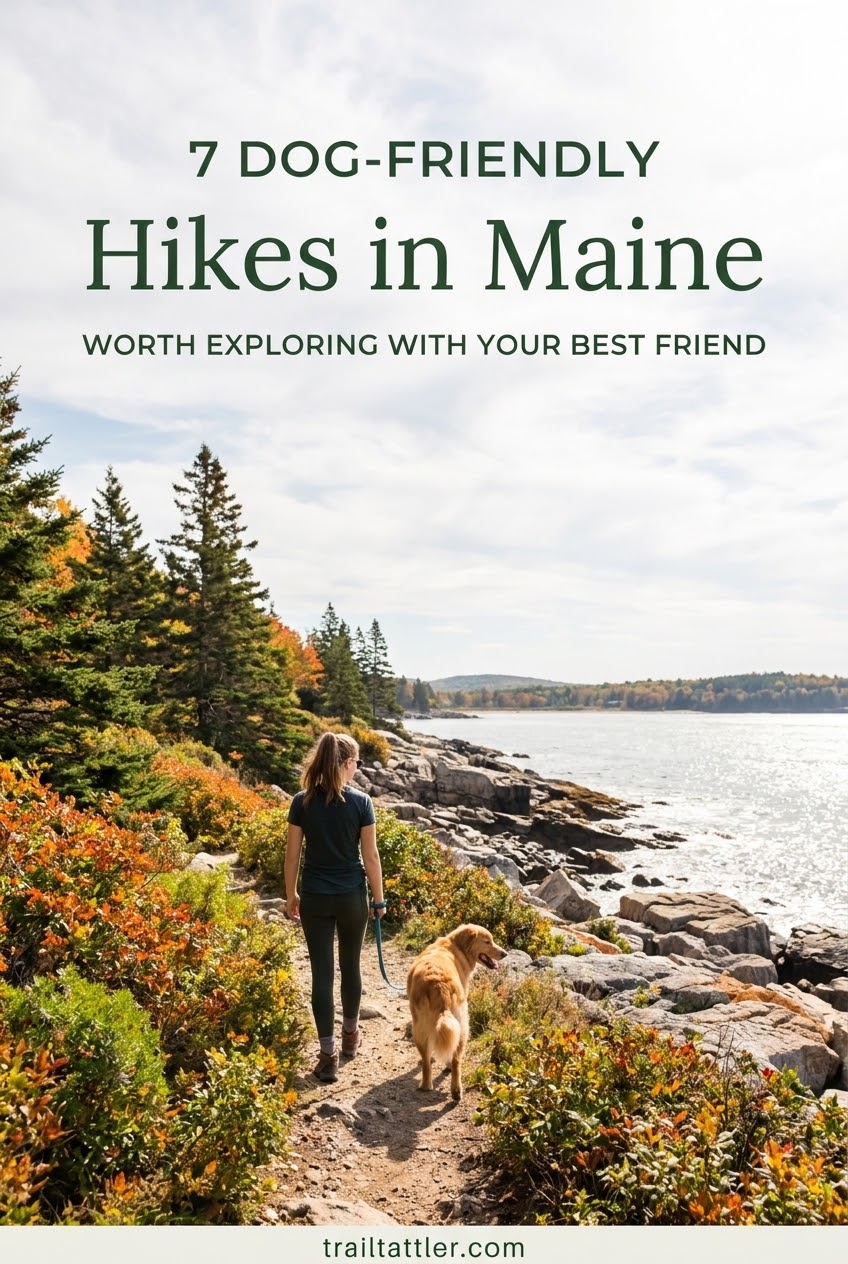
Maine has a particular talent for making a short walk feel like a proper adventure. One minute you're under a canopy of pine, the next you're looking out over Casco Bay or climbing toward a granite summit. If your hiking partner has four legs and an excellent nose, there's plenty here to investigate together.
I've put together seven options that cover forest paths, coastal scenery, summit views, and easy waterfront walking. My planning rule is simple: check the actual dog rules before leaving home, because leash requirements, seasonal restrictions, and trail conditions can change. This guide draws on official park and town information checked on October 19, 2026; it isn't a claim that I've personally hiked every route or verified today's trail conditions on the ground.
At a glance
- For a summit: Bradbury Mountain or Mount Agamenticus.
- For ocean views: Great Head Trail or Mackworth Island.
- For a wooded coastal walk: Wolfe's Neck Woods State Park.
- For an urban outing: Eastern Promenade in Portland.
- For a quieter woodland wander: Rines Forest in Cumberland.
Bradbury Mountain State Park, Pownal, Maine

Bradbury Mountain is a good choice when I want a real summit without committing to a full day on the trail. The park has a network of routes, and the short climb to the top delivers a satisfying change in elevation. The official trail guide lists the Summit Trail at about 0.3 mile one way, with a short, steep ascent. Choose your return route carefully rather than assuming every nearby trail is equally gentle.
The footing varies between packed paths, exposed rock, and steeper sections on some connecting trails. For a simple summit outing, allow roughly 30–60 minutes for the short route, longer if you add a loop or stop to explore. Exact elevation gain depends on the route selected, so check the current map before setting your plan. The park's trail listings and maps are available from the Maine Bureau of Parks and Lands.
Dogs are welcome on the trails when leashed and under control; bring waste bags and pack everything out. Parking and day-use fees may apply, so check current information before arriving. Water availability can be limited on the trail, which means your dog needs a supply of its own. I would turn around if the climb is taking longer than expected, the rock becomes slippery, or either hiking partner is running low on water.
Mount Agamenticus, York, Maine
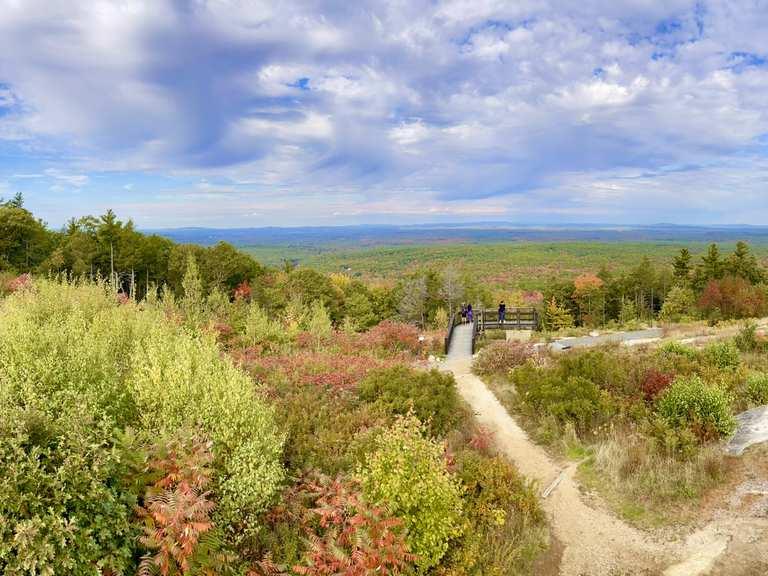
Mount Agamenticus is one of my first picks for a dog-friendly outing in southern Maine because the trail network gives hikers several ways to shape the day. You can aim for the summit, explore connecting paths, or keep the outing short. The views from the top are the reward, but the route you choose matters more than the word moderate on a map.
There isn't one distance or elevation-gain figure that applies to every Mount A hike. Check the official trail descriptions and map for your chosen loop, then estimate time using your dog's pace as well as your own. Rocky and uneven sections may slow you down, particularly after rain. The conservation area is open during daylight hours, and seasonal conditions can affect footing.
Pets are welcome, but the rules require them to remain on a leash. Bring waste bags, drinking water, and a bowl, and keep your dog away from wildlife and fragile vegetation. Parking is available at designated areas, and seasonal restroom facilities may be available near the summit and base. If the weather deteriorates or you're running short on daylight, take the most direct marked route back rather than adding another loop.
Great Head Trail, Acadia National Park, Maine

Great Head is the coastal hike I would put near the top of a Maine itinerary if the goal is salt air, granite ledges, and big Atlantic views. The loop is roughly 1.4 miles, but don't mistake the modest distance for a smooth stroll. Expect rocky footing, uneven surfaces, and sections where you'll want to keep your attention on the trail rather than the scenery.
The National Park Service estimates two to four hours for this hike, depending on pace, stops, and terrain. That is a useful reminder to leave more time than the mileage alone suggests. Dogs are permitted on Great Head Trail on a leash no longer than six feet, subject to park restrictions. The access route is especially important: during the seasonal beach restriction, dogs can only cross Sand Beach under the specific rules in effect. The NPS recommends using a non-beach access to Great Head during summer. Check the current Great Head Trail guidance before setting out.
Carry water for both of you, and don't let your dog scramble across exposed coastal rock to get a better look. Wet granite can be slippery, and the shoreline brings changing tides, cold water, and strong waves. Acadia also charges an entrance fee year-round. I would turn back if wind, rain, or slick footing makes the exposed sections uncomfortable. Keep your dog on the marked trail and give the cliffs a wide margin.
Mackworth Island Trail, Falmouth, Maine
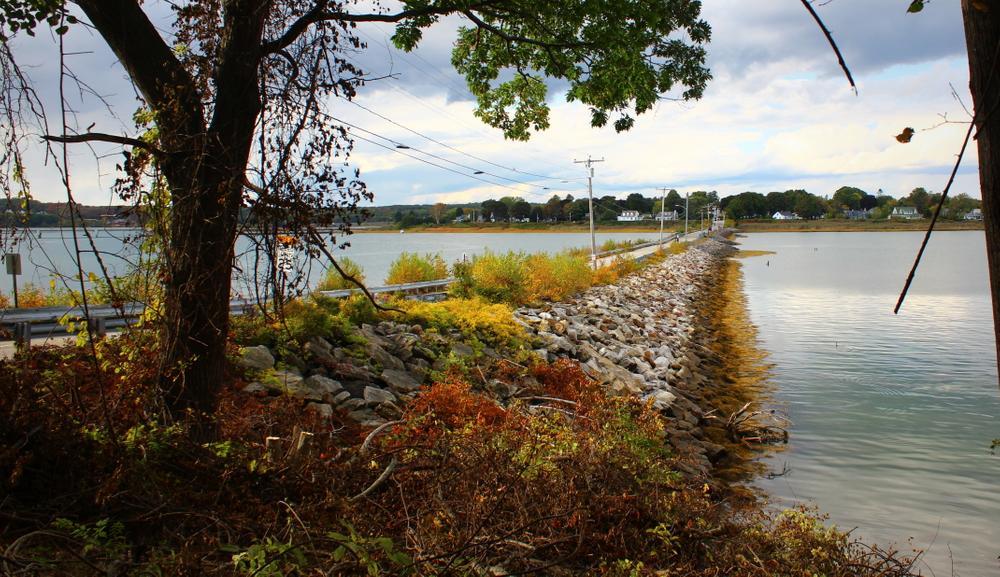
Mackworth Island is a lovely option when I want a coastal walk without a major climb. The island's perimeter path combines woodland, rocky shoreline, and views across Casco Bay. The loop is commonly described as roughly 1.25 miles, making it a practical outing for hikers who prefer a shorter day. Expect natural trail surfaces and occasional roots and rocks rather than a uniformly smooth path.
Allow around 45–75 minutes for a relaxed circuit, with extra time for shoreline stops. The trail's proximity to the water makes it scenic, but it doesn't mean every section is suitable for a dog to roam freely. Keep your companion close near the edge, especially when the rocks are wet. Before visiting, consult the Maine Bureau of Parks and Lands for current access information and any posted advisories.
State park pet rules require dogs to be leashed and under physical control, with waste picked up immediately. A day-use fee may apply. Parking is limited compared with larger recreation areas, so arriving earlier can make the visit easier. Bring water even for this short loop; don't assume the island will provide a refill point. If your dog is uncomfortable with narrow shoreline sections or crowded paths, turn around and return along the safest available route.
Wolfe’s Neck Woods State Park, Freeport, Maine
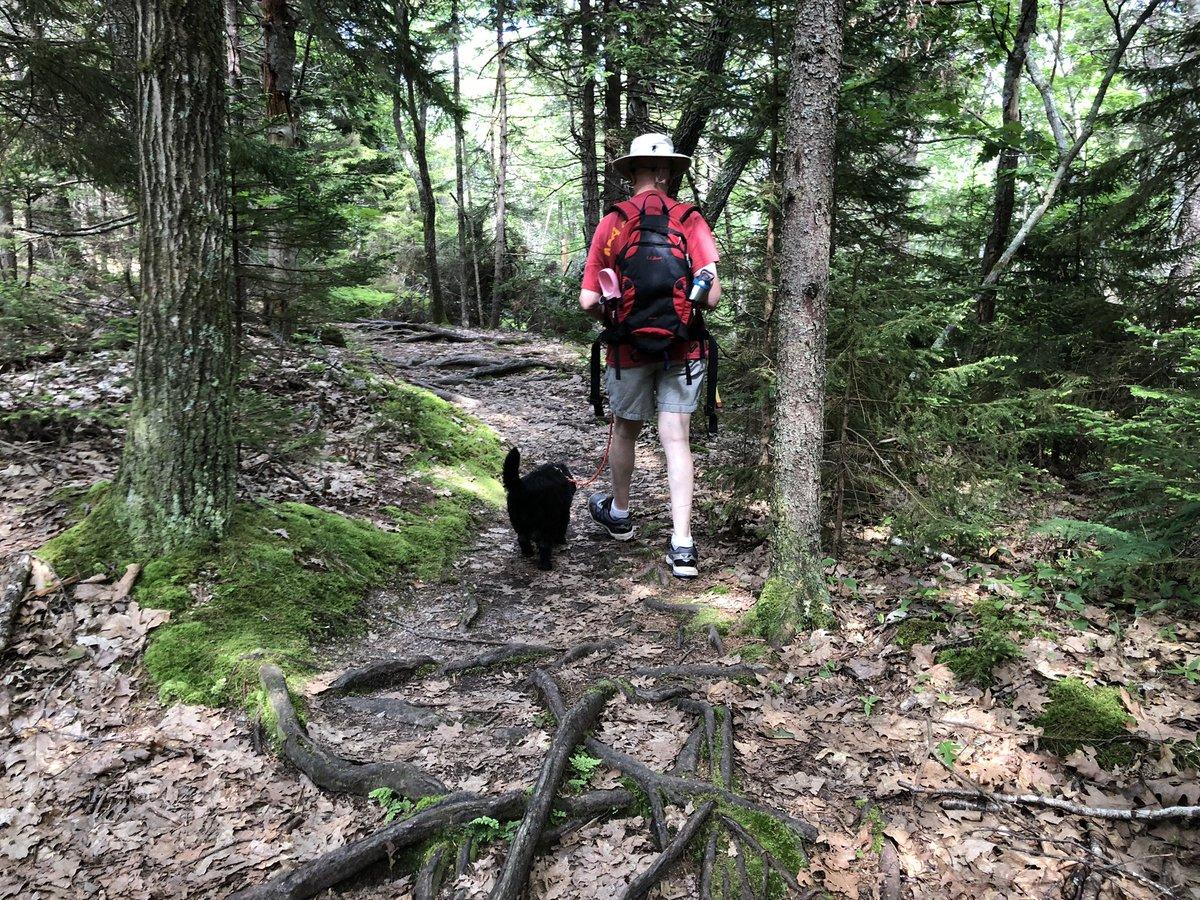
Wolfe's Neck Woods State Park is the kind of place I would choose for a slower walk: forest shade, rocky shore, and the chance to notice more than just the next climb. Rather than one demanding summit route, the park offers a network of relatively short trails. The interconnected paths let you tailor the outing to your dog's energy and the time you have available.
Because individual trail combinations vary, check the park map before deciding on a distance or estimating elevation gain. For a short wander, plan roughly 45–90 minutes, adding time if you want to explore several paths. Some areas near the shore can be rocky or slippery, and the park asks visitors to use trails and stairs to protect the surrounding vegetation. Official information is available through the park website and the park brochure.
Dogs are allowed when leashed, attended, and under control. Pick up waste promptly and keep clear of sensitive wildlife areas, including the osprey sanctuary at Googins Island. A day-use fee applies, and park facilities are seasonal, so don't count on every service being available outside the main visitor season. I would keep this hike easy and unhurried, with a turnaround if the shoreline is slick or the dog starts tiring on uneven ground.
Eastern Promenade Trail, Portland, Maine
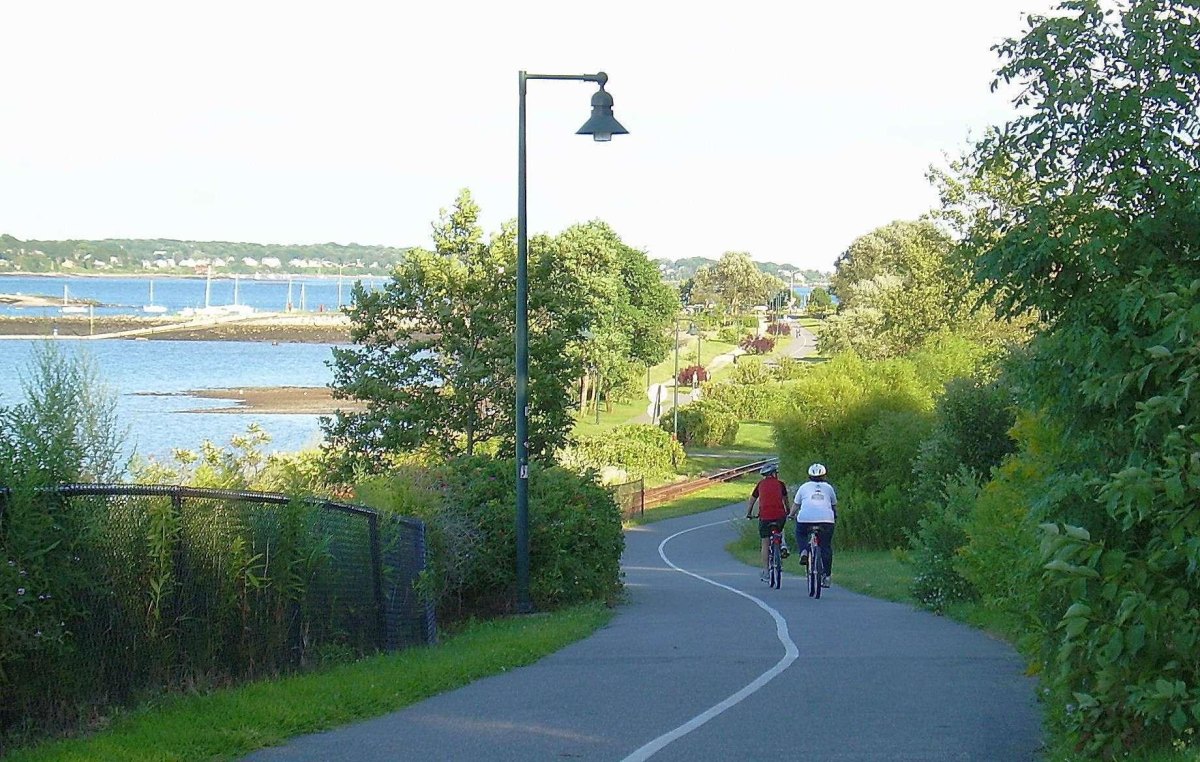
Not every dog-friendly hike needs tree roots, elevation gain, or mud on the car floor. Portland's Eastern Promenade is my choice for an easier outing with harbor views and a gentler walking surface. The park has paths along a hillside above Casco Bay, grassy areas, and access to the waterfront. It works well for a relaxed walk, a travel-day leg stretch, or a dog that prefers a steady pace over a rocky climb.
This is an urban park route rather than a wilderness hike, so elevation gain is limited and the walk can be shortened or extended to suit your plans. Allow around 30–60 minutes for a casual outing, depending on how far you follow the paths and how often you stop. Expect other walkers, cyclists, and dogs, especially during pleasant weather. For local details, see the Friends of the Eastern Promenade dog rules.
Dogs must remain under voice control, and off-leash access is limited to designated areas and hours. During summer, off-leash hours are before 9 a.m. and after 5 p.m.; during the winter schedule, designated areas allow off-leash activity during park hours. Keep a leash in hand, stay within the permitted distance, and follow all signs. Pick up every bit of dog waste; Portland's rules impose substantial penalties for leaving it behind. The waterfront can be windy, so bring water and an extra layer for yourself if you're staying near the shore.
Rines Forest Trail, Cumberland, Maine
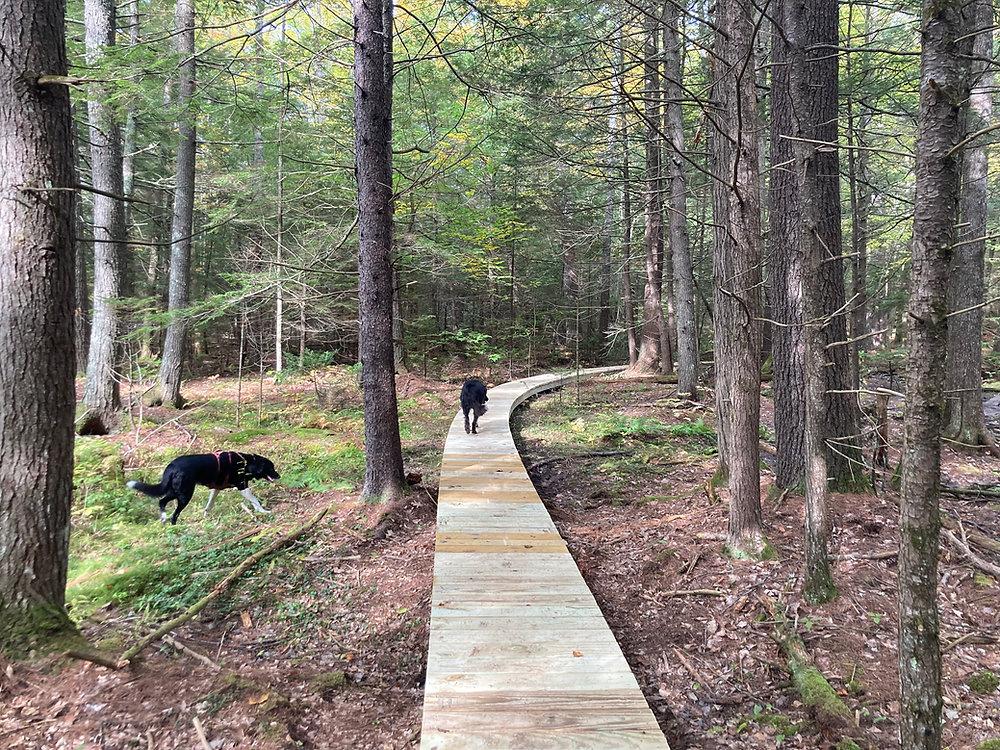
Rines Forest is the option I would keep in mind when the coast is busy and a wooded walk sounds better than a summit. This 268-acre conservation area has a network of trails, wildlife habitat, and cascading streams, including Mill Stream. The landscape feels more secluded than its proximity to Greater Portland might suggest, but it is still a working natural area with changing conditions and multiple permitted activities.
There is no single distance or elevation figure for the entire network, so choose a mapped loop and calculate your expected time before setting out. As a starting point, allow 45–90 minutes for a shorter woodland walk, then adjust for trail length, mud, and streamside stops. The town notes that parking is along Range Road. Trail surfaces can vary, and after rain the ground near streams may be wet or slippery. Find current access and management information on the Town of Cumberland's Rines Forest page.
Dogs are allowed under owner or keeper control; the town's general dog rules apply, so keep your dog responsive and follow any posted restrictions. Hunting is permitted in the forest, which makes checking the season and wearing visible clothing a sensible precaution. Keep your dog close, never let it chase wildlife, and carry water rather than relying on the streams as drinking water. Turn back if stream crossings look unsafe, the trail is more flooded than expected, or you are running short on daylight.
Before you head into the woods
Tell someone which trail or loop you plan to walk and when you expect to return. Carry a map, a charged phone, a small first-aid kit, a headlamp, extra water, and weather-appropriate layers. Cell service can be unreliable, and a short hike can take longer than planned.
More Pinterest Visuals








 Backpacking Gear & Packing12 Wandern Für Anfänger Packliste – Alles Für Einen
 Family HikingHiking With Kids Checklist for a Safer, Happier Trail Day
 Hiking Destinations17 Best Autumn Hiking Trails In Canada For Fall Color Season
 Backpacking Gear & PackingHiking Emergency Gear Checklist for Safer Days on the Trail