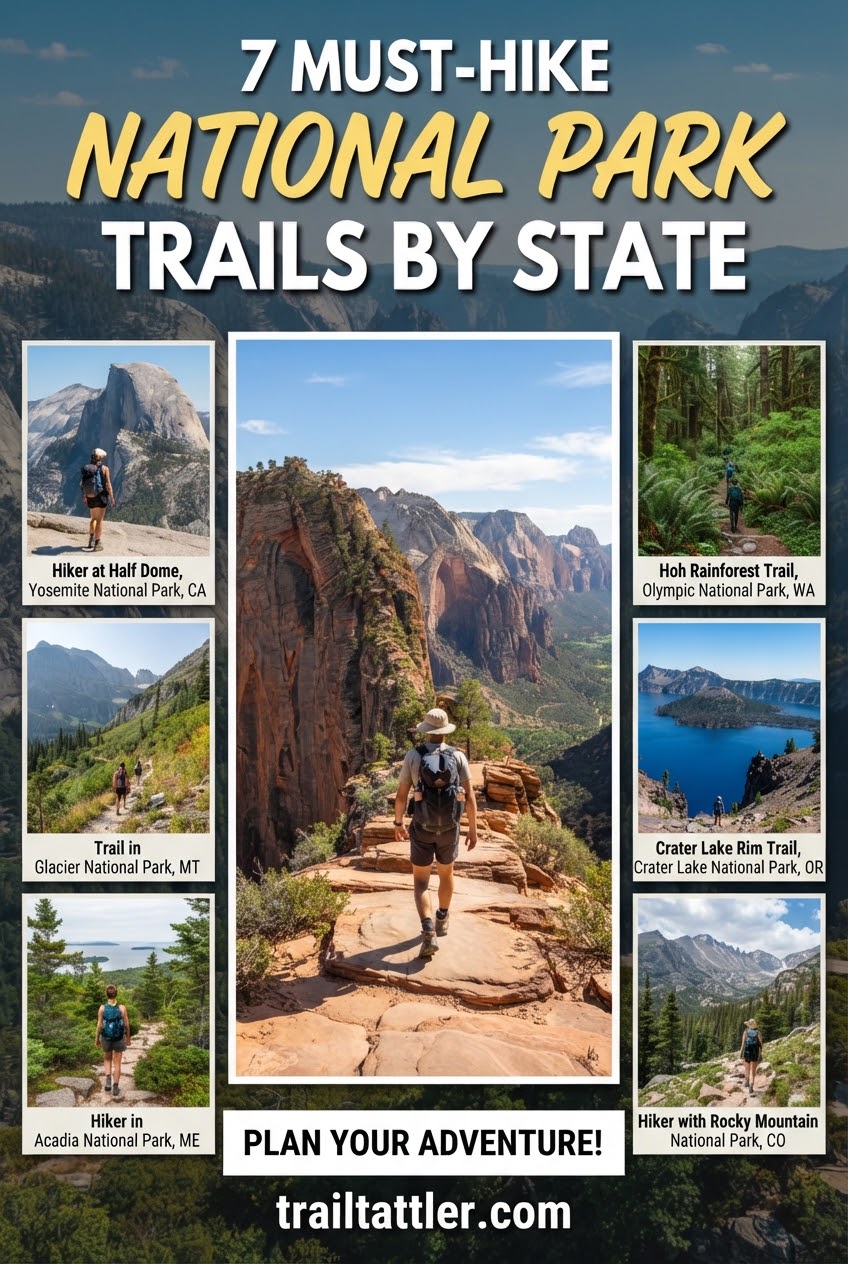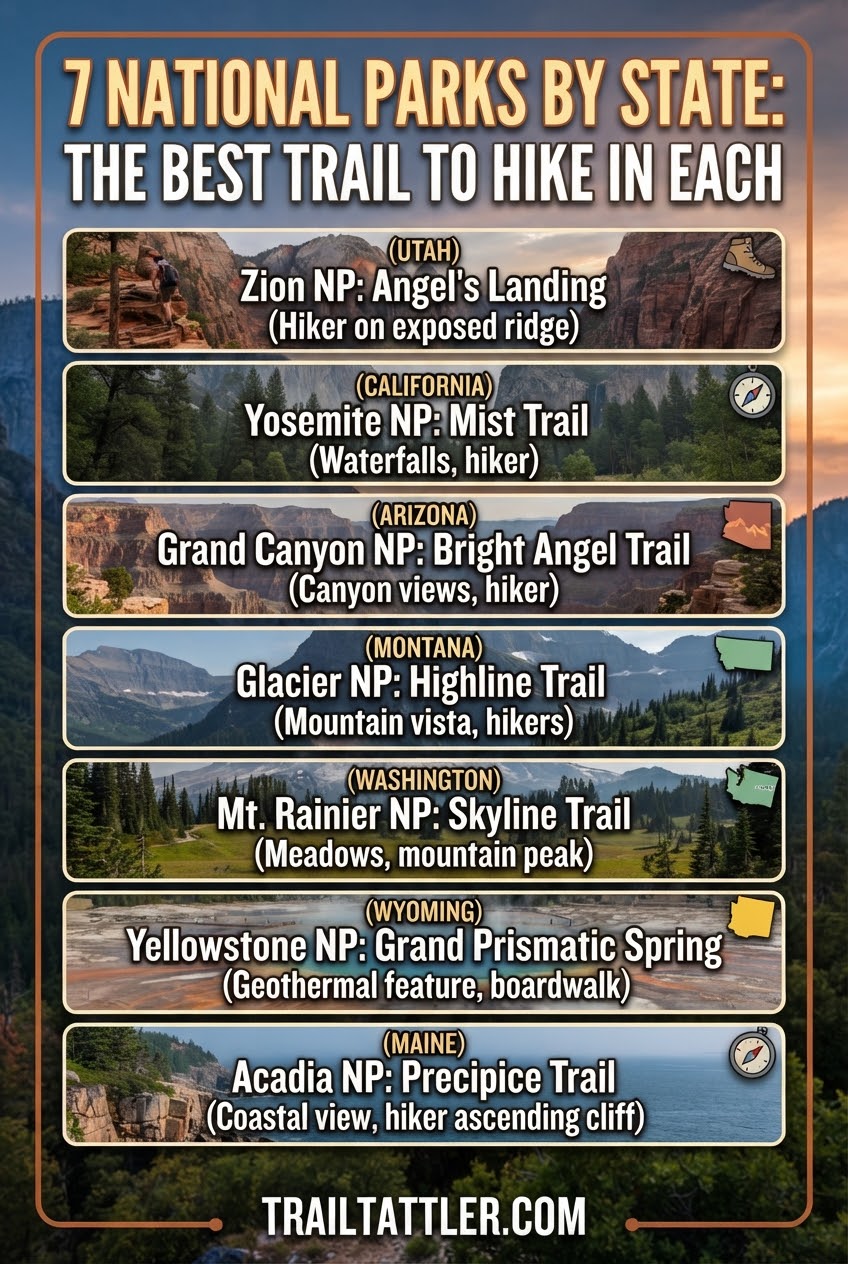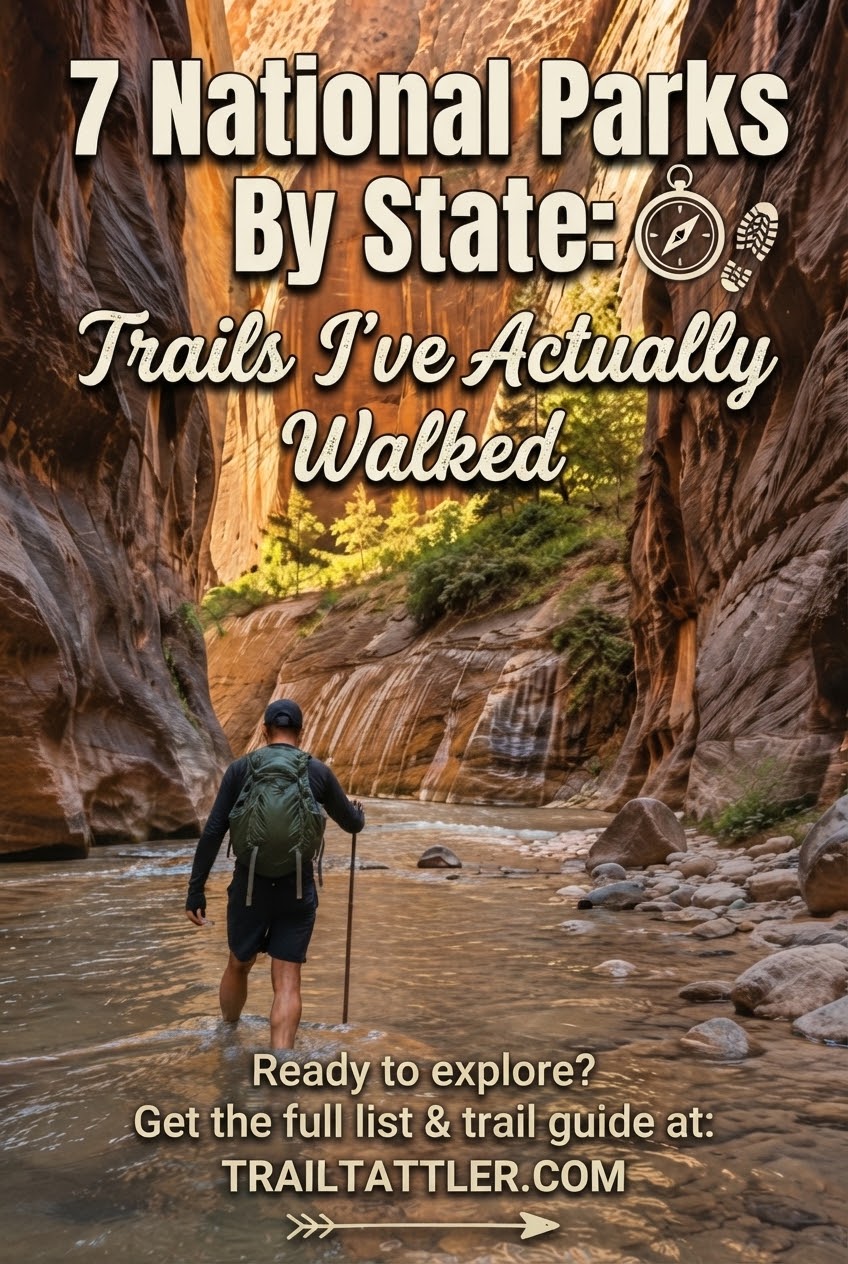
I get asked for a national parks by state list more than almost anything else, usually from someone planning a road trip and trying to figure out which park is worth the detour. So instead of a spreadsheet, here are seven parks I've personally hiked in seven different states, each anchored to one trail I'd actually recommend, with the numbers that matter and the parts the brochure leaves out.
Arizona: Grand Canyon National Park
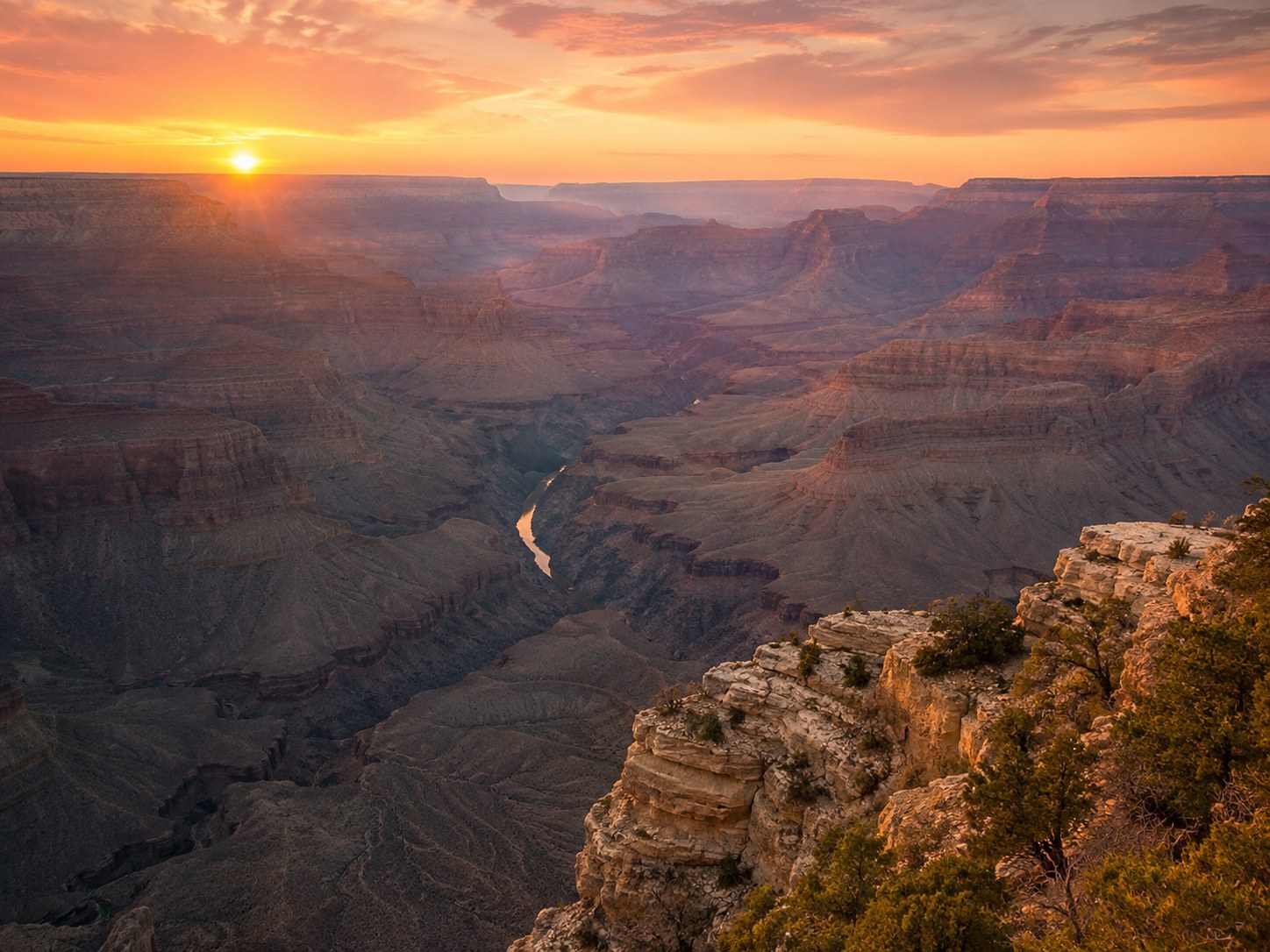
The Grand Canyon's South Rim is one of the few places in the country where the 'easy' trail is also the main event. The paved Rim Trail runs roughly 13 miles one way along the edge, mostly flat, and you can walk any short section of it in street shoes to a viewpoint like Yaki or Mather at sunrise and get exactly what's in the photo — no gain, no exposure, real crowds.
The trap is what's below the rim. Bright Angel and South Kaibab drop over 4,000 feet to the river, and I've stood at the trailhead in October watching people head down at 11 a.m. with one water bottle for a hike that eats an entire day and most of your knees on the way back up. My rule, borrowed straight from search and rescue: turn around when you've used half your water or half your daylight, whichever comes first, no negotiating.
- Elevation: rim sits around 7,000 feet — you'll feel it faster than you expect
- Dogs: allowed on leash on the Rim Trail only, not below the rim, not on shuttle buses
- Water: fill up at the rim; there's none for miles once you're inside the canyon in summer
California: Yosemite National Park
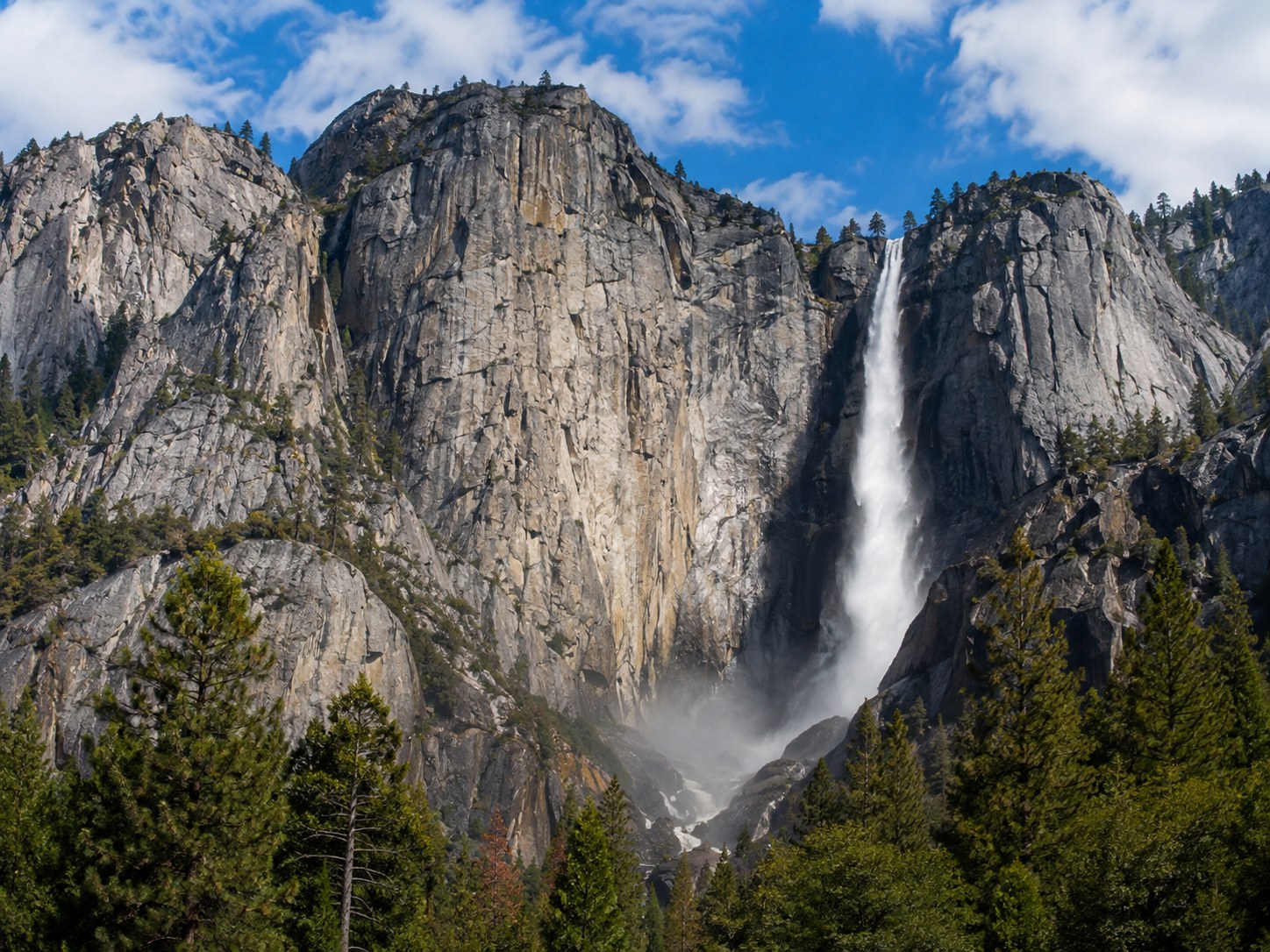
Upper Yosemite Fall, at roughly 2,425 feet, is one of North America's tallest waterfalls, and the trail that earns you the top view is honest about the cost: about 7.2 miles round trip with close to 2,700 feet of gain, almost entirely on exposed granite switchbacks with zero shade for long stretches. Gain per mile there is over 700 feet, which in my numbers is a genuinely strenuous day, not a scenic stroll.
If that's not the trip you signed up for, the Lower Yosemite Fall Loop is under a mile, paved, flat, and gets you close enough to feel the spray on a good flow day. Both trails are looking at the same waterfall from different distances, which is the point — pick the version that matches your day, not your ego.
The flow is seasonal — by August, Upper Yosemite Fall can be a trickle or dry entirely, so if the waterfall itself is the reason you're going, aim for April through June.
Dogs aren't allowed on either trail; Yosemite's trail-dog policy is among the strictest of the bunch on this list.
Wyoming: Yellowstone National Park
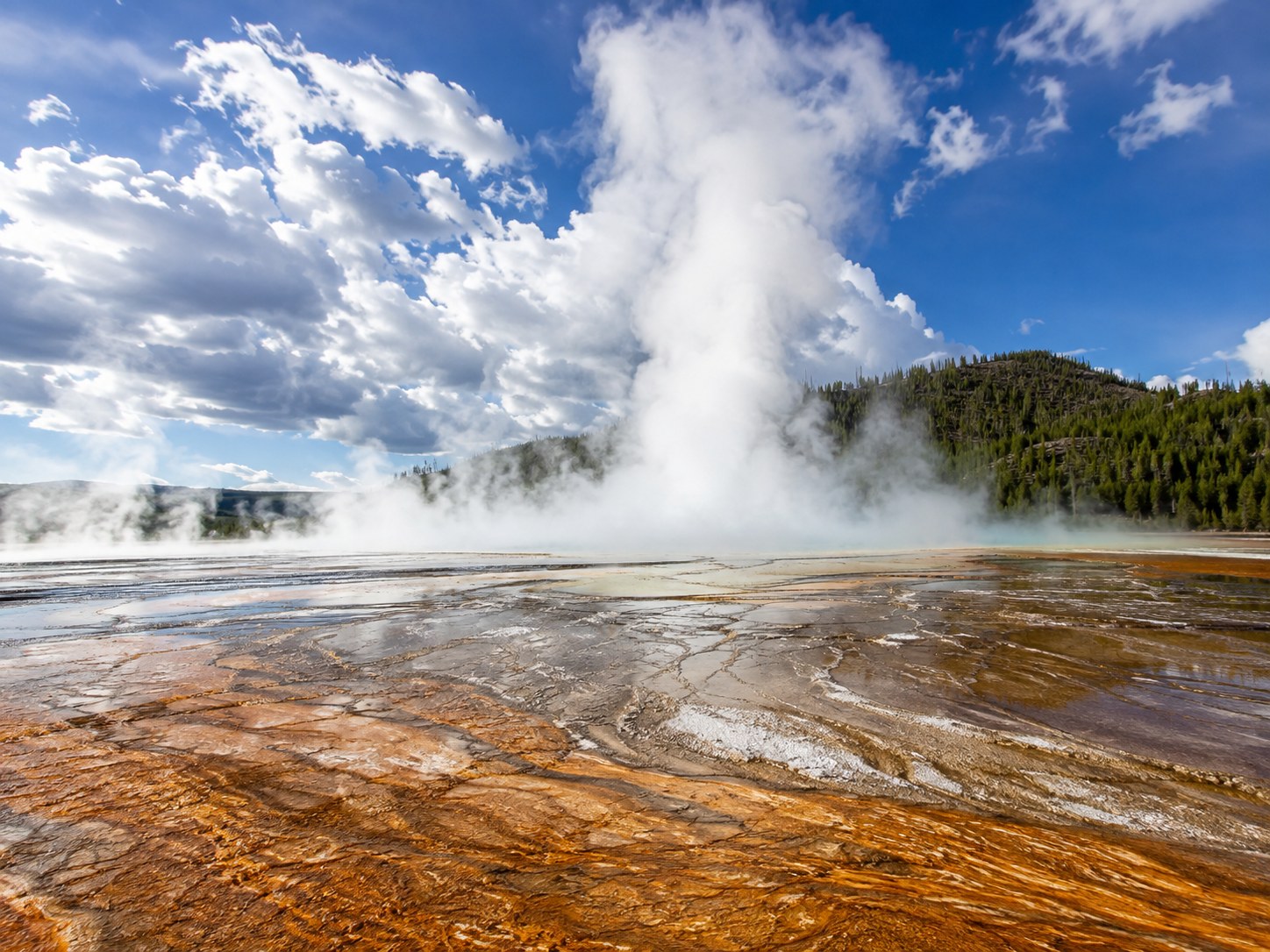
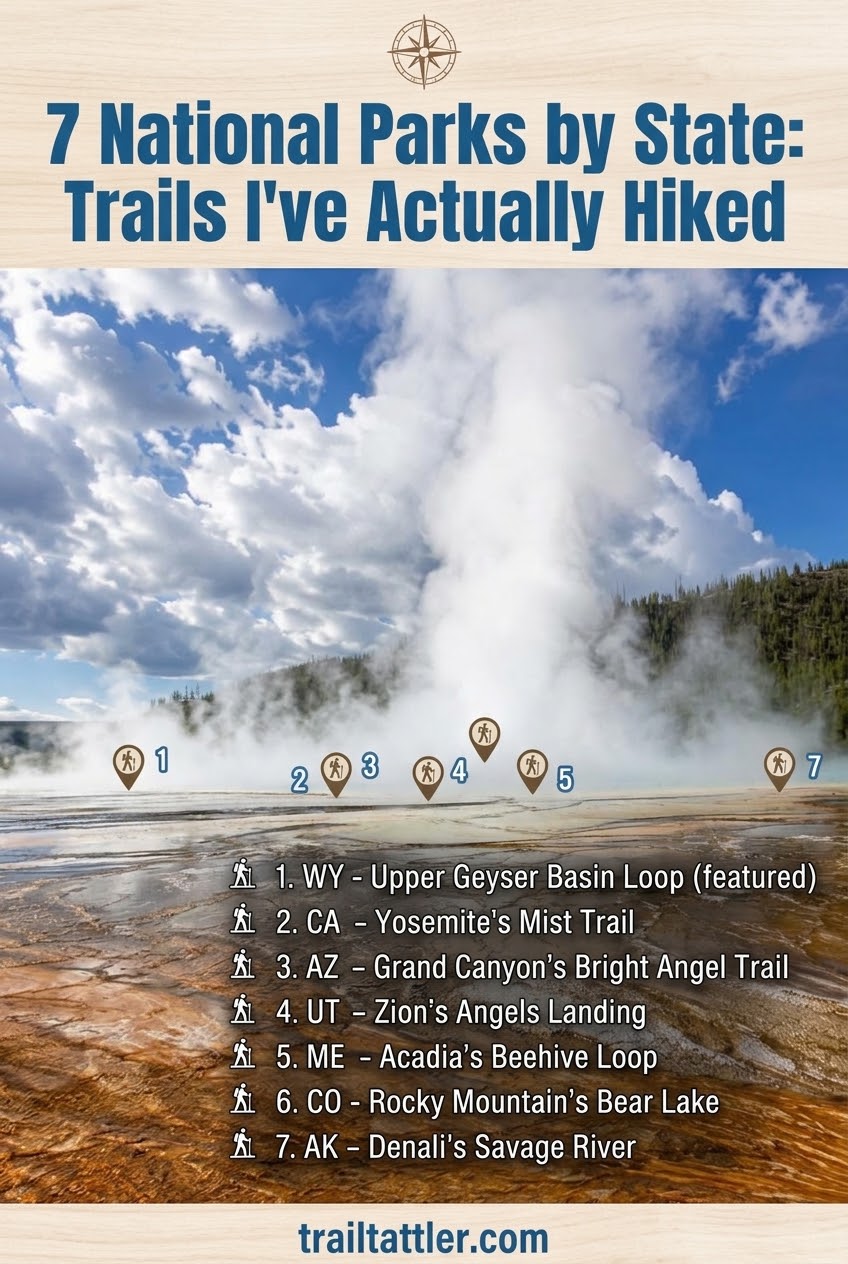
Grand Prismatic Spring, in the Midway Geyser Basin, is the photo everyone wants, and getting it means two very different trails. The basin boardwalk itself is under a mile, flat, and takes you right past the steaming edge of the spring at ground level — easy, family-friendly, and genuinely dangerous if you step off it, because the crust around these features is thin and the water underneath is scalding.
For the classic overhead view, the unmarked Grand Prismatic Overlook Trail off the Fairy Falls parking area adds about a mile and 100+ feet of climbing to a short ridge — nothing technical, but it's the only way to get above the steam.
- Stay on boardwalks and marked trails — thermal ground breaks unpredictably
- Bears: Yellowstone is grizzly country; food storage rules apply at every trailhead and campsite
- Timing: midday sun burns off the steam for photos; morning gives you more atmosphere
No dogs on any boardwalk or thermal trail, full stop.
Utah: Zion National Park
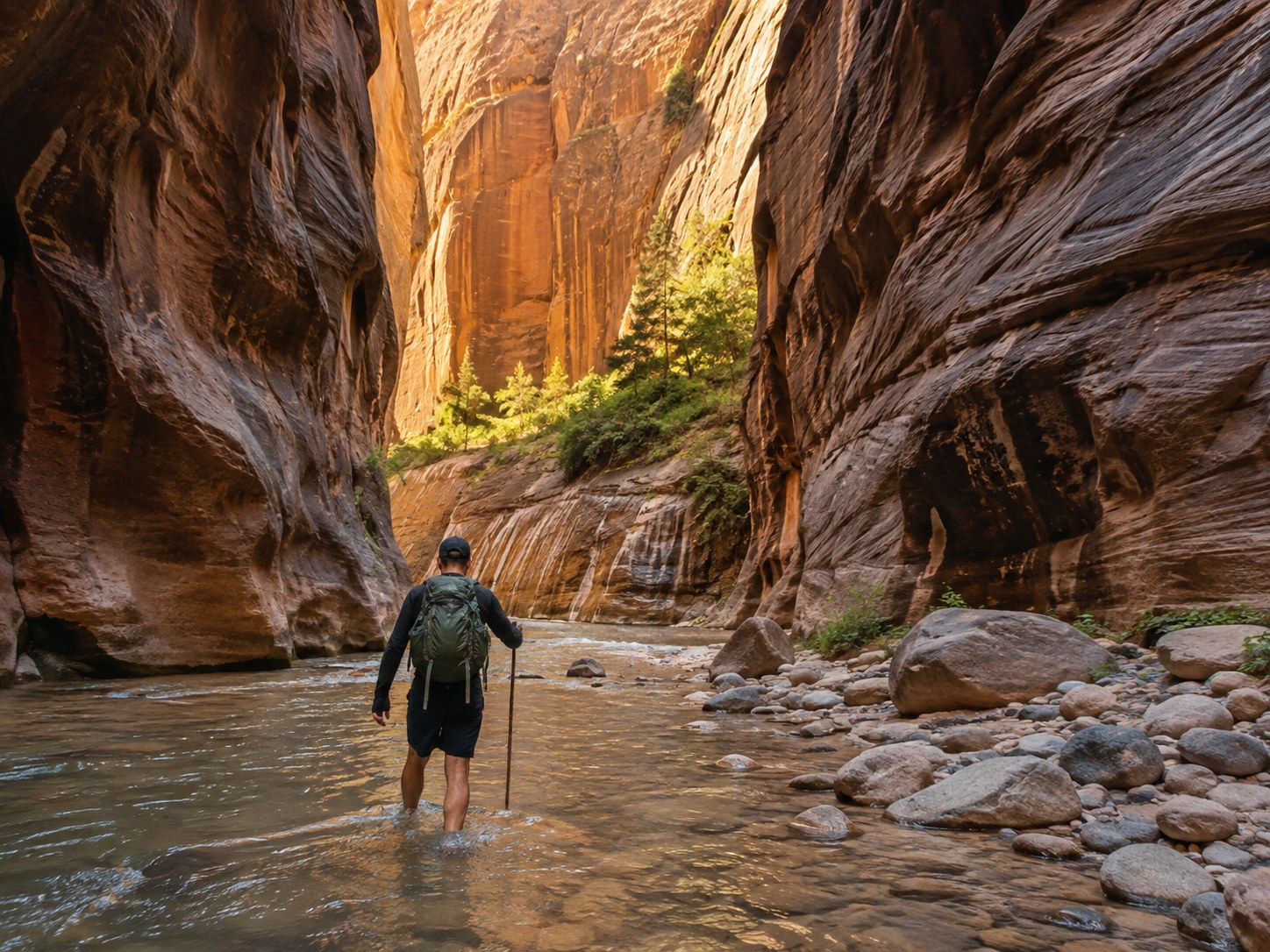
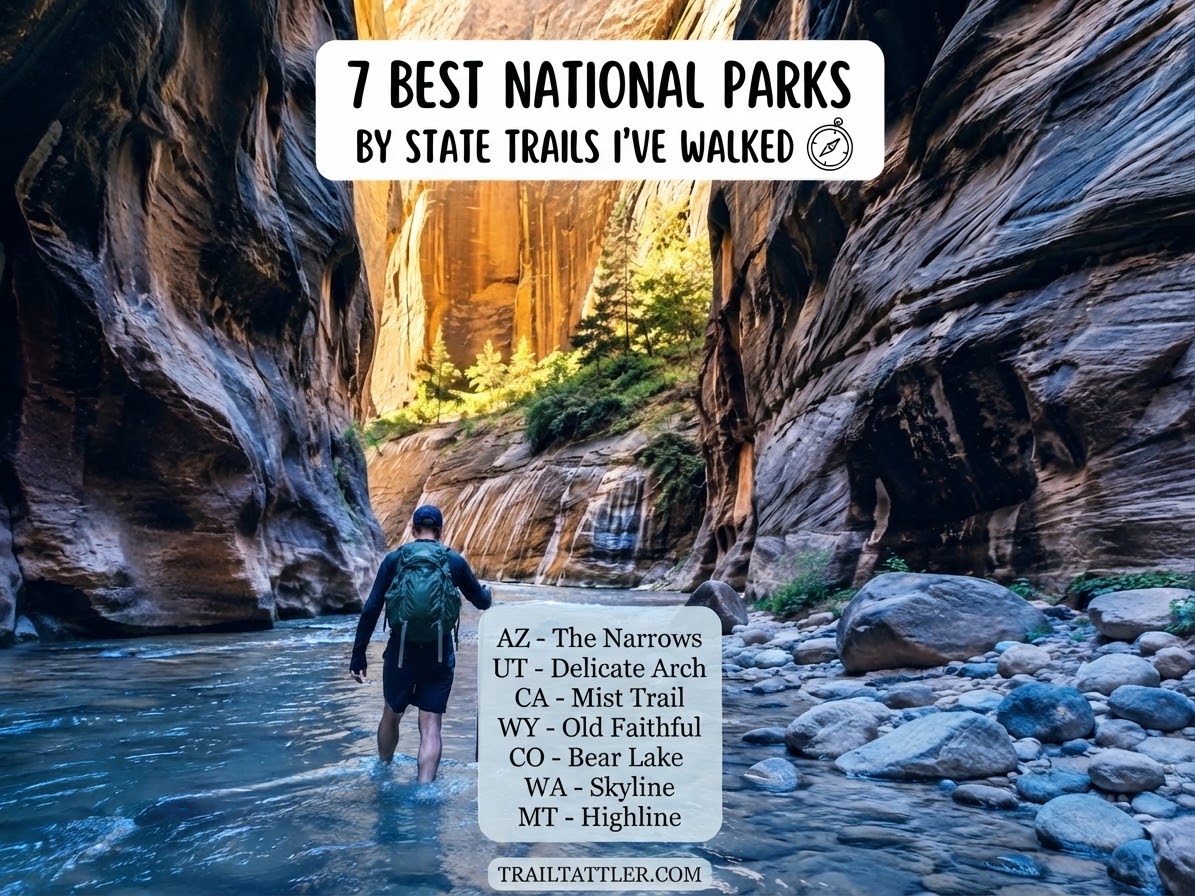
The Narrows is the trail that made me buy neoprene socks, and I don't regret it. You're wading up the Virgin River between thousand-foot sandstone walls, and the numbers here don't work like a normal trail — elevation gain is minimal, but you're fighting current, slick cobbles, and water that's frequently mid-thigh. The bottom-up hike to Big Spring and back is about 9-10 miles round trip and takes most people 6-8 hours.
This is a flash-flood corridor. Check the forecast and the flow rate at the visitor center the morning you go — a storm miles upstream can turn this canyon dangerous fast, and there's often no cell signal to warn you once you're in it. A wooden walking stick from the outfitters in Springdale is worth every dollar; it's the single piece of gear I'd never do this trail without.
- Permit: only required for the full top-down traverse, not the bottom-up day hike
- Footwear: canyoneering shoes or sturdy boots you don't mind getting soaked
Dogs aren't permitted anywhere in the Narrows or on nearly any Zion trail.
Maine: Acadia National Park
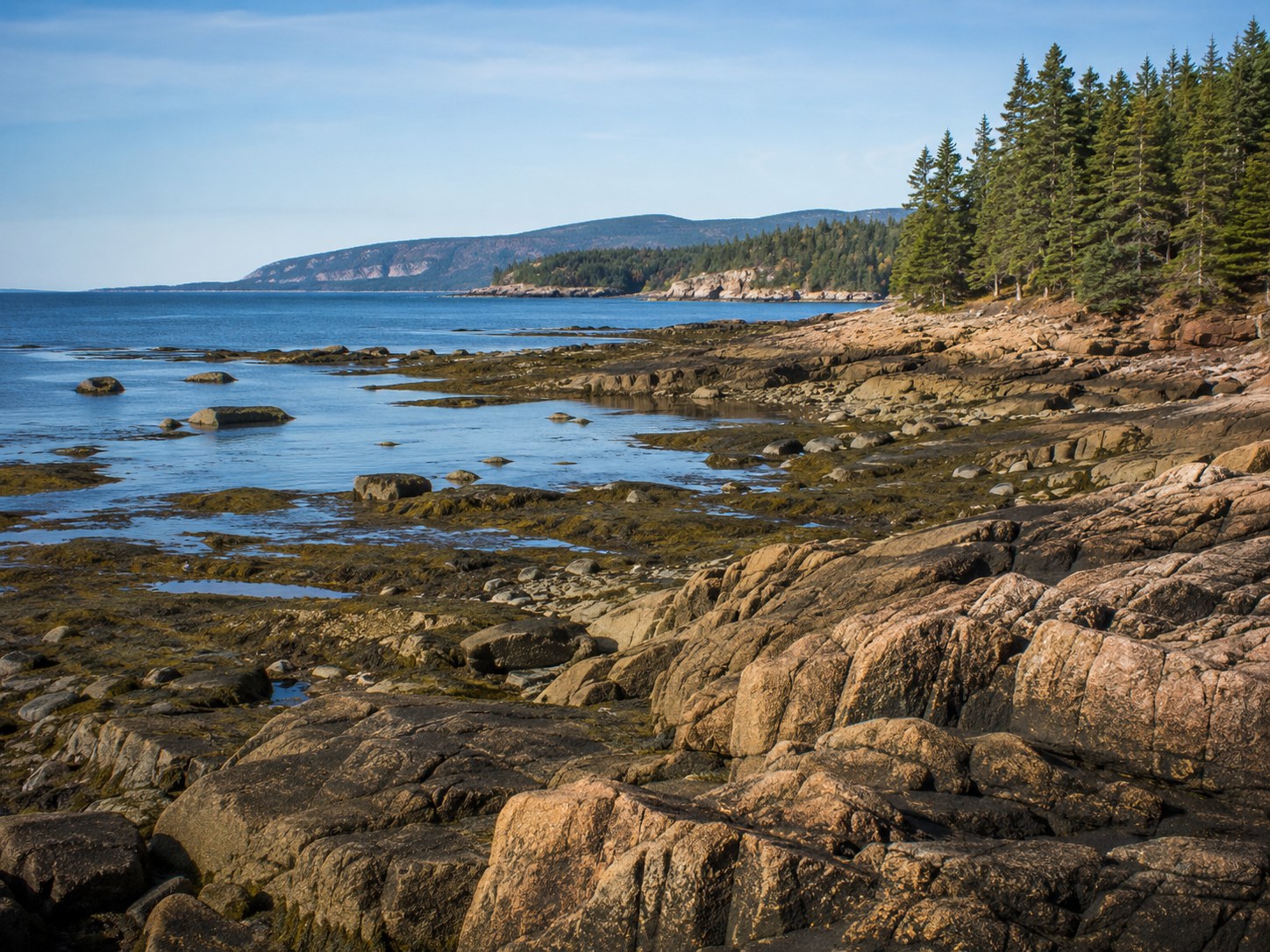
The Ocean Path, running about 4.4 miles round trip between Sand Beach and Otter Point, is the rare coastal trail that's flat, mostly gravel, and delivers granite ledges, tide pools, and open Atlantic views the entire way — genuinely easy, stroller-viable in dry sections, and one of the few times on this list I'll use that word without a caveat.
Acadia is also one of the better parks for dog owners: leashed dogs are welcome on most trails, including the Ocean Path, which matters because I've had to tell readers 'no' about their dog at five of the other six parks on this list.
- Tides matter — check the schedule before you climb down to the rocks; incoming tide cuts off routes fast
- Nearby contrast: the Precipice Trail uses iron rungs and ladders bolted into cliff face — a completely different commitment a mile away
If you only have an afternoon in Acadia, this is the trail I'd send you to first.
Tennessee/North Carolina: Great Smoky Mountains National Park
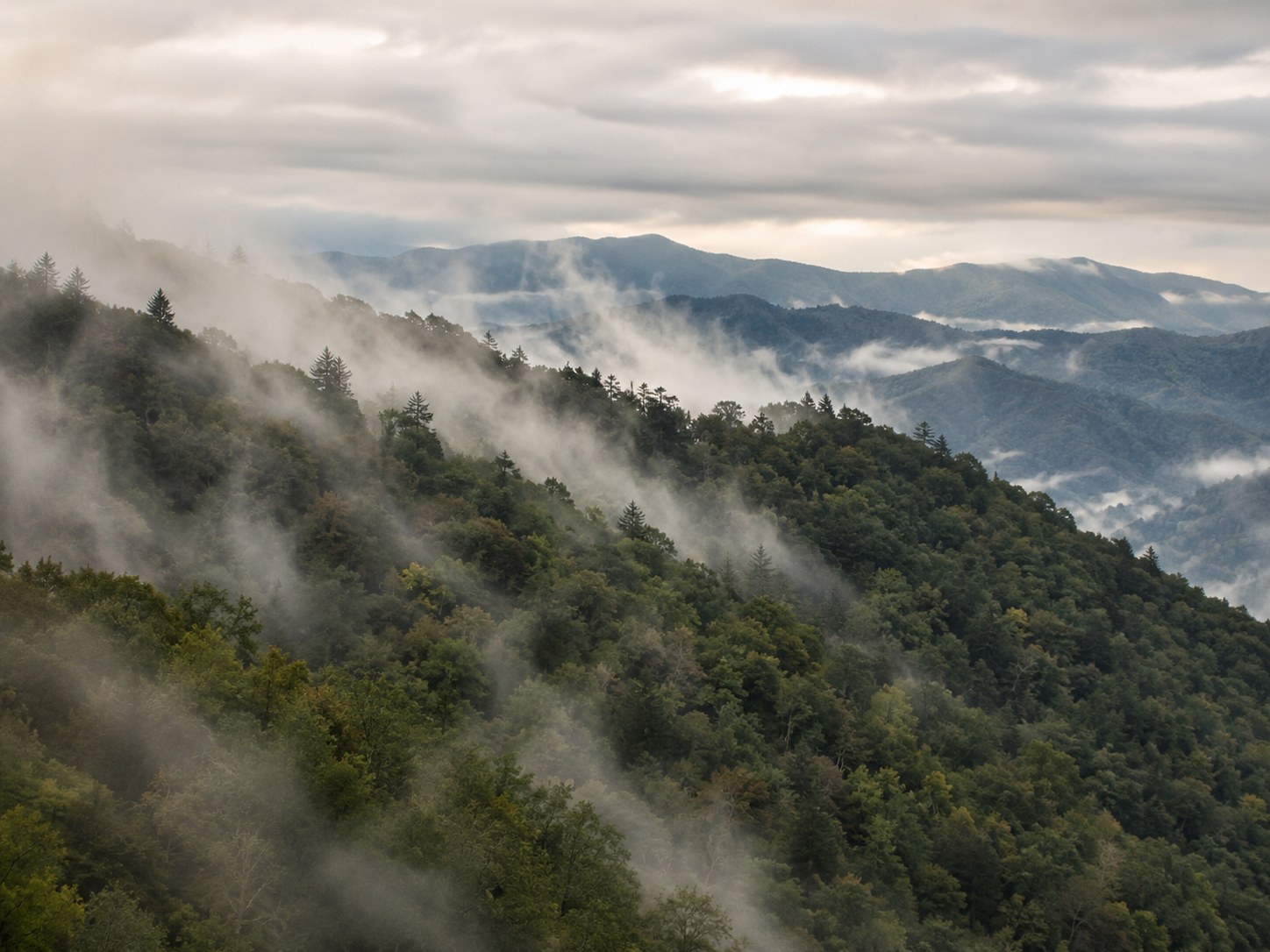
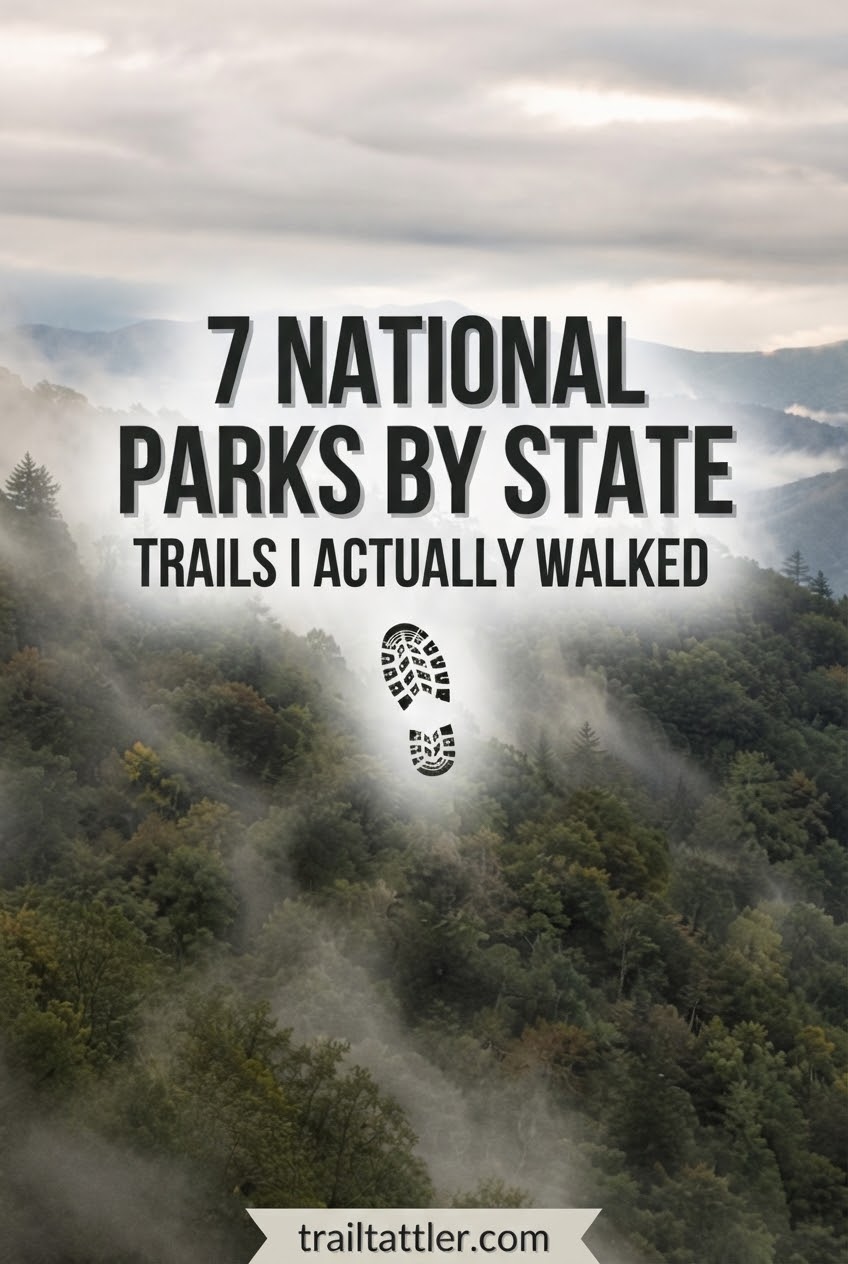
I live two hours from the Smokies, so I've walked the ridge near Clingmans Dome and Newfound Gap in every season, and the fog in these photos isn't weather luck — it's how the park behaves most mornings, especially in fall when warm valley air meets cold ridge air. The Appalachian Trail segment between the two is about 8 miles one way with roughly 1,600 feet of gain, all above 5,000 feet, which means it's cold and wet even when the trailhead felt warm.
This is the most-visited national park in the country, and its dog policy surprises people every time: dogs aren't allowed on any trail in the Smokies except two short paved paths near the park boundary. I say this plainly because I've watched people find out at the trailhead after a long drive.
- Black bears are active and food-conditioned in high-traffic areas — never leave food unattended
- Fall foliage timing: color starts near the ridgelines in early October, drops to the valleys by early November
Florida: Everglades National Park
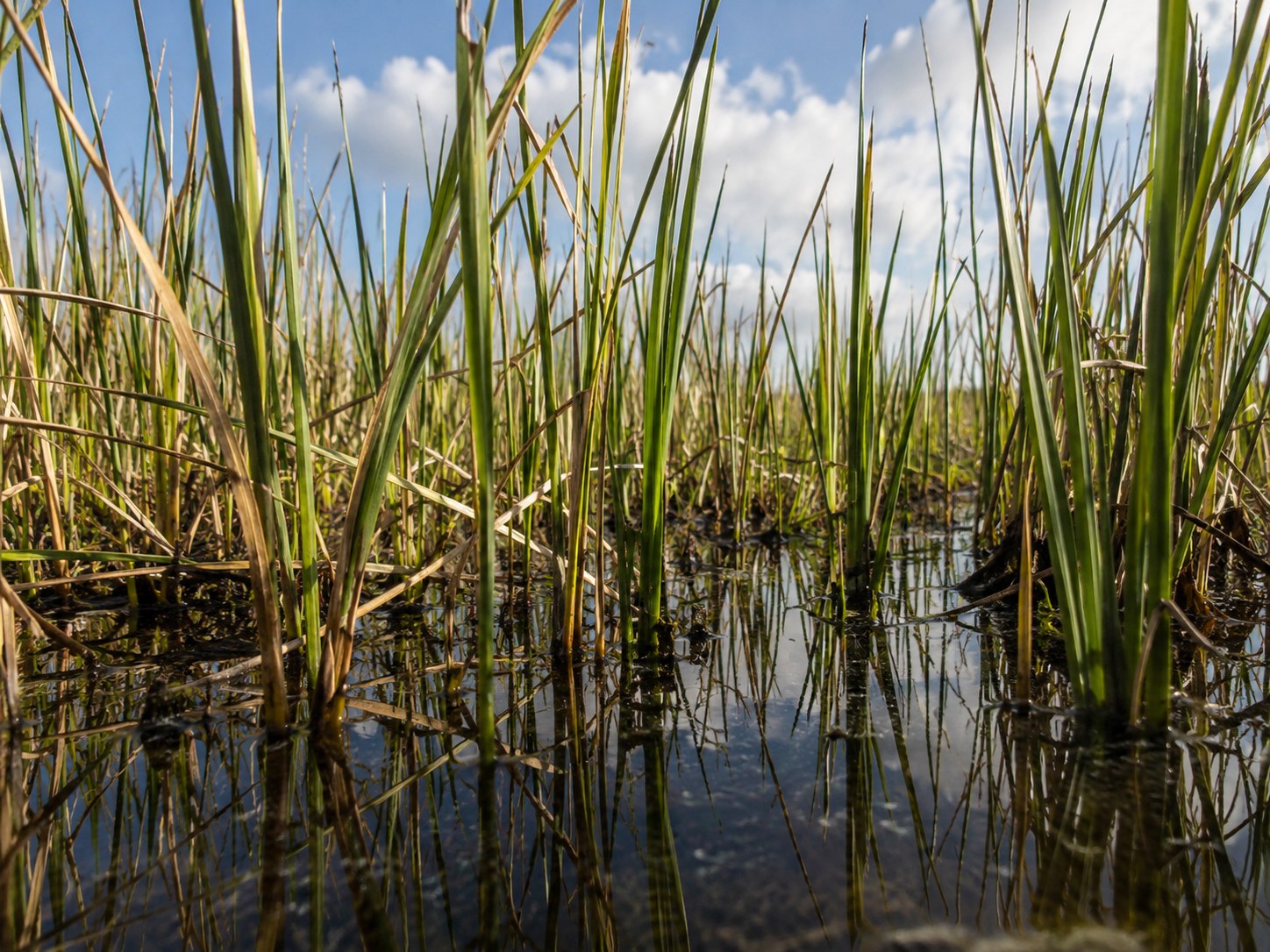
The Anhinga Trail and the sawgrass marsh boardwalks nearby are about as flat and easy as trails get — a half-mile loop, no gain worth mentioning, and alligators close enough that the trail's real hazard isn't the terrain, it's people getting too close for a photo.
Keep at least 15 feet from any alligator, never feed wildlife here or anywhere, and expect the marsh to look completely different by season: wet season (June-November) floods it and disperses wildlife, dry season concentrates animals around remaining water and is the better time to actually see something.
- Heat and mosquitoes are the real Everglades hazard — long sleeves and repellent aren't optional in summer
- Water: carry your own; humidity here drains you faster than the flat trail suggests
- Dogs: not permitted on nearly any Everglades trail, with rare exceptions at developed areas
It's the least strenuous park on this list and, for exactly that reason, one of the easiest to underestimate.
A national parks by state list is only useful if it tells you what you're actually signing up for once you get there, and these seven trails are the ones I'd point a friend toward first. Check current alerts and permits before you go — conditions on every one of these changes by season, and none of this replaces what the park service posts the week of your trip.


Your Questions, Answered
Which of these seven trails is truly beginner-friendly?
The Ocean Path in Acadia and the Anhinga Trail in the Everglades are both flat, short, and low-hazard by comparison — good starting points if you're new to national park hiking.
Can I bring my dog to any of these parks?
Acadia is the exception on this list — leashed dogs are welcome on most trails. The other six restrict dogs to roads, campgrounds, or a small handful of paved paths, if that.
How should I actually choose which park to visit from a state list like this?
Pick based on the trail experience you want, not just the state's name recognition — check current trail conditions and any permit or timed-entry requirements on the park's official site before you commit, since these change year to year.