
I spent eight years fitting packs onto strangers' backs before I ever wrote a word about trails, and the mistake I watched most often wasn't a bad pack — it was the wrong pack for the hike someone was actually doing. A day pack doesn't need to survive a week in the Smokies; it needs to carry water, a shell and your Ten Essentials without turning a six-mile loop into a chore. Here's the sequence I actually use, in the order I use it.
Choose the Right Size First
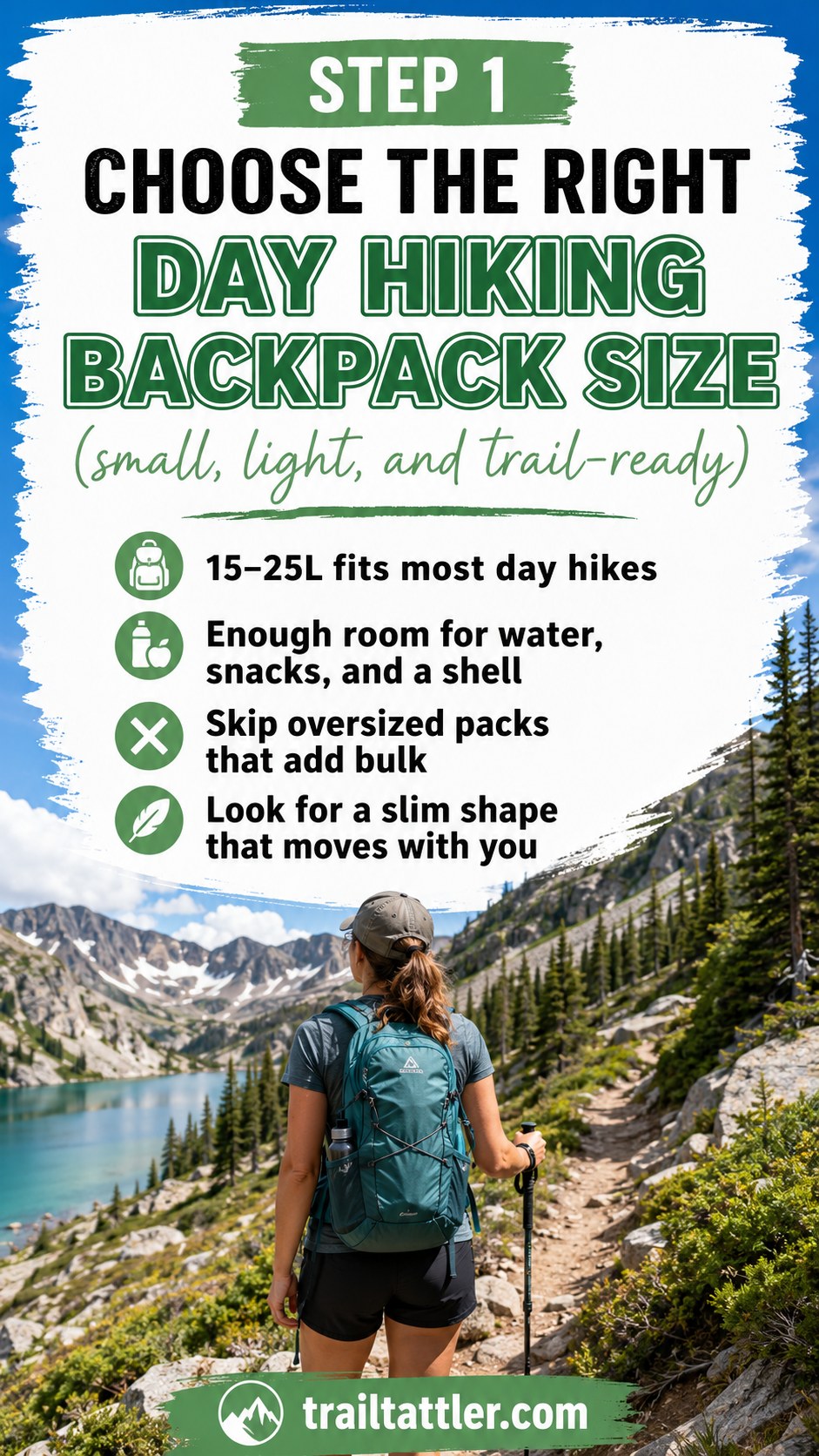
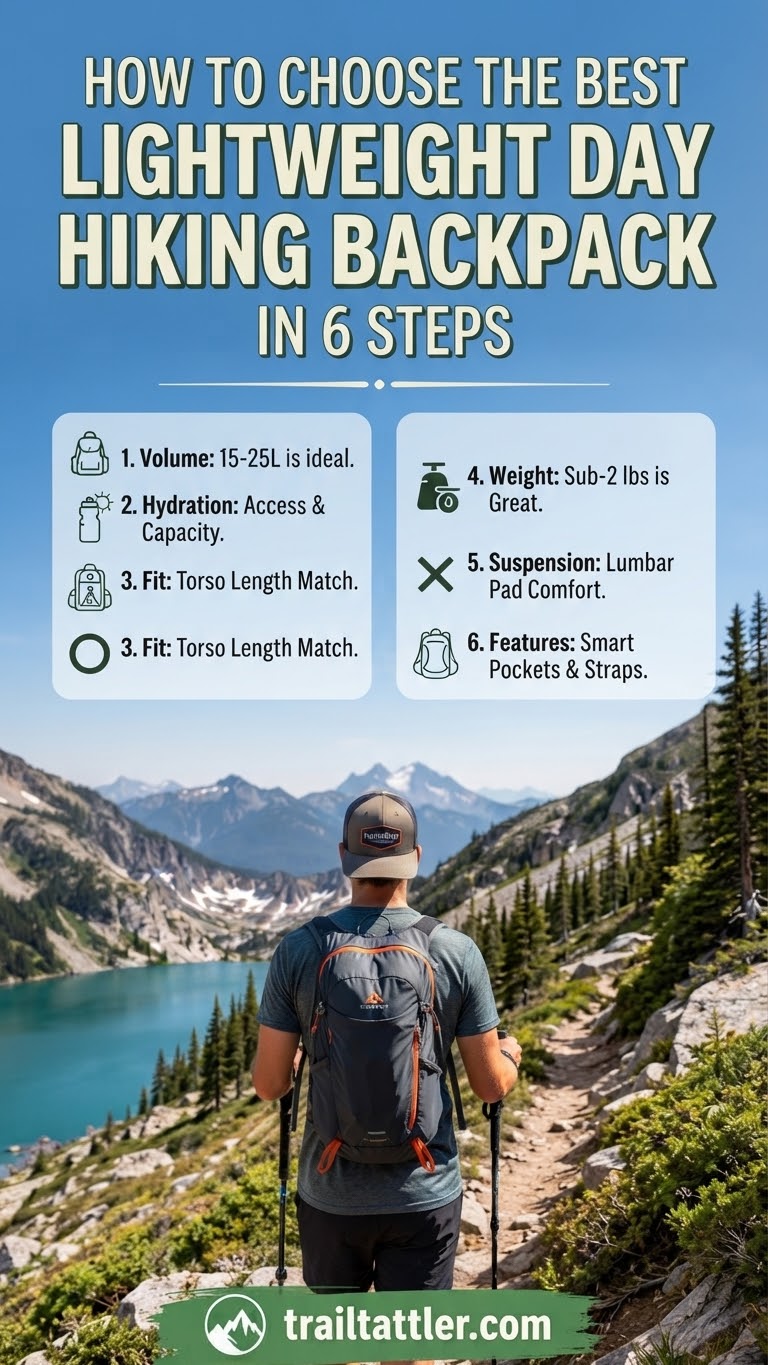
Get the capacity right before you look at anything else. For a day hike, that's almost always 15 to 25 liters — enough for water, food, a layer and your first-aid kit, without the dead space that lets everything shift around and thump your spine on the downhills. I see people buying 35L+ packs because they're on sale, then hiking with a half-empty bag that swings on every switchback.
- 15-18L suits short, warm-weather hikes with minimal gear
- 20-25L covers most seasons, extra layers and a dog-water setup
- Skip anything oversized — bulk you don't fill is just weight and imbalance you carry for nothing
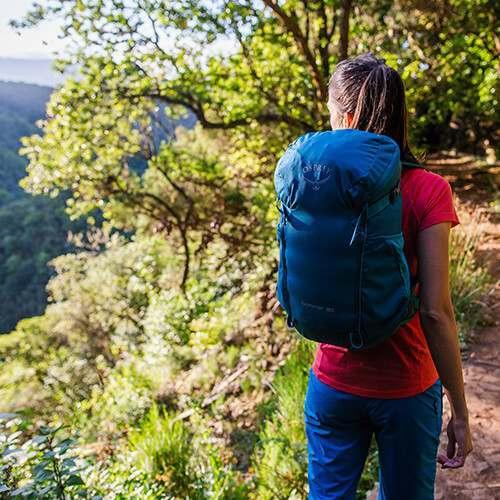
Look for a slim profile that sits close to your back rather than ballooning outward — that's the shape that moves with you instead of against you on rooted or narrow tread, which describes most of the Cumberland Plateau trails I walk on Tuesdays.
Prioritize Low Pack Weight
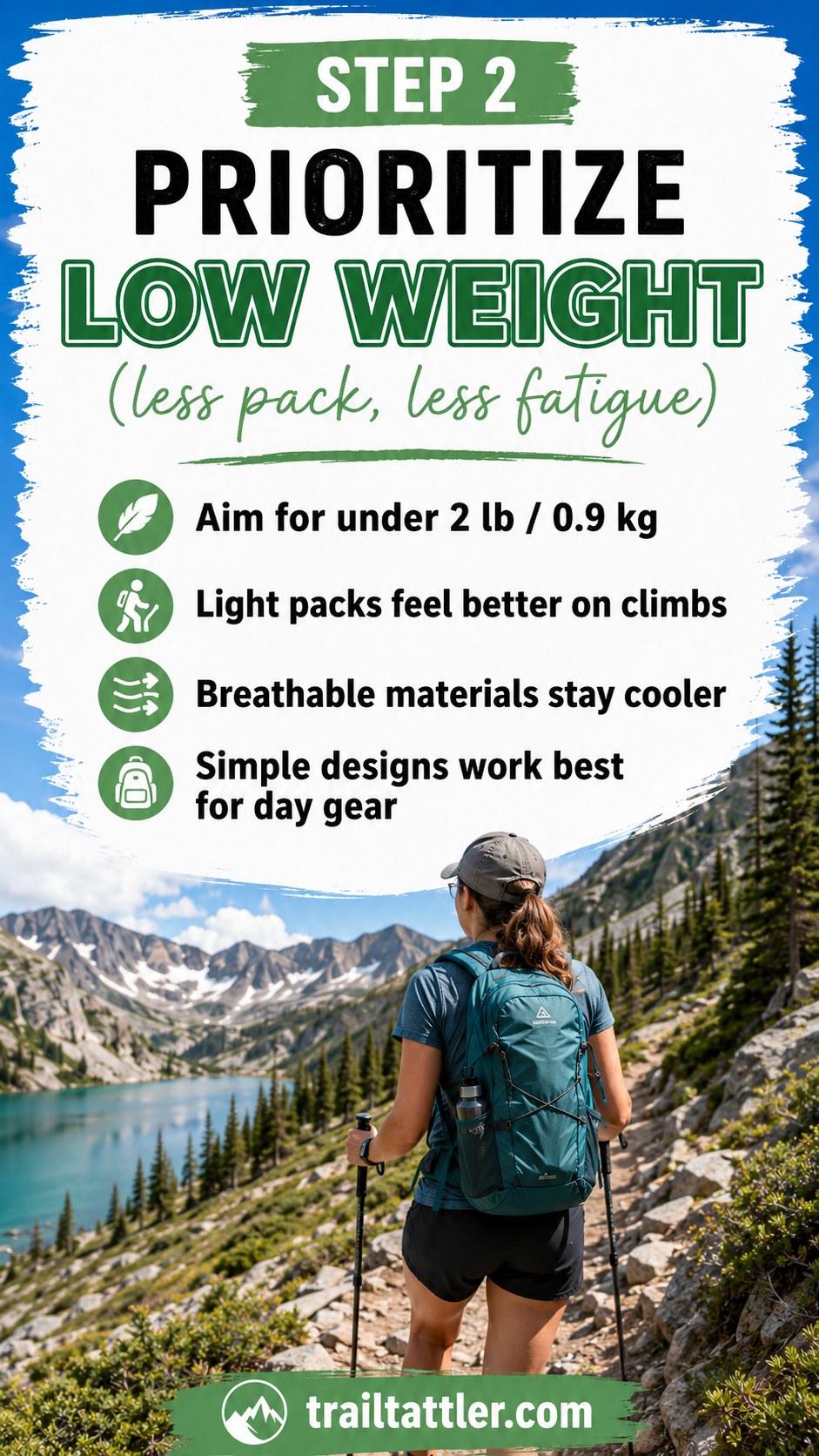
The pack itself should disappear into the math. Aim for under 2 lb / 0.9 kg empty — that's before water, food or gear goes in, and it's the number that separates a day pack from a repurposed overnight bag with the straps cinched down.
In my retail years, the packs that came back on warranty weren't the light ones — they were the heavy ones people bought thinking more material meant more durable. Simple, light designs usually have fewer failure points, not more.
A lighter shell means:
- Less fatigue on climbs — every ounce on your back multiplies over elevation gain
- Better breathability — lighter, simpler fabrics run cooler against your back
- Fewer moving parts — less to snag, tear or fail mid-trail
This is where day-hiking gear genuinely diverges from backpacking gear. You're not sacrificing durability for weight here — you're just not paying the weight tax for features you won't use in an afternoon.
Check Fit and Comfort Before Anything Else
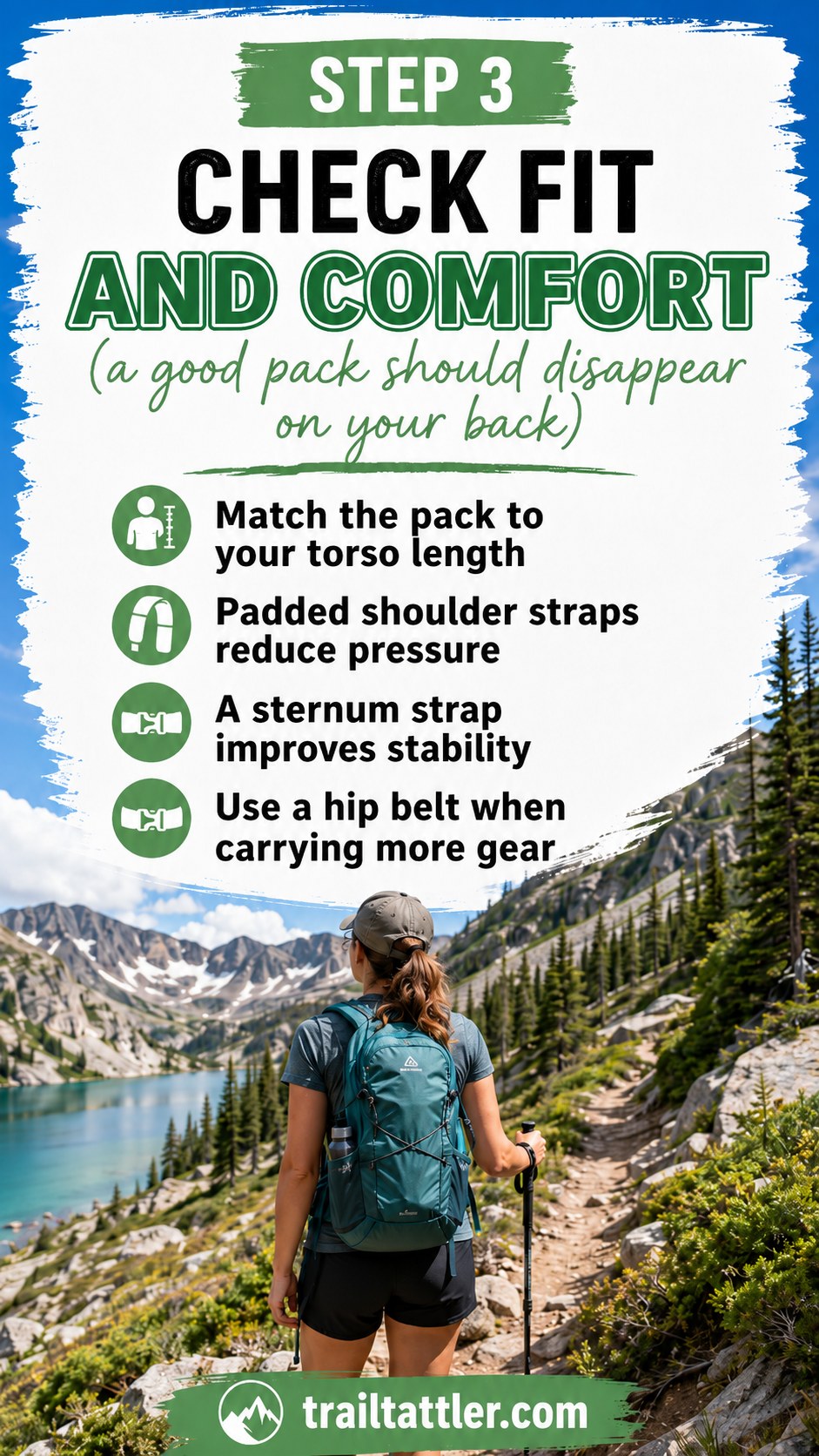
A good pack should disappear on your back — you shouldn't finish a hike thinking about it. That starts with matching the pack to your torso length, not your height; two hikers the same height can need different frame sizes, which is exactly the kind of detail that gets skipped in a five-minute store visit.
- Padded shoulder straps spread the load instead of digging in at the collarbone
- A sternum strap keeps the pack from shifting side to side on uneven terrain
- A hip belt earns its weight the moment you're carrying more than a liter or two — it moves the load to your hips, where your body actually wants it
Try it loaded, not empty. I've fitted a lot of feet and a lot of backs, and the fit that feels fine standing in an aisle can feel completely different after two miles of real trail movement — bending, reaching, climbing over a blowdown.
Compare the Trail Features That Actually Help
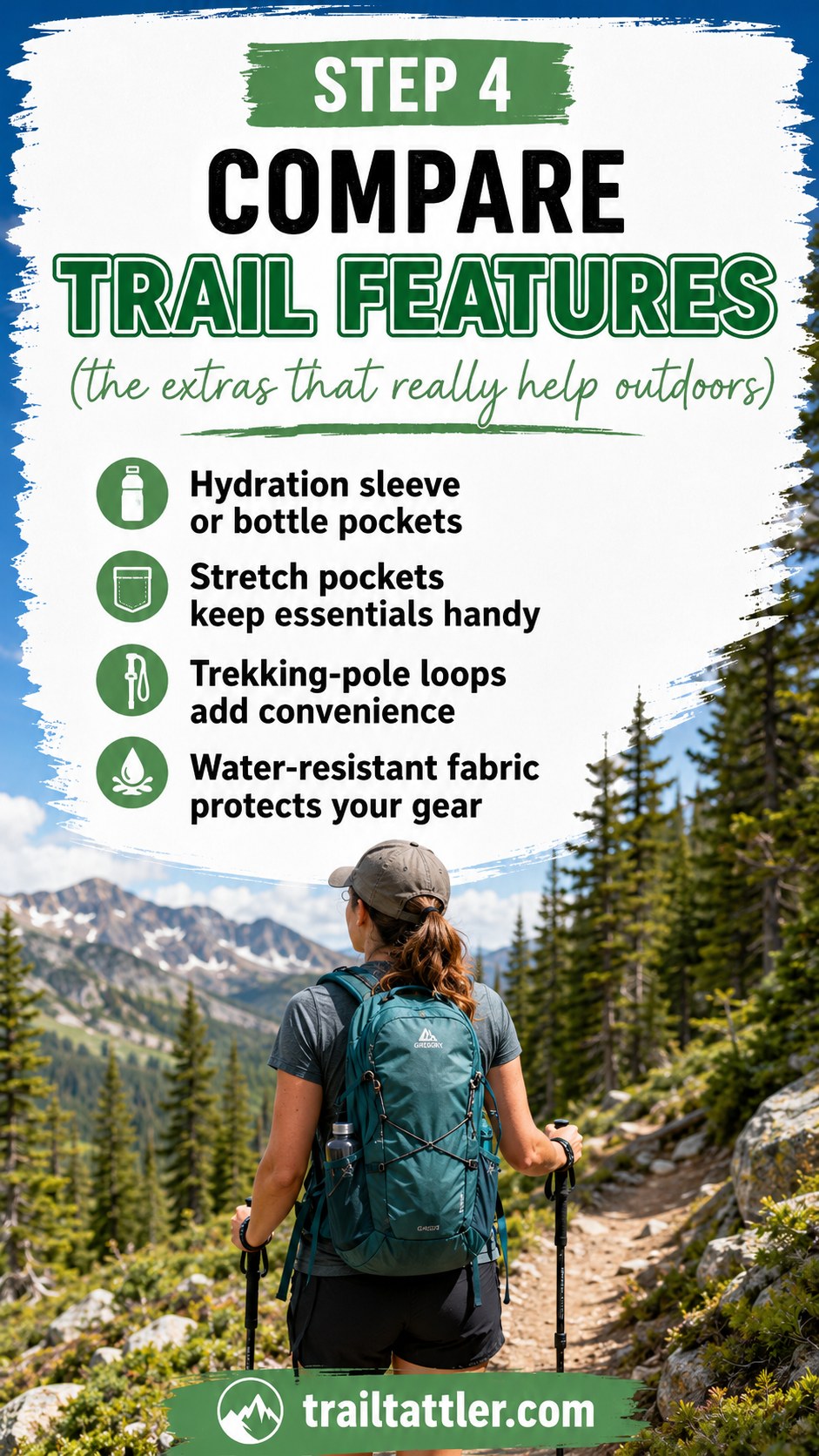
This is where packs start to differentiate, and it's easy to get distracted by features you won't use. Focus on the ones that solve real problems on the actual trail:
Worth having
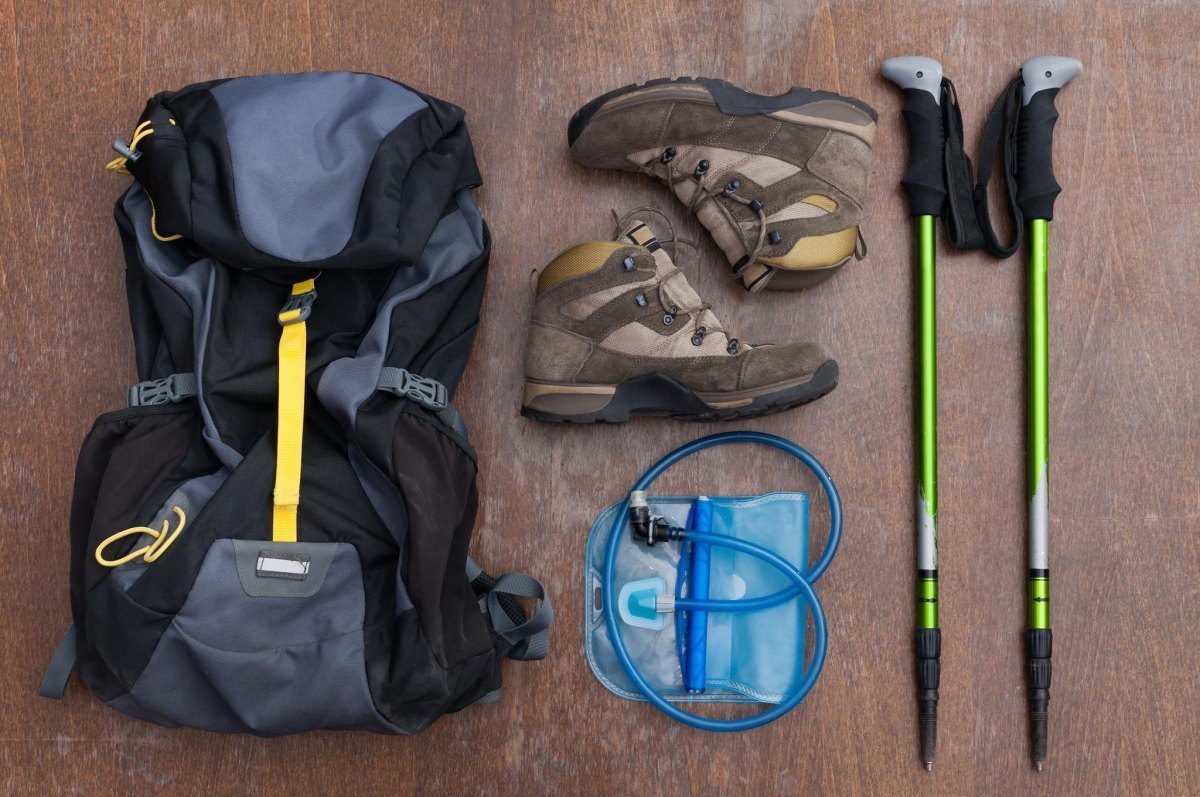
- A hydration sleeve or bottle pockets you can reach without taking the pack off
- Stretch pockets for a map, snack or extra layer you need mid-stride
- Trekking-pole loops for the stretches where you need your hands free
- Water-resistant fabric that shrugs off a passing shower without soaking your first-aid kit
What I don't chase: excessive organization panels, daisy chains you'll never clip anything to, or "expandable" compartments that just add fabric and weight for a scenario that's rare on a day hike. The best day pack I own does four things well instead of twelve things adequately.
Stay on Budget Without Buying Junk
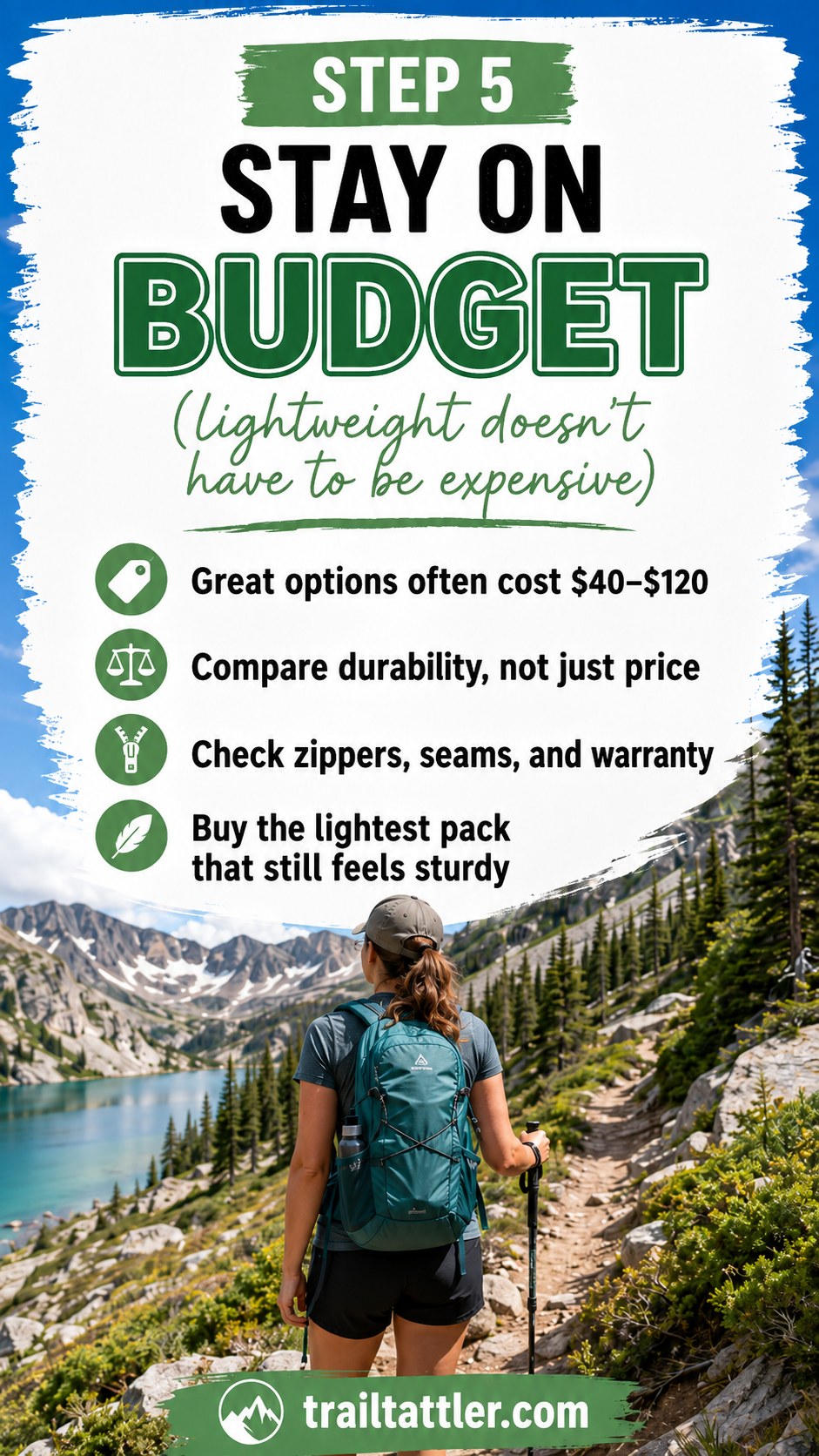
Lightweight doesn't mean expensive — solid day packs live comfortably in the $40 to $120 range, and I've fitted plenty of hikers into packs at the low end of that who never had a problem in years of use.
What actually predicts a pack's lifespan, from years of watching warranty claims come back across a retail counter:
- Zipper quality — cheap zippers are the single most common failure point I've seen
- Seam construction — check the stress points at strap attachments, not just the main panel
- A real warranty — a brand backing its own stitching for years tells you something the price tag doesn't
Compare durability signals, not just the number on the tag, and buy the lightest pack that still feels sturdy when you flex it in your hands. That combination exists at every price point — you just have to check rather than assume.
Test It on an Actual Trail
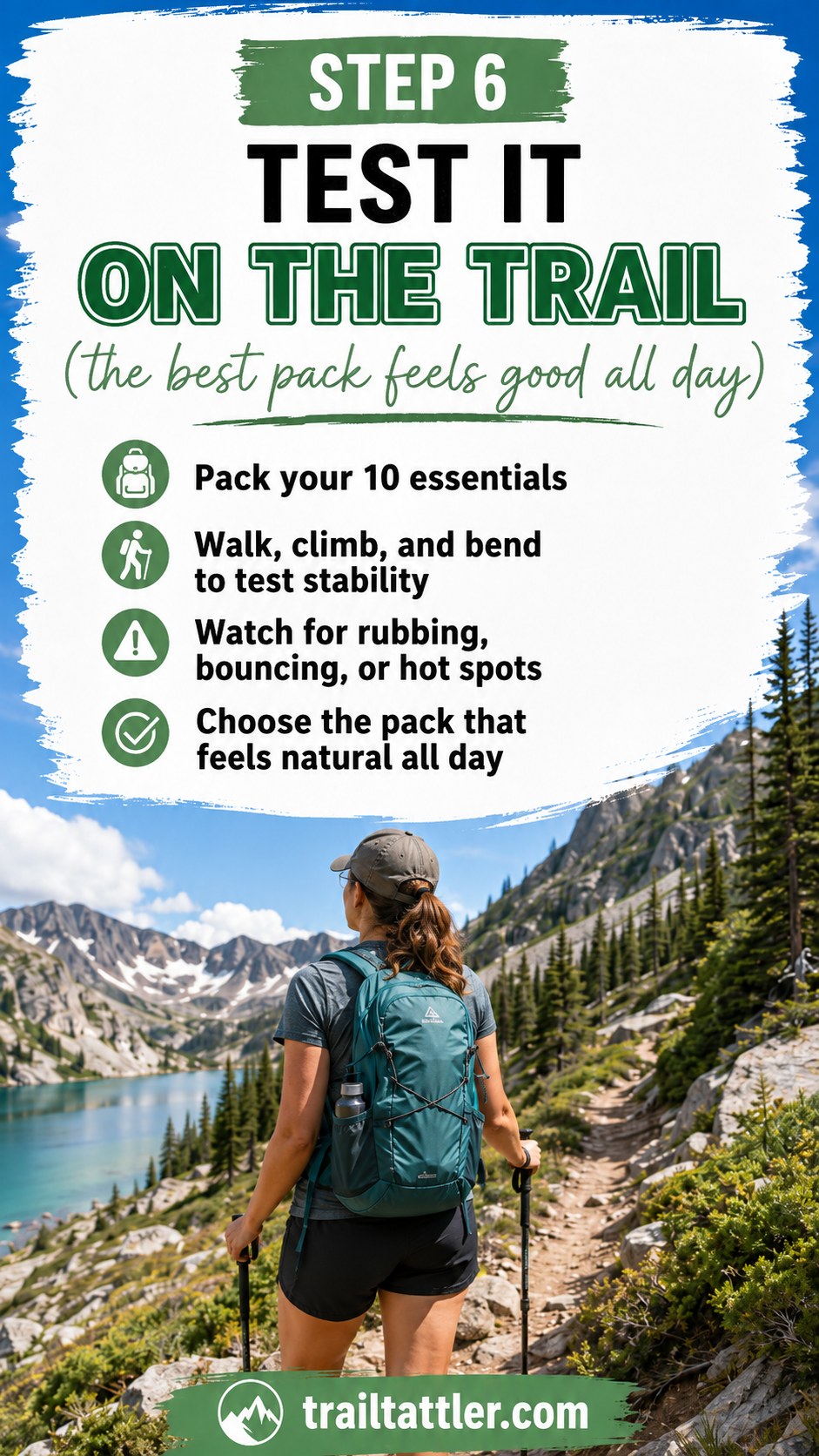
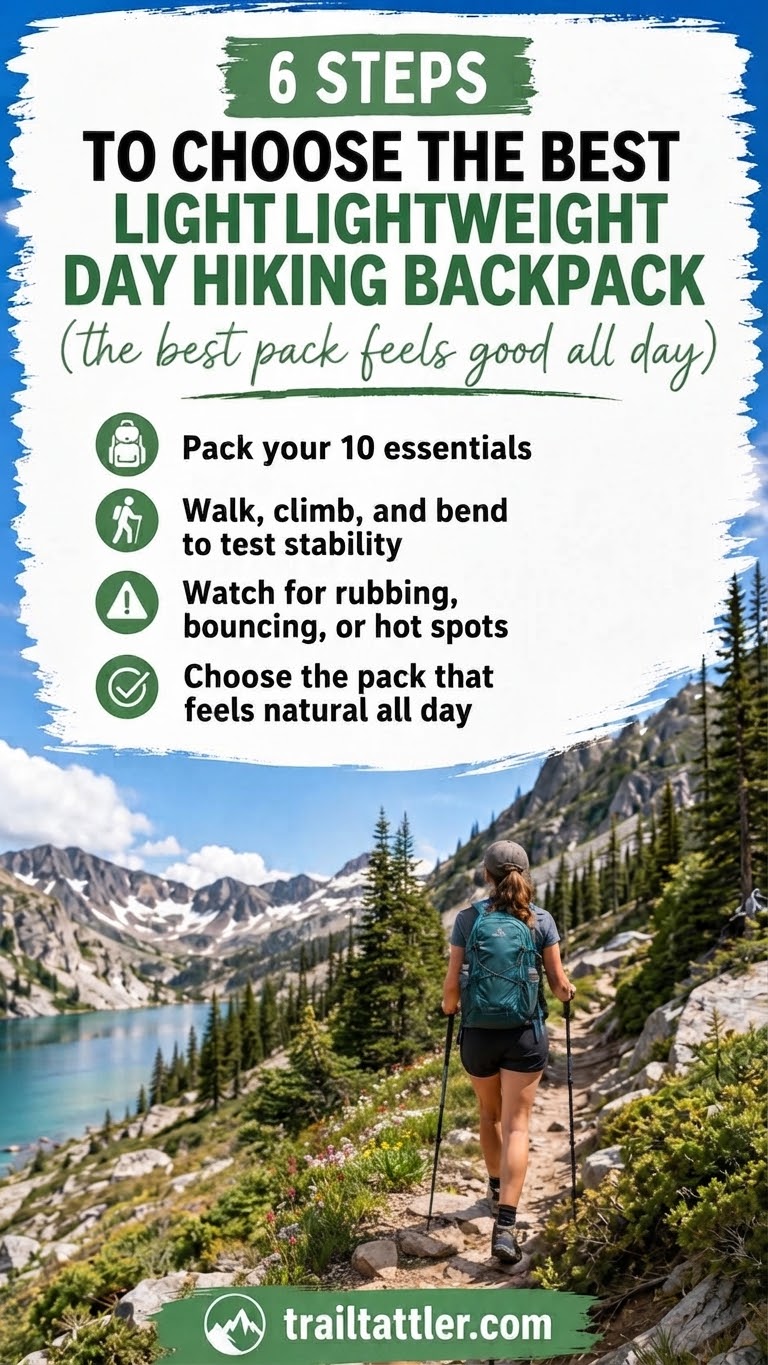
No amount of aisle-walking replaces this step. Pack your Ten Essentials — navigation, headlamp, sun protection, first aid, knife, fire, shelter, extra food, extra water, extra layers — and go hike with the pack loaded the way you actually would.
Walk, climb a short grade, and bend down to tie a boot or clear trail debris. That's the movement pattern a day hike actually asks of a pack, and it's exactly what a store aisle can't replicate.
- Watch for rubbing at the shoulders or collarbone after 20-30 minutes
- Watch for bouncing on descents — a loose load shifts your balance more than people expect
- Note hot spots anywhere the fabric or a buckle presses consistently
Most of the SAR callouts I've been part of trace back to something simple that went unnoticed until it mattered — a missing headlamp, an unplanned late start. A pack that feels natural all day is one less thing working against you if your afternoon runs long.
None of this is complicated, but skipping a step is exactly how you end up with a pack that's technically light but wrong for you. Run through all six, load it the way you actually hike, and let the trail tell you the rest.

Your Questions, Answered
How many liters do I actually need for a day hike?
For most day hikes, 15-25L is the sweet spot. Go smaller (15-18L) for short warm-weather outings, and toward 25L if you're carrying extra layers, dog water, or hiking longer shoulder-season routes.
Do I really need a hip belt on a day pack?
If you're carrying more than a couple liters of water plus gear, yes — it shifts the load off your shoulders and onto your hips, which noticeably reduces fatigue on longer or steeper day hikes.
Is a cheaper lightweight pack actually reliable?
Often, yes. Price doesn't correlate as tightly with durability as people assume. Check zipper quality, seam stitching at stress points, and whether the brand offers a real warranty — those tell you more than the tag.
How do I know if a pack fits before I've hiked in it?
Load it with roughly what you'll actually carry and walk around for at least 20-30 minutes, including some bending and stair-climbing. Fit that feels fine standing still can reveal rubbing or bouncing once you're moving.