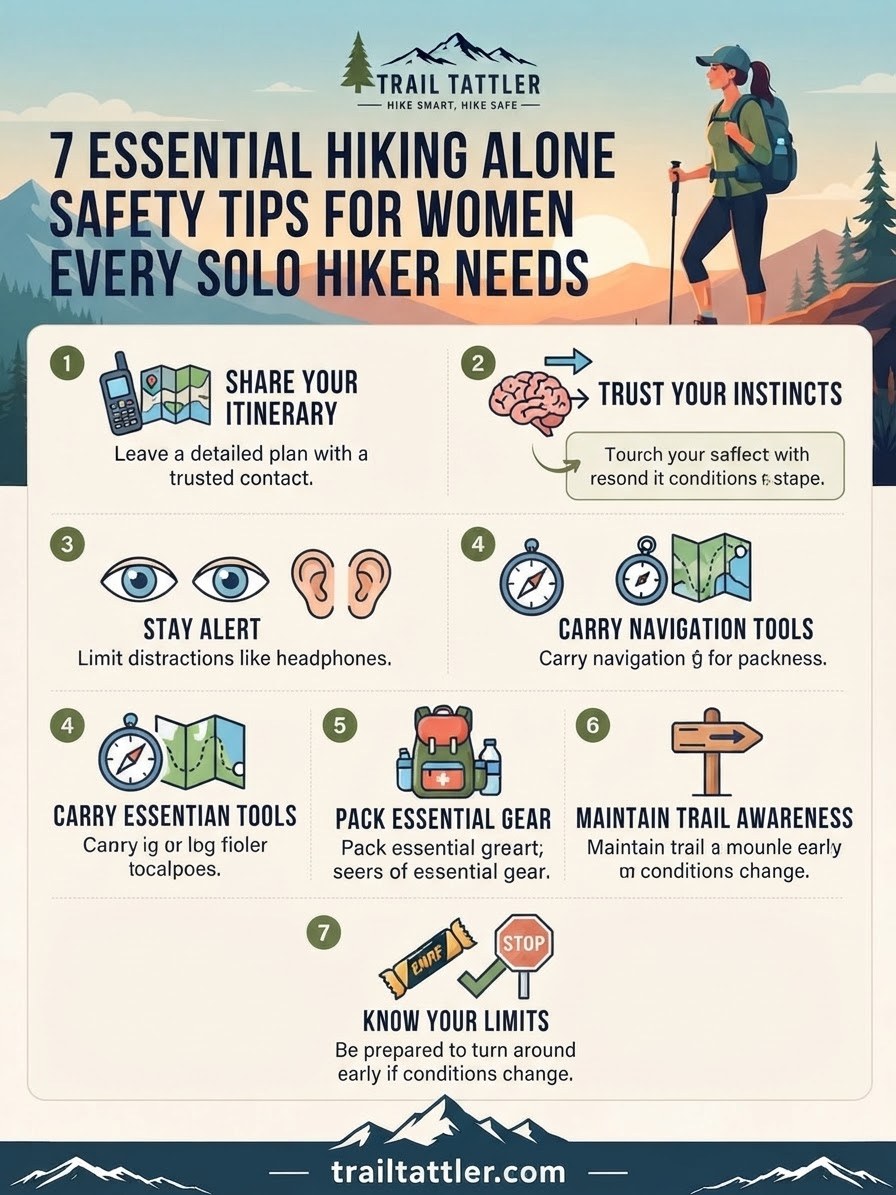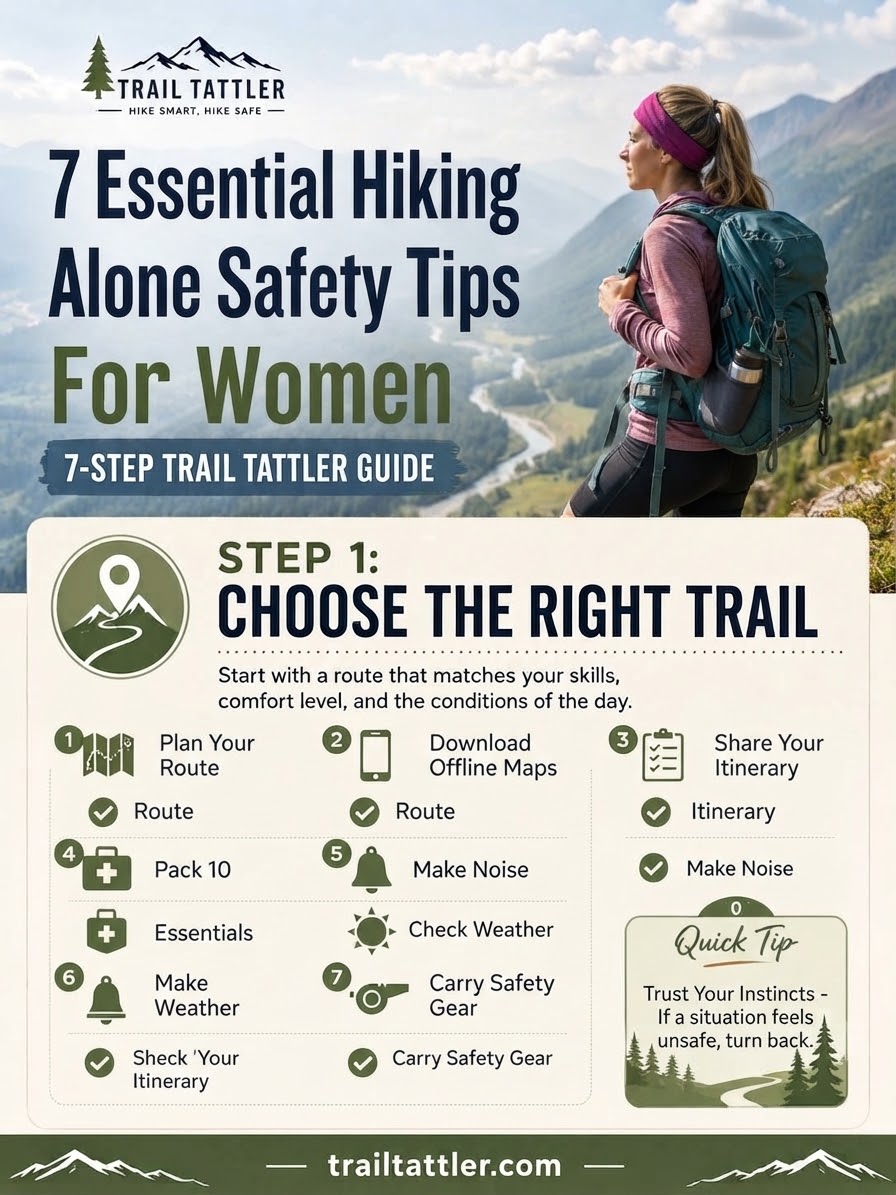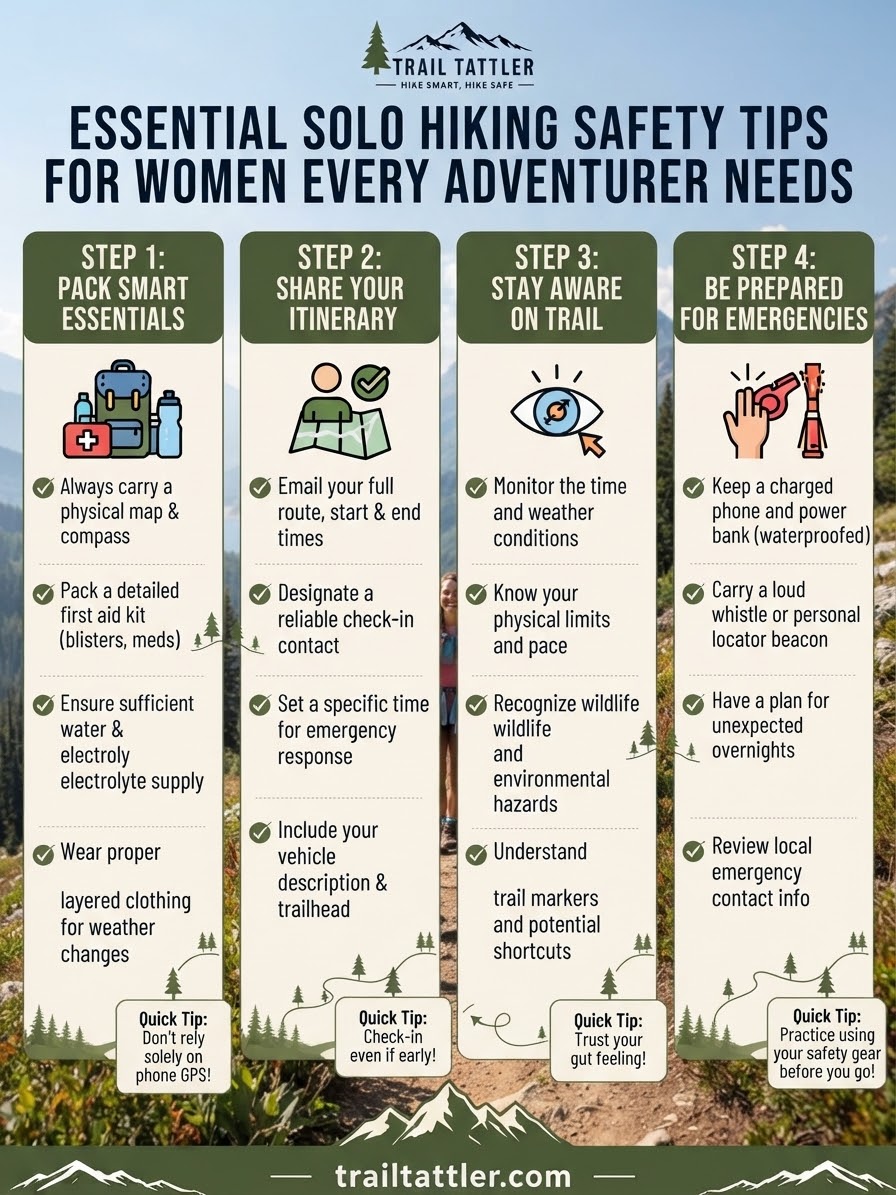
Six years on a county search and rescue team taught me something that surprises people: the hikers we go looking for are almost never doing anything extreme. They're on a reasonable trail, they just missed one piece of planning. Solo hiking as a woman adds a layer most guides skip past with a pep talk instead of specifics, so here's the actual seven-step version I'd hand a friend before her first solo trail day.
Choose the Right Trail
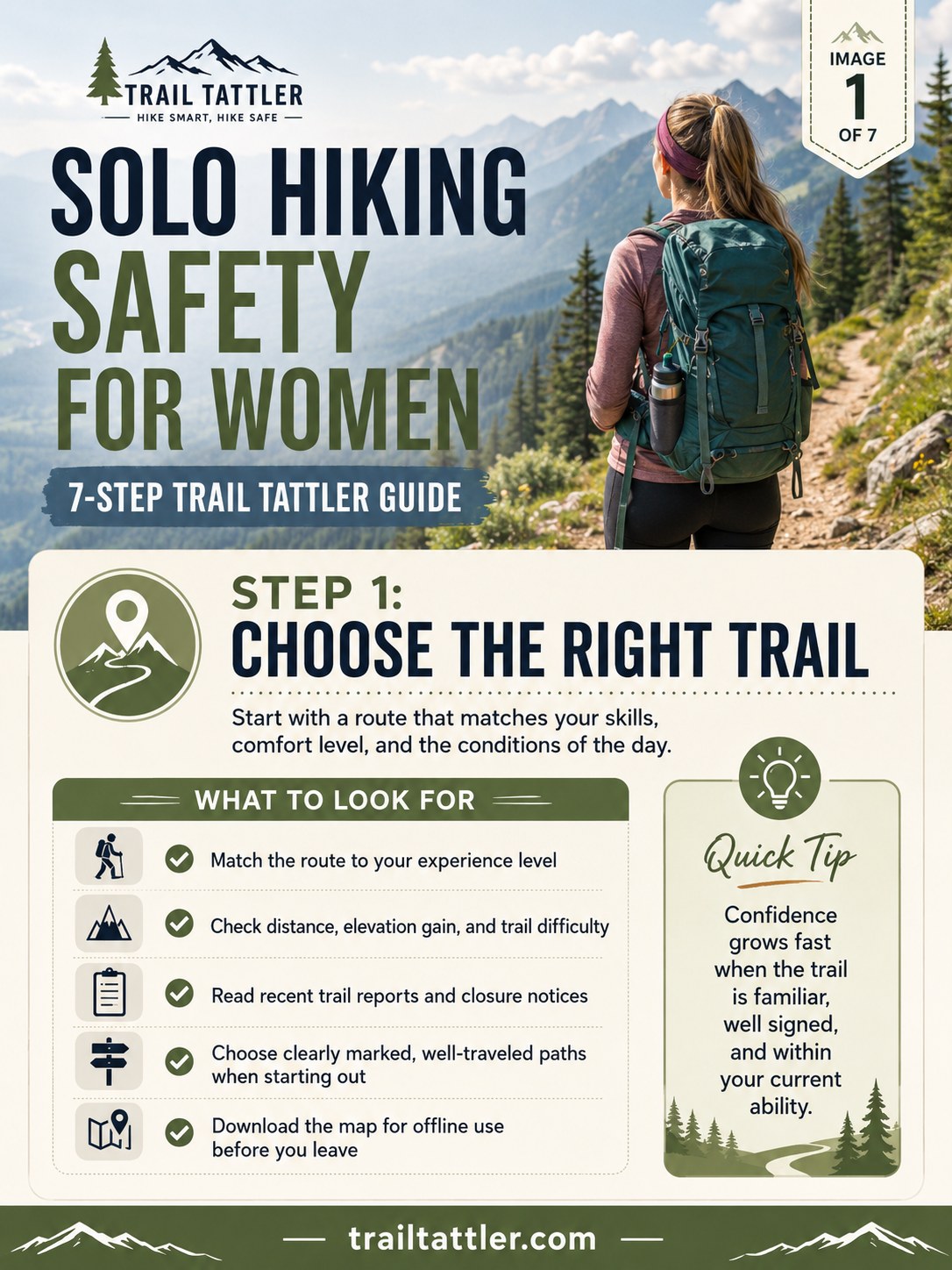
Every callout I've ever been part of started with a trail that looked fine on a map and turned out to be something else on the ground. Matching the route to your actual experience, not your aspirational one, is the whole game here.
- Look past the distance to elevation gain per mile — a 4-mile trail with 2,000 feet of climb hikes very differently than a flat 4-miler.
- Read recent trip reports, not just the agency page, which is often years out of date on tread condition.
- Start with clearly marked, well-traveled routes before you go looking for the quiet ones.
- Download the offline map before you leave cell range, because you will lose it.
I still translate every trail I write up into numbers instead of a single word like 'moderate,' because that word has meant three completely different hikes to me this year alone.
Check Weather and Time Your Hike
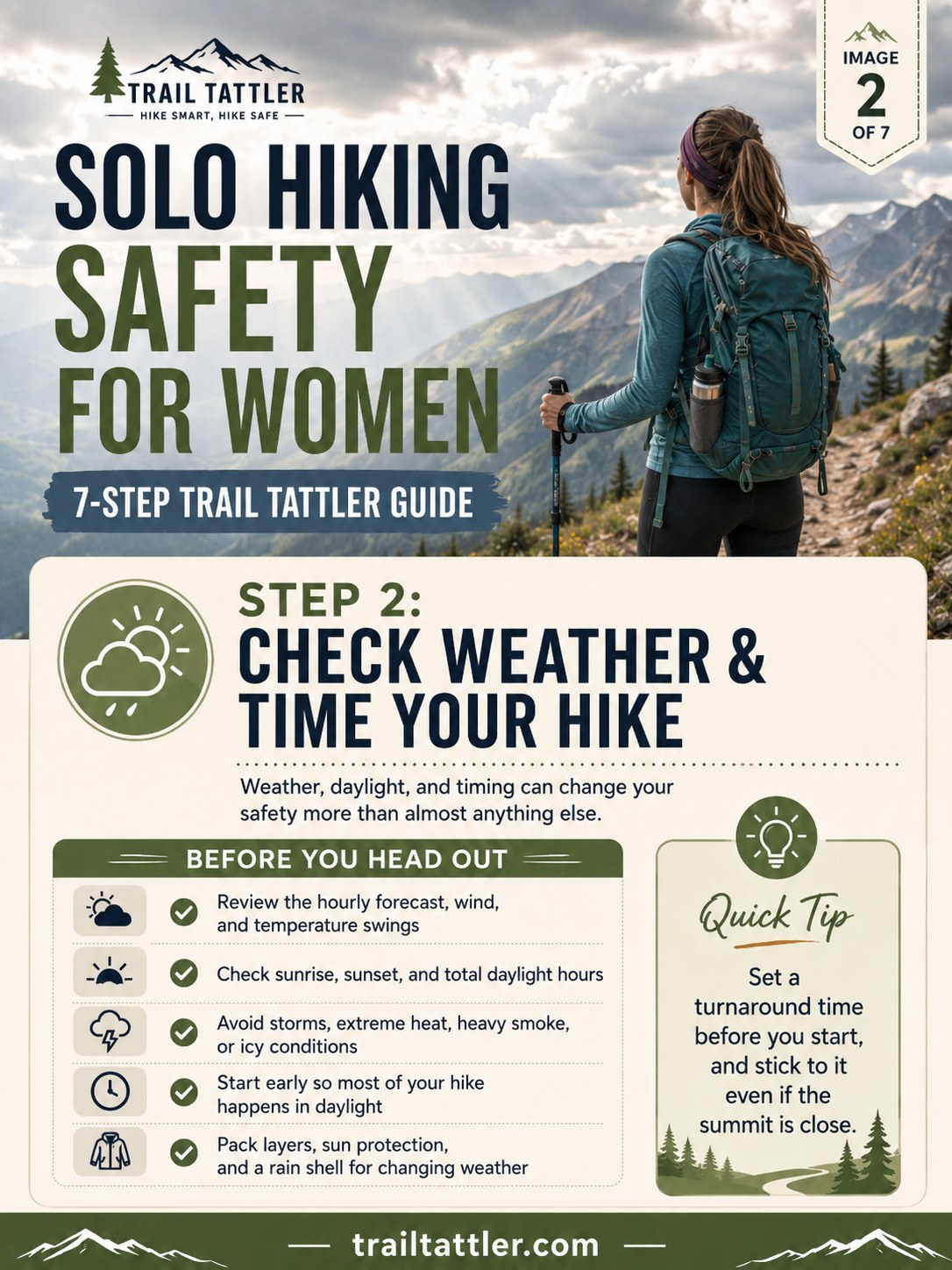
Daylight and weather change your risk more than terrain does, and they're the two things people forget to check because the trailhead is right there and the sky looks fine. It won't look fine at 4 p.m.
Check sunrise, sunset, and your total daylight window before you check the trail description. Start early — most of your hike should happen in daylight, with margin. Watch the hourly forecast for wind, temperature swings, and anything that turns a dry rock scramble into a slick one.
Set your turnaround time before you leave the car, and keep it even if the summit is twenty minutes away. That decision is easy at the trailhead and brutally hard on the ridge — make it early, while it's still just math.
Pack layers and a rain shell regardless of the forecast. Southeast weather changes faster than people expect, and I've watched a clear Cumberland Plateau morning turn into a genuinely cold, wet afternoon more times than I can count.
Share Your Plan
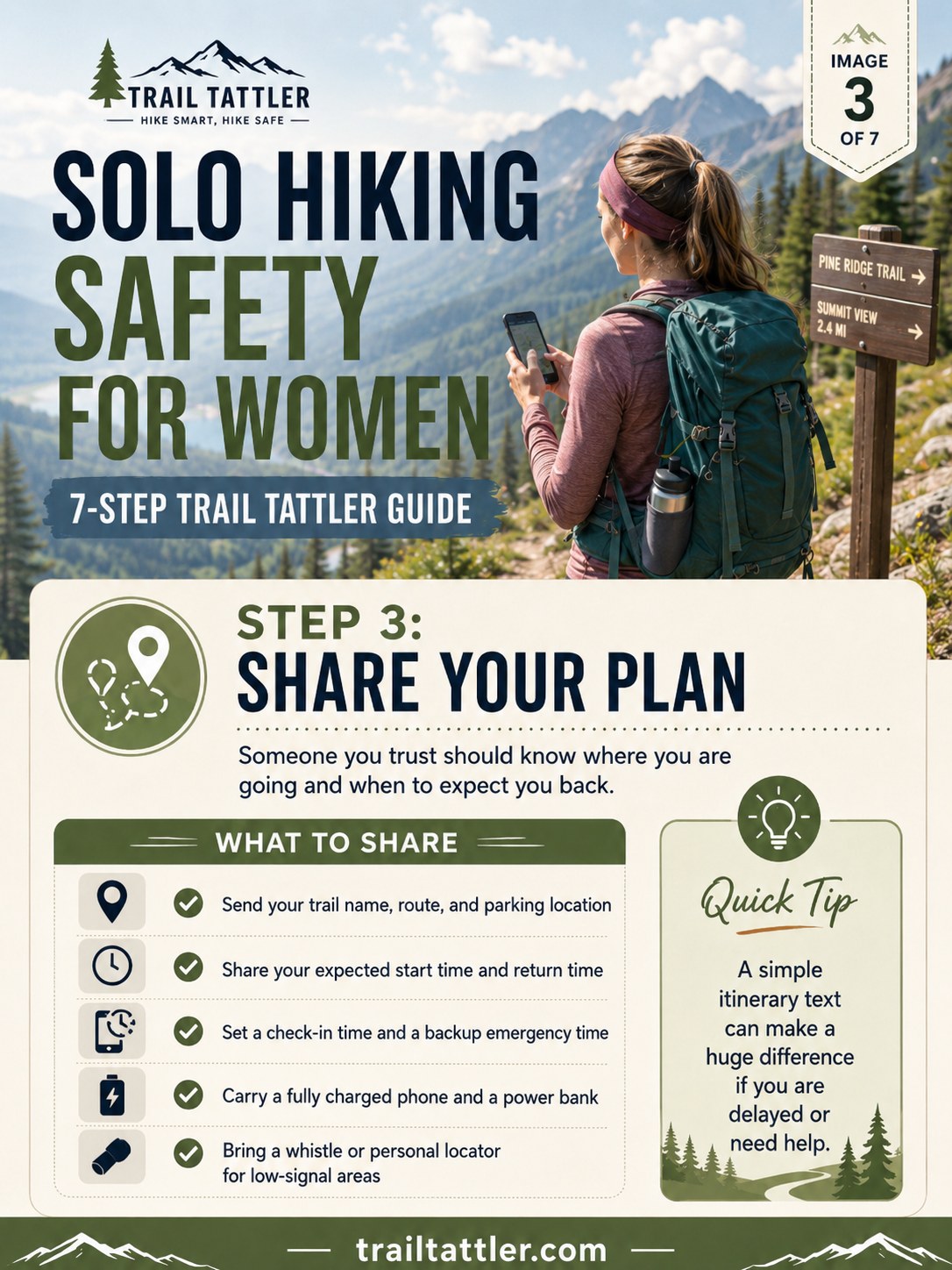
This is the single step that shortens a search the most, and I mean that from having been on the other end of it. Someone you trust needs your trail name, route, and parking location — not a vague 'hiking, back tonight.'
- Send the specifics: trailhead, planned route, expected start and return time.
- Set a check-in time and agree on what happens if you miss it.
- Carry a fully charged phone and a power bank, knowing full well most trails have no signal at all.
- Consider a whistle or personal locator beacon for anywhere remote enough that a text isn't reliable.
A simple written itinerary — even a text message with the four points above — is the fastest thing I've seen turn a delay into a non-event instead of a search.
Pack Smart Safety Gear
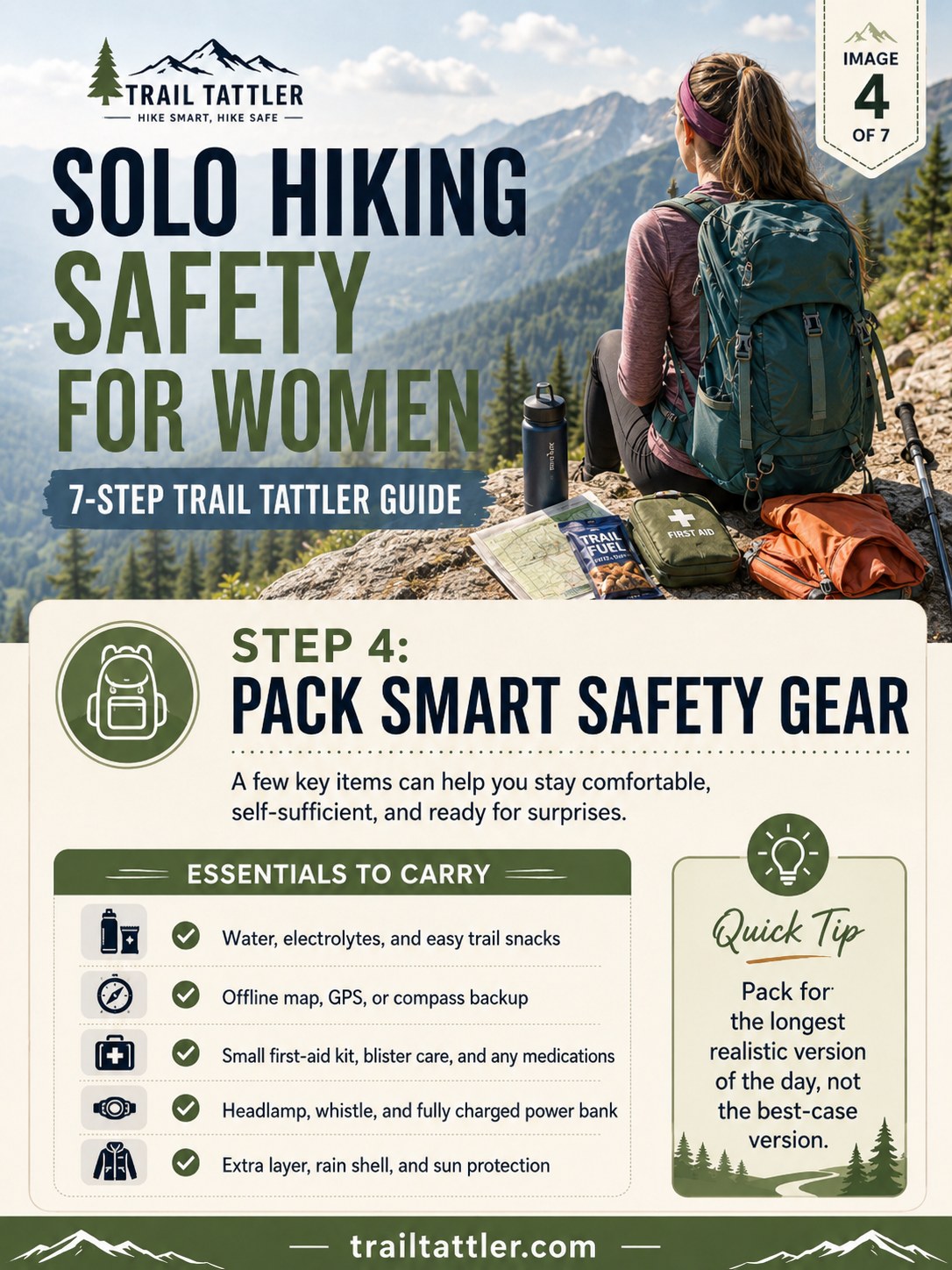
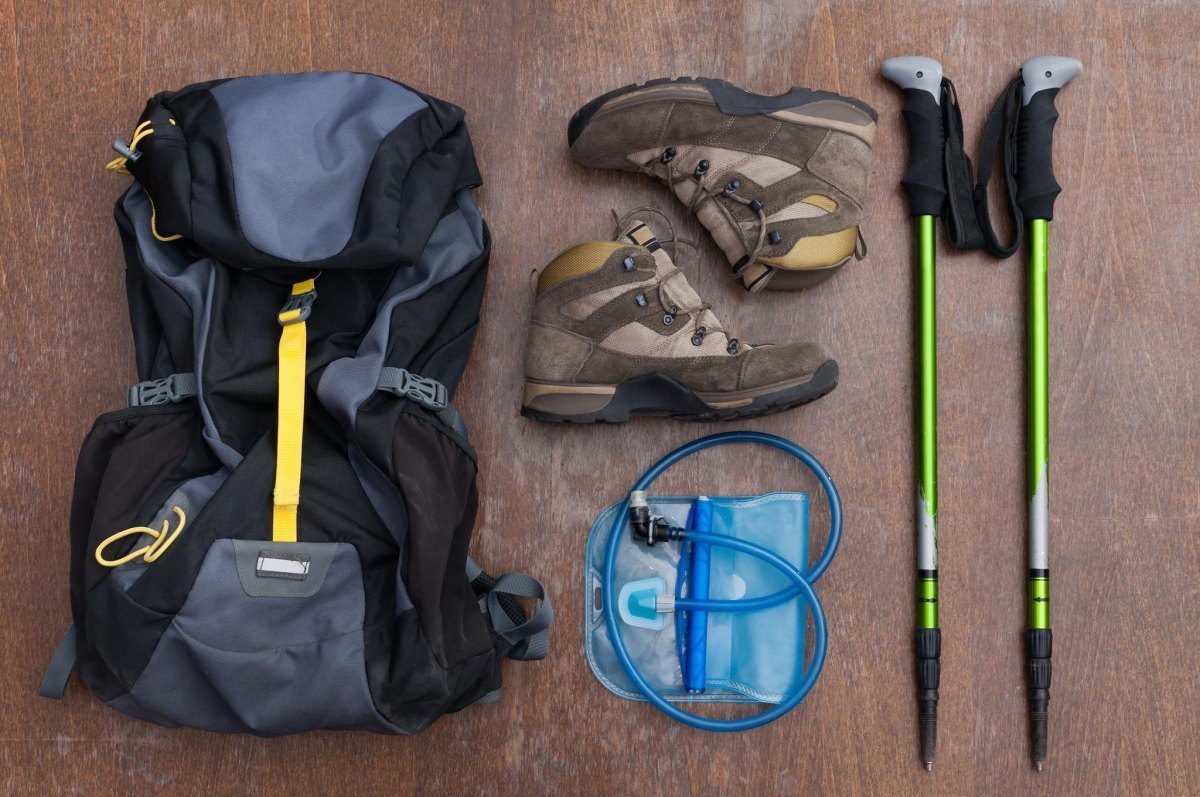
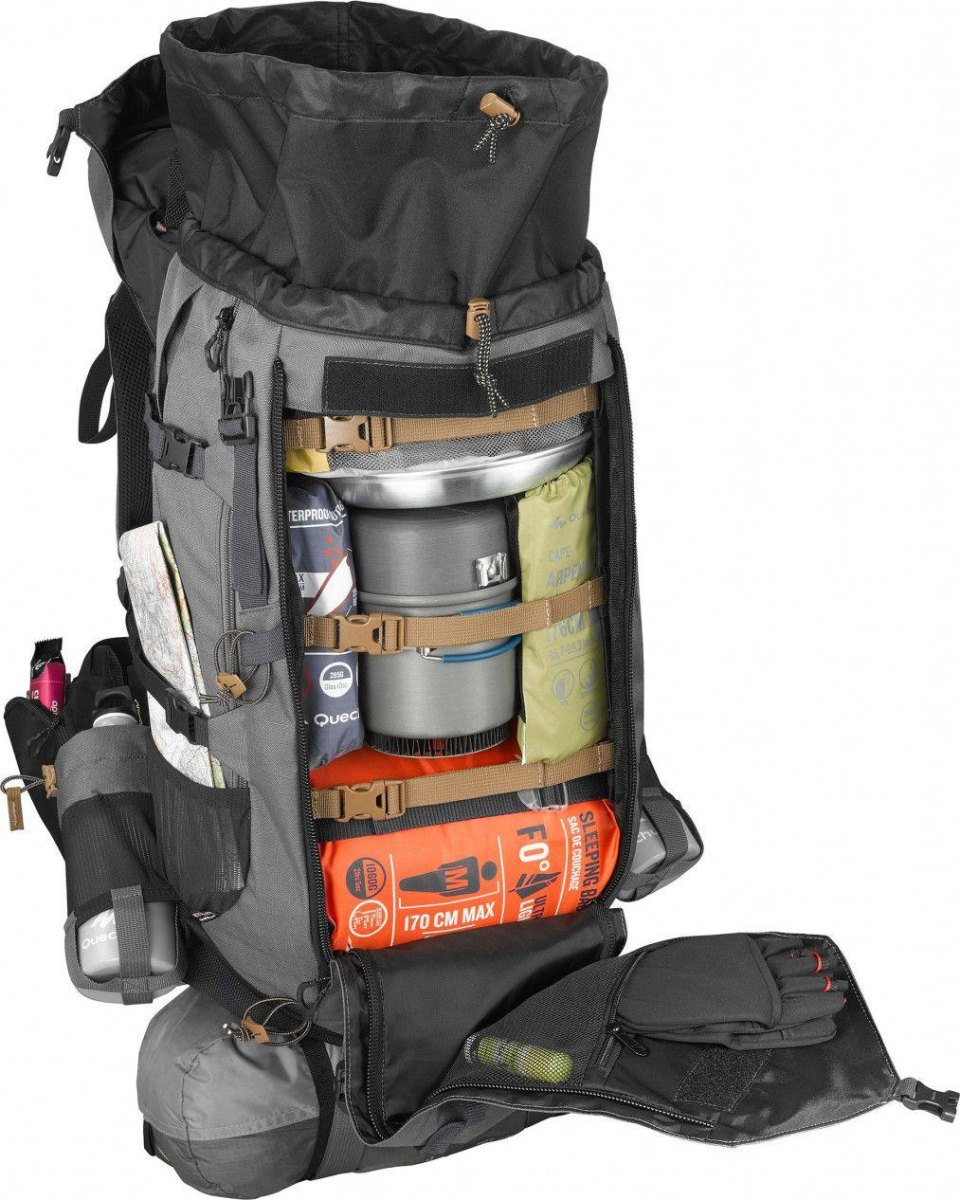
Eight years fitting boots and processing warranty returns taught me which gear earns its weight and which is marketing. For solo day hikes, this is the short list that matters, adapted from the Ten Essentials rather than replacing them.
- Water and electrolytes plus easy trail snacks — pack for the longest realistic version of the day, not the best case.
- Offline map, GPS, or compass backup — batteries die, paper doesn't.
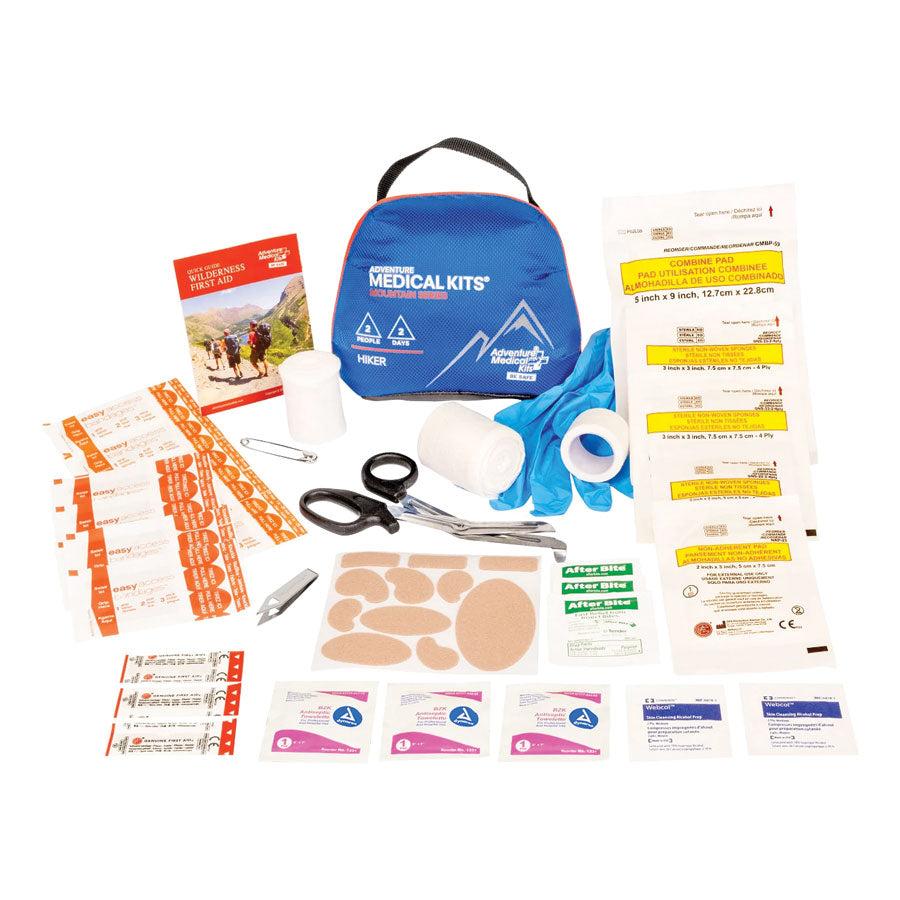
- A small first-aid kit covering blister care and any personal medications.
- Headlamp, whistle, and a charged power bank — a missing headlamp shows up in more SAR callouts than almost anything else.
- Extra layer, rain shell, and sun protection, even on a forecast that promises otherwise.
You don't need the expensive version of most of this. The cheap headlamp works fine as long as you actually pack it.
Stay Aware on the Trail
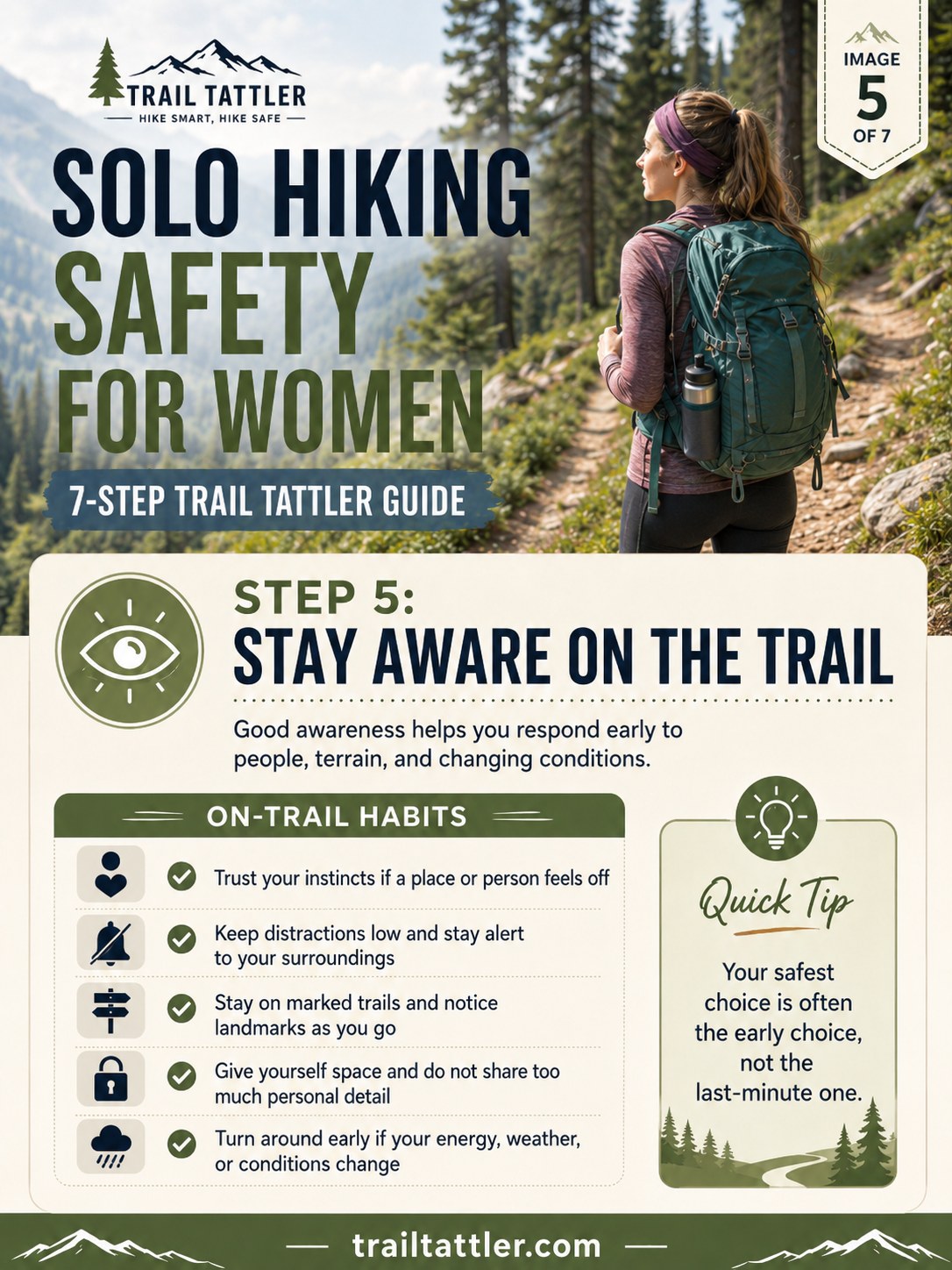
Awareness is a habit, not a mood, and it's the thing that lets you respond early instead of reacting late. Trust your instincts if a place or a person feels off — that reaction is data, not paranoia.
- Keep distractions low; one earbud out is enough to hear what's coming up the trail.
- Stay on marked tread. I spend a lot of Saturdays doing trail work, and the trails that erode fastest are the ones people cut corners on.
- Give yourself space and skip the detailed itinerary with strangers you meet along the way.
- Turn around early if energy, weather, or trail conditions shift — that's a skill, not a retreat.
Your safest call is usually the early one, made while you still have options, not the last-minute one made when you're already tired.
Handle Wildlife and Emergencies
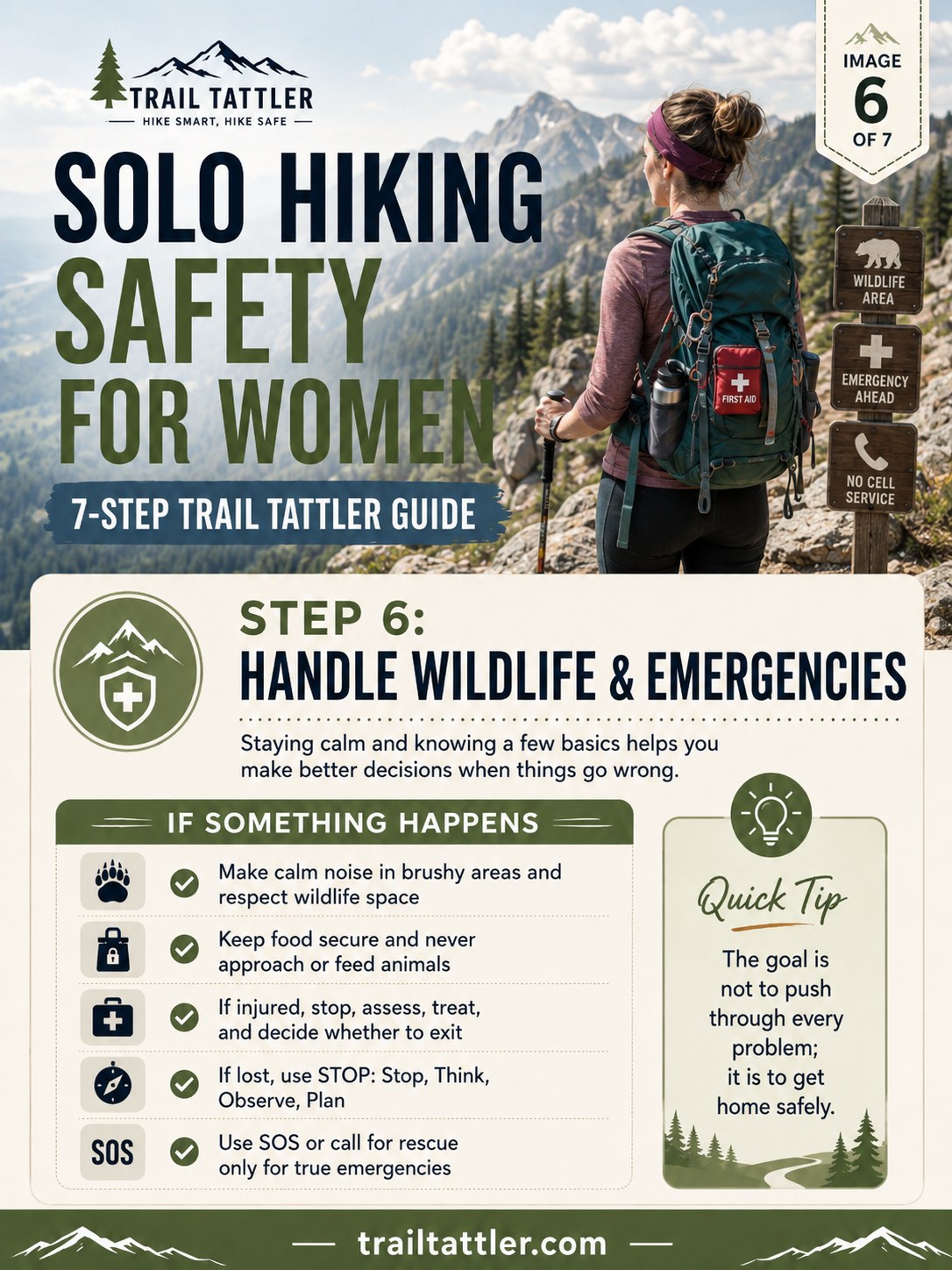
Most wildlife encounters resolve themselves if you give distance and make calm noise in brush or blind corners. Never approach, feed, or bait wildlife for a photo — that's how a manageable encounter turns into a bad one, and it's rule number one everywhere I hike.
- Secure food and never let anything get close enough to associate you with a snack.
- If injured, stop, assess, and decide whether you can self-treat and continue or need to exit.
- If lost, use STOP: Stop, Think, Observe, Plan — before you keep walking in a direction you're not sure of.
- SOS is for true emergencies — a real inability to get yourself out safely, not a discomfort.
I'm a Wilderness First Responder, not a doctor, and that distinction matters here: anything serious means get out, call for help, and see an actual physician after. My job in the field is recognizing when that line has been crossed, not treating past it.
Finish Strong and Build Confidence
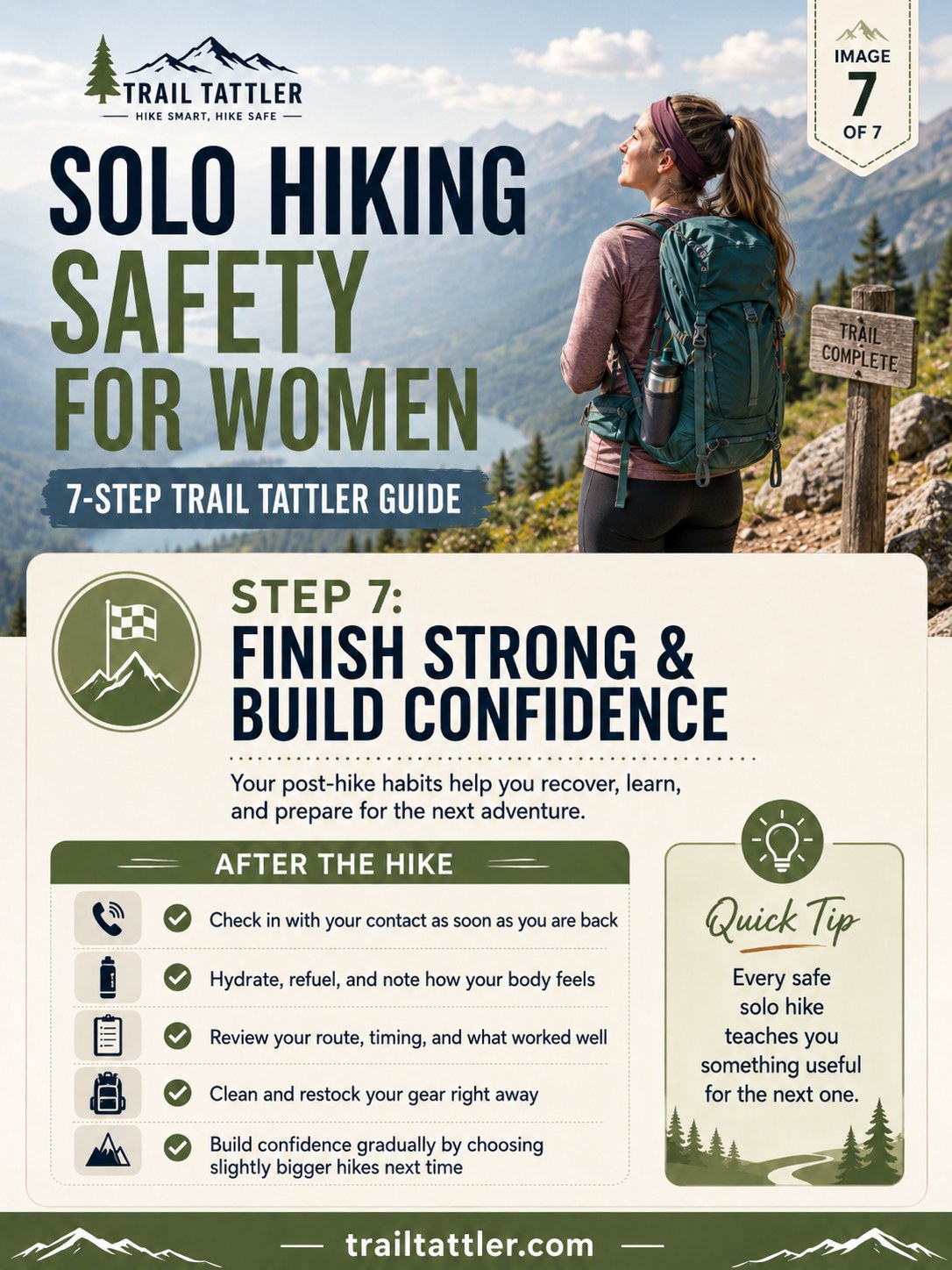
The hike isn't done at the trailhead sign. Check in with your contact as soon as you're back, before you even start the car — it's the step people skip the most and the one that matters most to whoever's on the other end of that plan.
- Hydrate, refuel, and note how your body actually feels, not how you expected it to feel.
- Review your route and timing honestly — where you were faster or slower than planned, and why.
- Clean and restock your gear right away, while you still remember what ran low.
- Build up gradually — a slightly bigger hike next time, not a dramatically bigger one.
Every solo hike that goes well teaches you something specific and useful for the next one. That's the actual mechanism behind confidence — repetition with attention, not a single big leap.
None of this is about hiking scared. It's about hiking with enough information that the decisions you make on trail are yours, made early, rather than ones the trail makes for you later. Start with the trail that fits you today, and let the confidence build from there.

Common Questions
Is solo hiking actually safe for women?
It can be, with the same preparation that makes any solo hike safer — trail selection matched to skill, a shared plan, and turnaround discipline. Most incidents I've seen have come down to a late start, a missing headlamp, or nobody knowing the route, not the fact that someone was hiking alone.
Do I need a personal locator beacon for a day hike?
For anywhere with unreliable cell signal — which is most trails — it's worth considering, especially if you hike solo often. It's not a requirement for a well-marked, well-traveled trail close to town, but it earns its keep fast on remote or high-consequence routes.
What should I do if I feel unsafe around another hiker?
Trust that reaction immediately. Increase distance, avoid sharing your specific plans or campsite location, stay near other groups if possible, and head back toward the trailhead rather than continuing forward into more isolated terrain.
What's the most common mistake you see in solo hikers?
A late start combined with no fixed turnaround time. Daylight math is unforgiving, and 'we'll just see how it goes' is exactly how a lot of search and rescue calls begin.