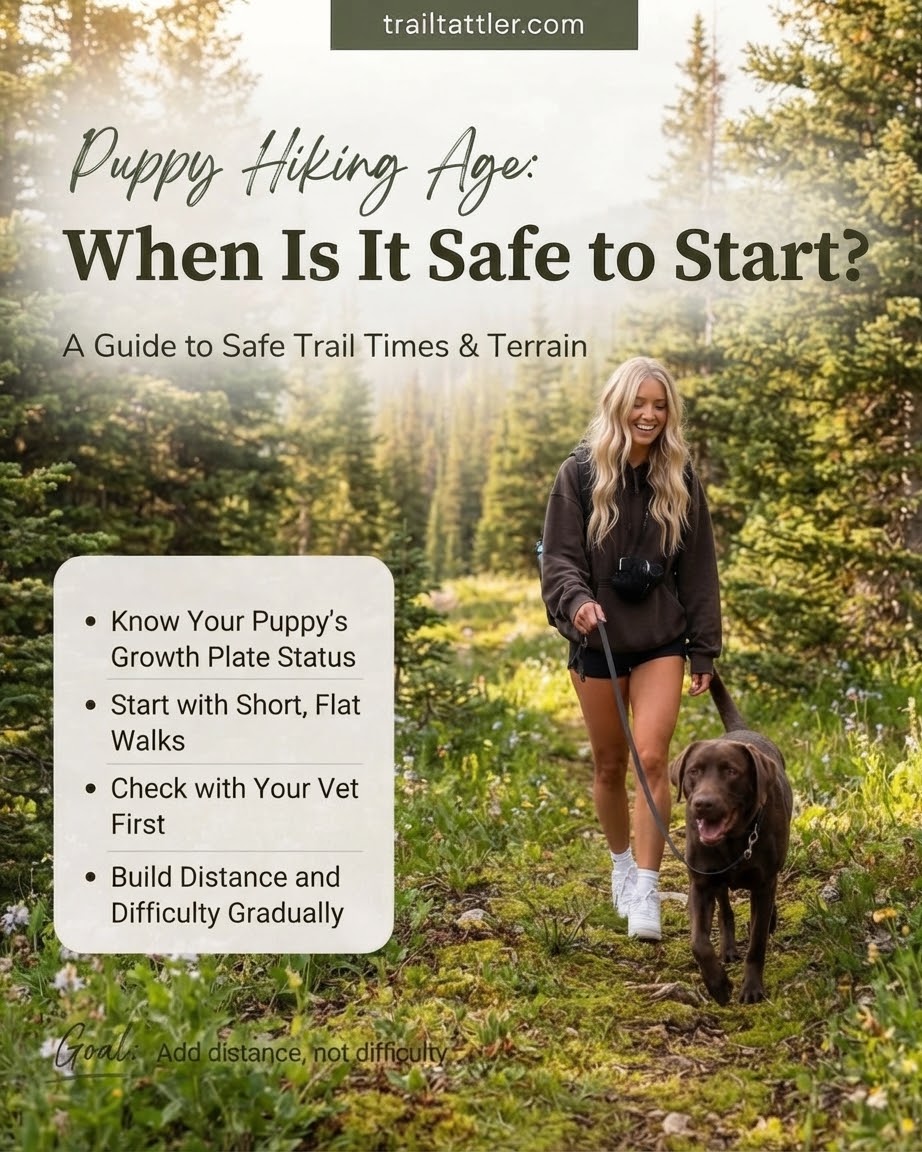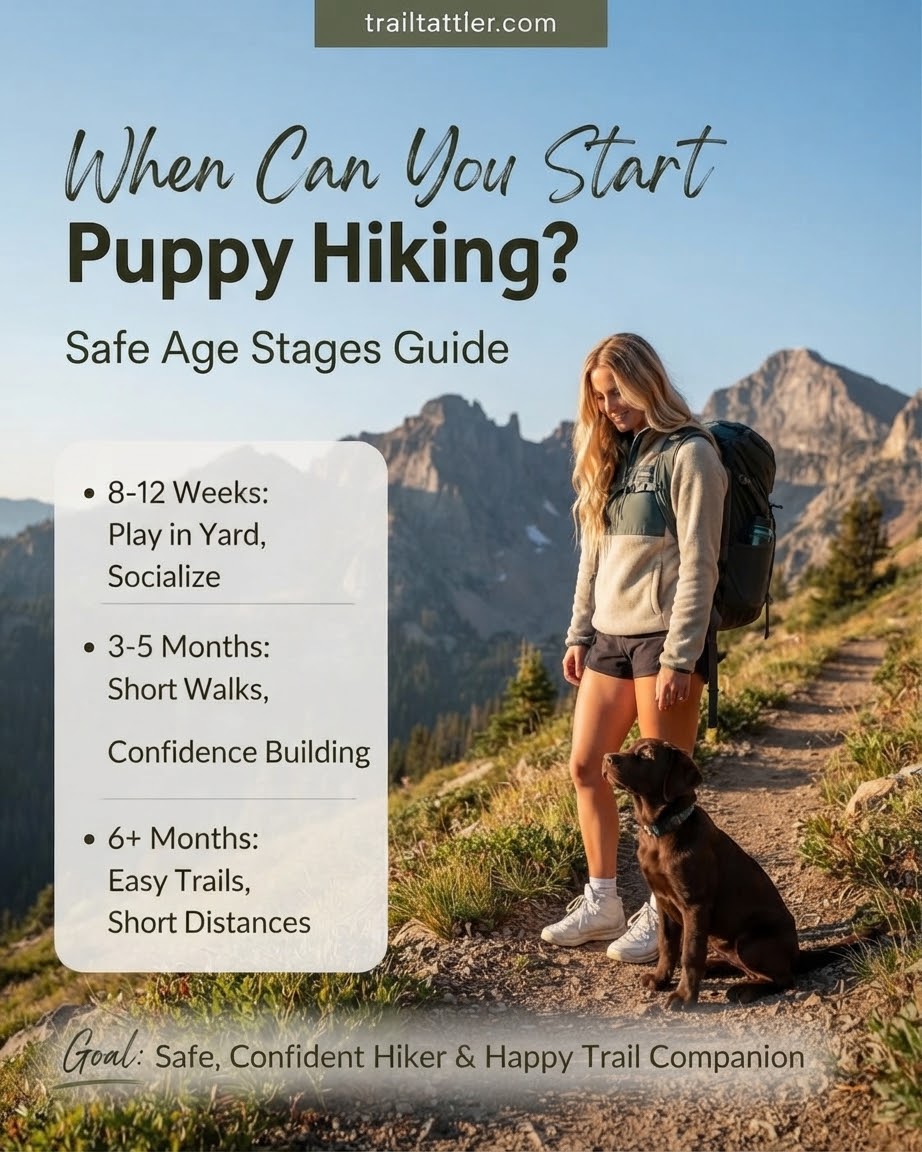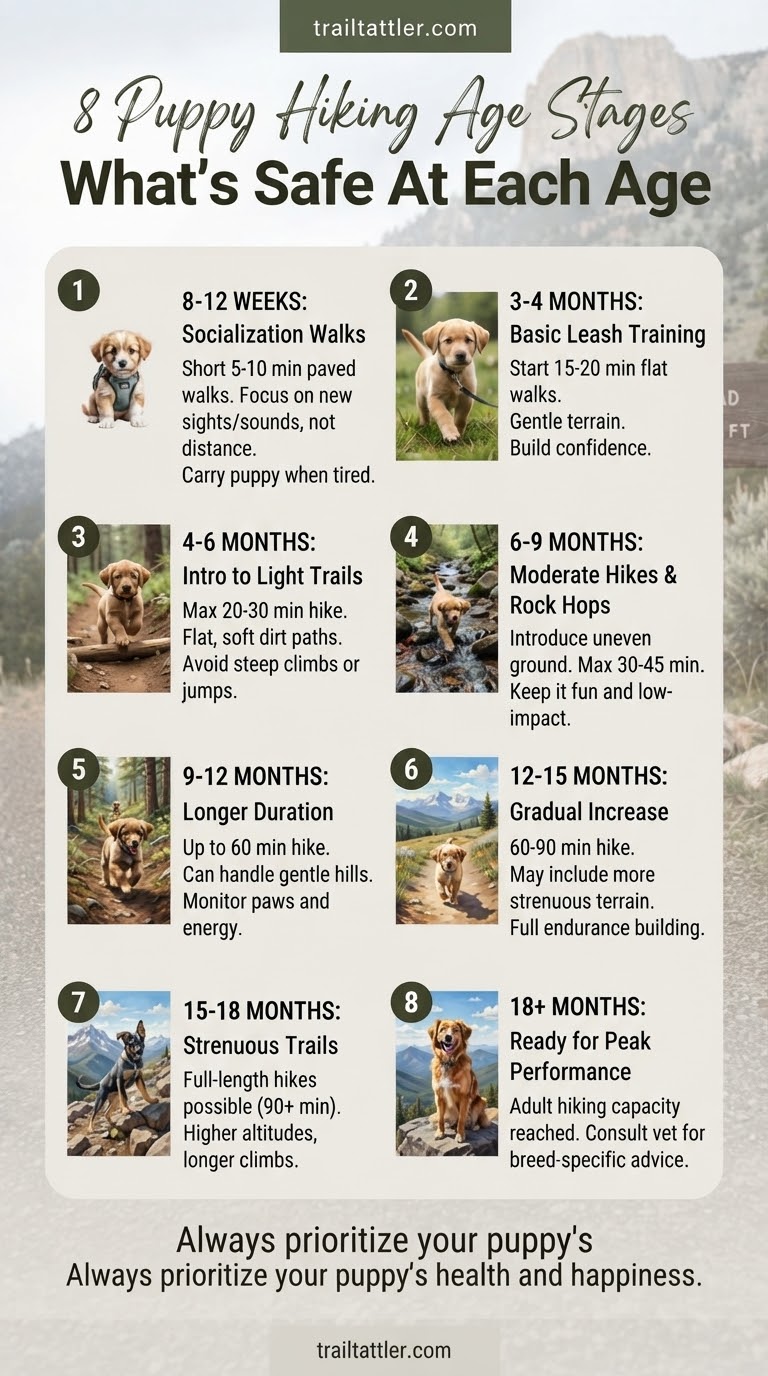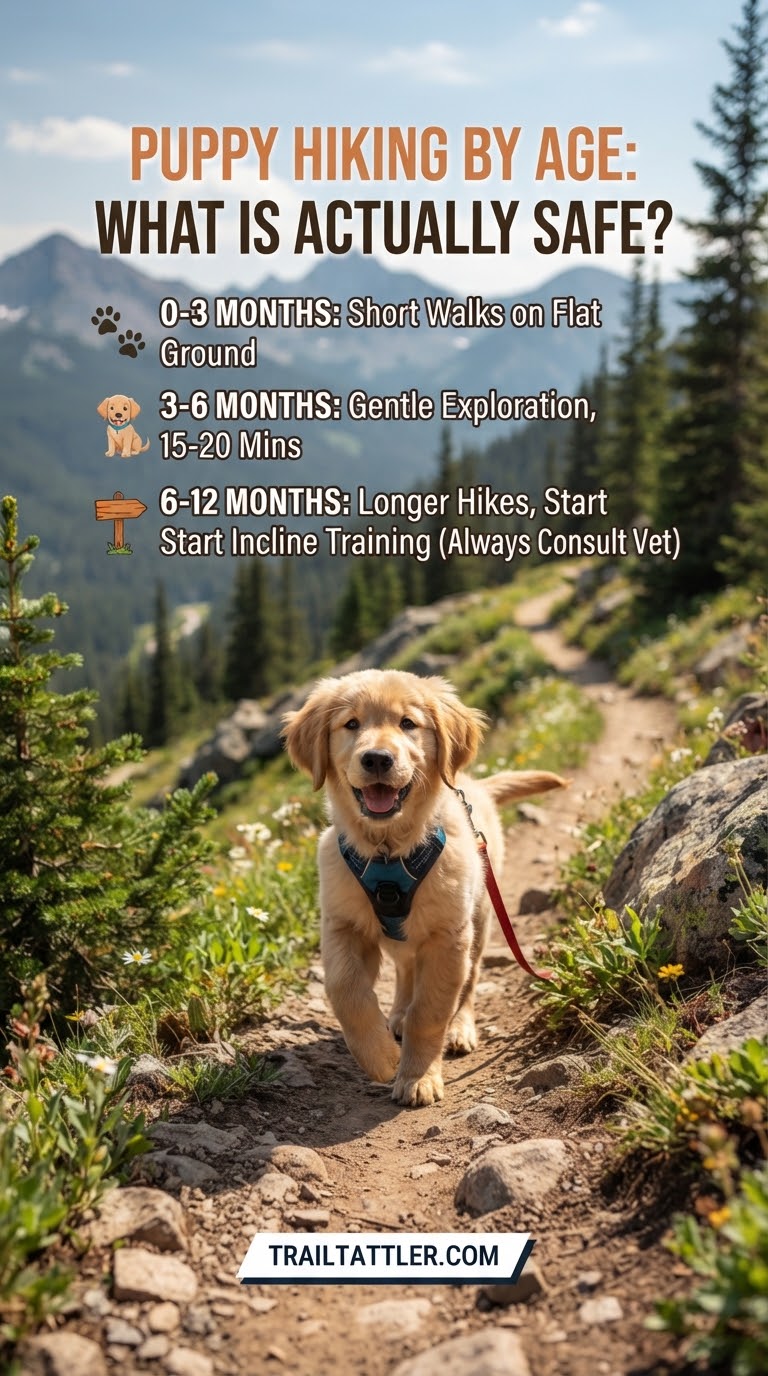
I get this question more than almost any other, usually from someone standing in a gear shop with a squirming eight-week-old and a trailhead map already open on their phone. The honest answer is that puppy hiking age isn't one number, it's a slow build, and I learned that the hard way with Figo, who came to me as a scrawny pup from a rescue in Lagos and spent his first couple of months doing laps of the block, not summits. What follows is the stage-by-stage version I wish someone had handed me then, plus the one habit — a pre-hike check — that matters more than any age chart.
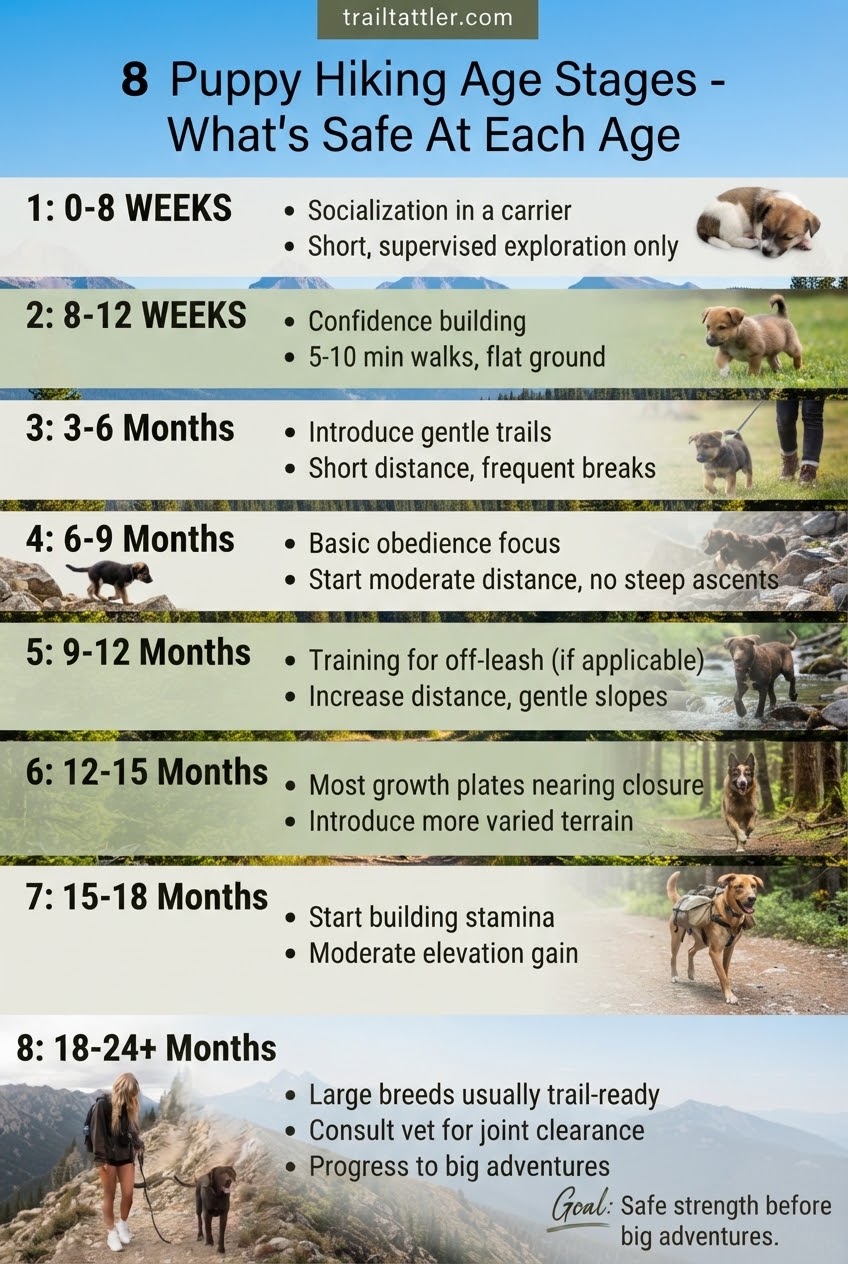
8–12 Weeks: Building Habits, Not Mileage
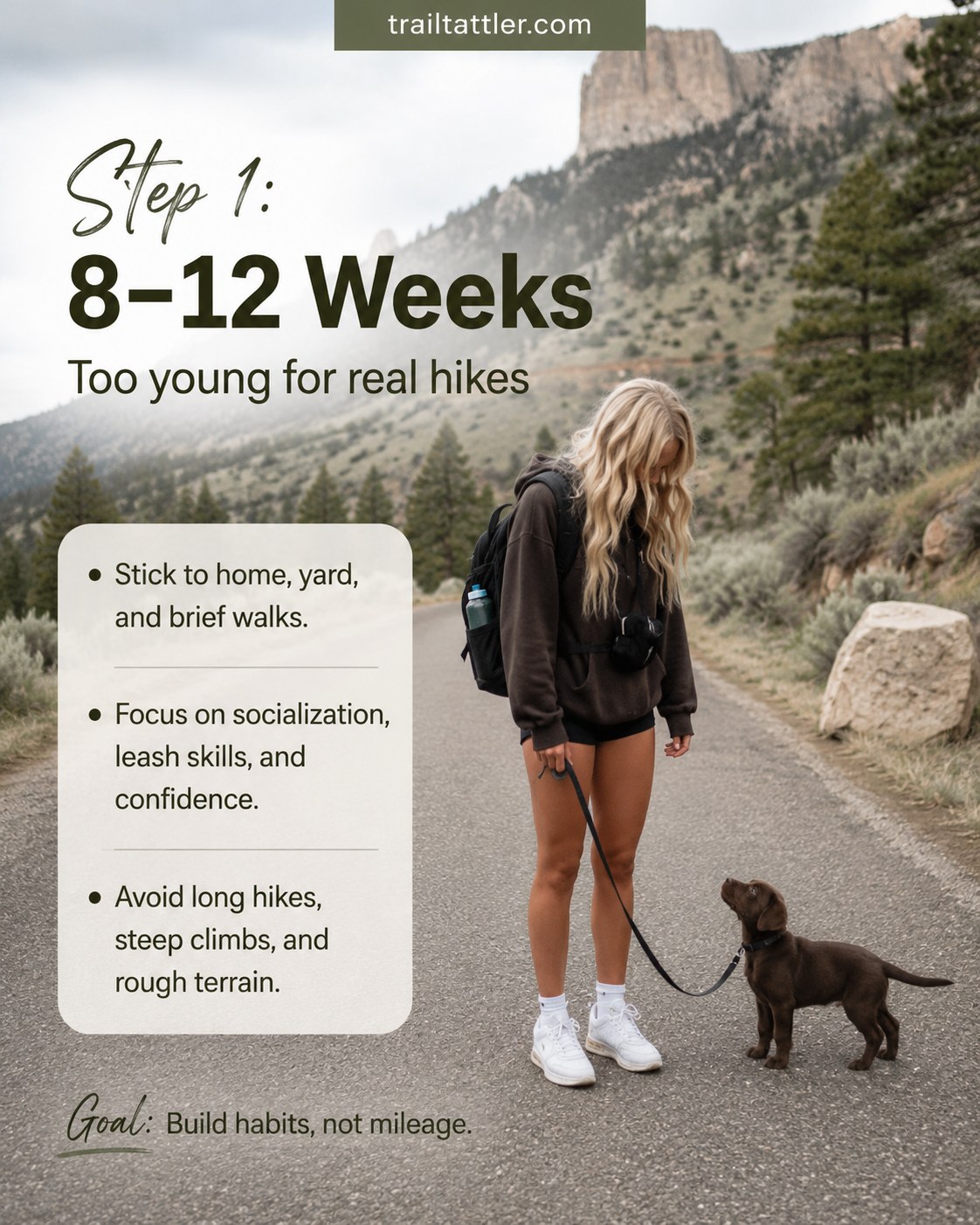
At this age your puppy's bones, joints and immune system are all still under construction, so the goal isn't distance, it's exposure. Vaccines usually aren't complete until somewhere around 14–16 weeks, which is reason enough to stay off busy trailheads regardless of how easy the terrain looks.
- Home and yard first: short leash walks around the block do more for a future hiking dog than any trail ever will at this age.
- Socialization is the real work: new surfaces, gentle noises, other dogs at a distance — this is the foundation for a calm trail dog later.
- Skip anything steep or long: growth plates are wide open, and there's no upside to testing them now.
I know it feels slow when the mountains are two hours away. Treat it as training camp, not a delay.
3–4 Months: The First Real Trail Walks
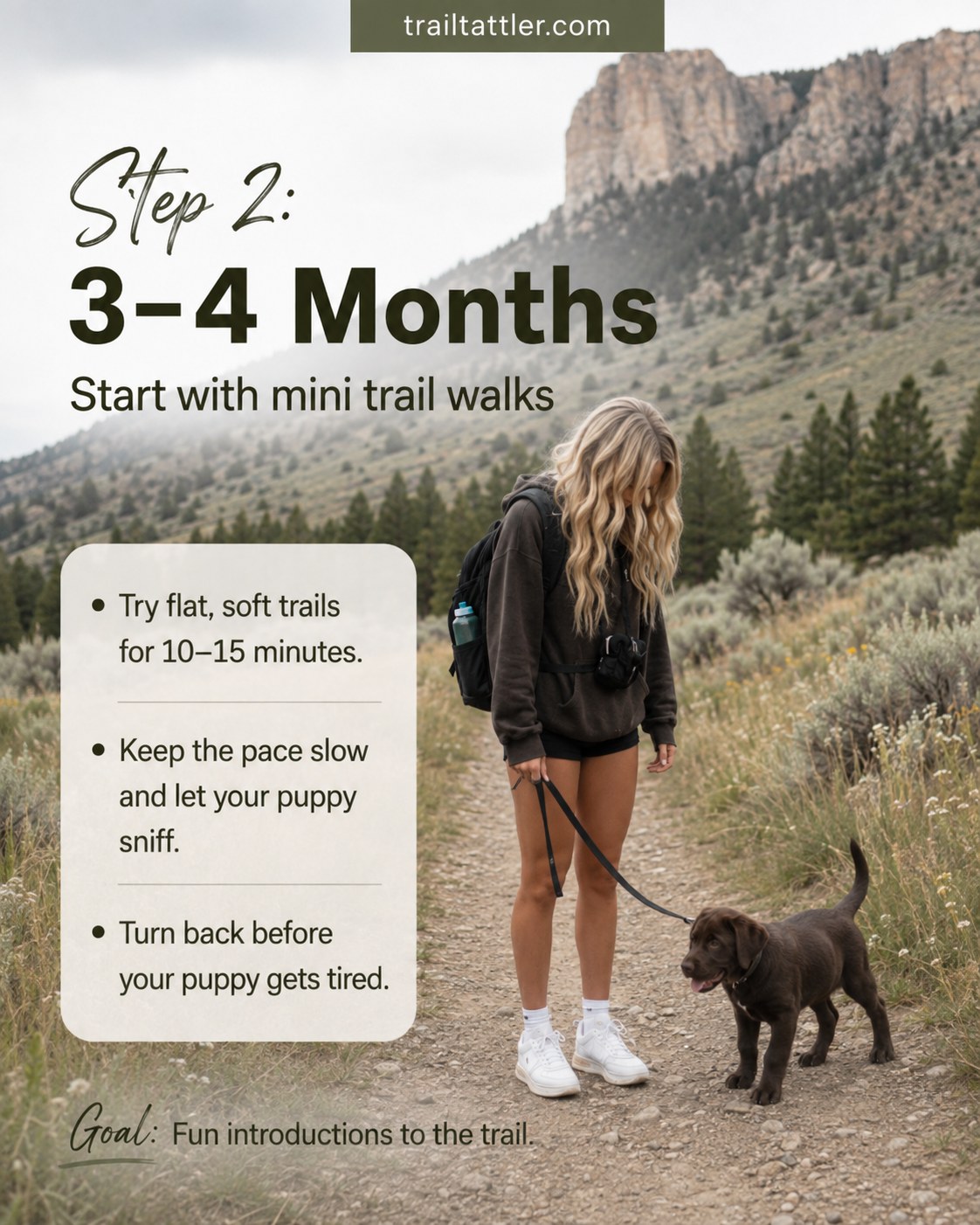
Once your vet gives the go-ahead, this is when the trail actually enters the picture — briefly. Flat, soft-surfaced paths for 10 to 15 minutes are plenty. Think a hard-packed greenway or a mellow park loop, not the rocky ridgeline you've been eyeing.
Let the pace be entirely the puppy's. Sniffing isn't wasted time, it's how a young dog reads a landscape, and rushing it just teaches leash-pulling instead of trail manners.
The dogs I've seen get hurt or scared off trails permanently almost always started too fast, too young — not too slow.
Turn back before your puppy asks to. A short, happy walk builds trail confidence; a walk that ends in a puppy sitting down and refusing to move builds the opposite.
4–6 Months: Short, Easy Hikes Only
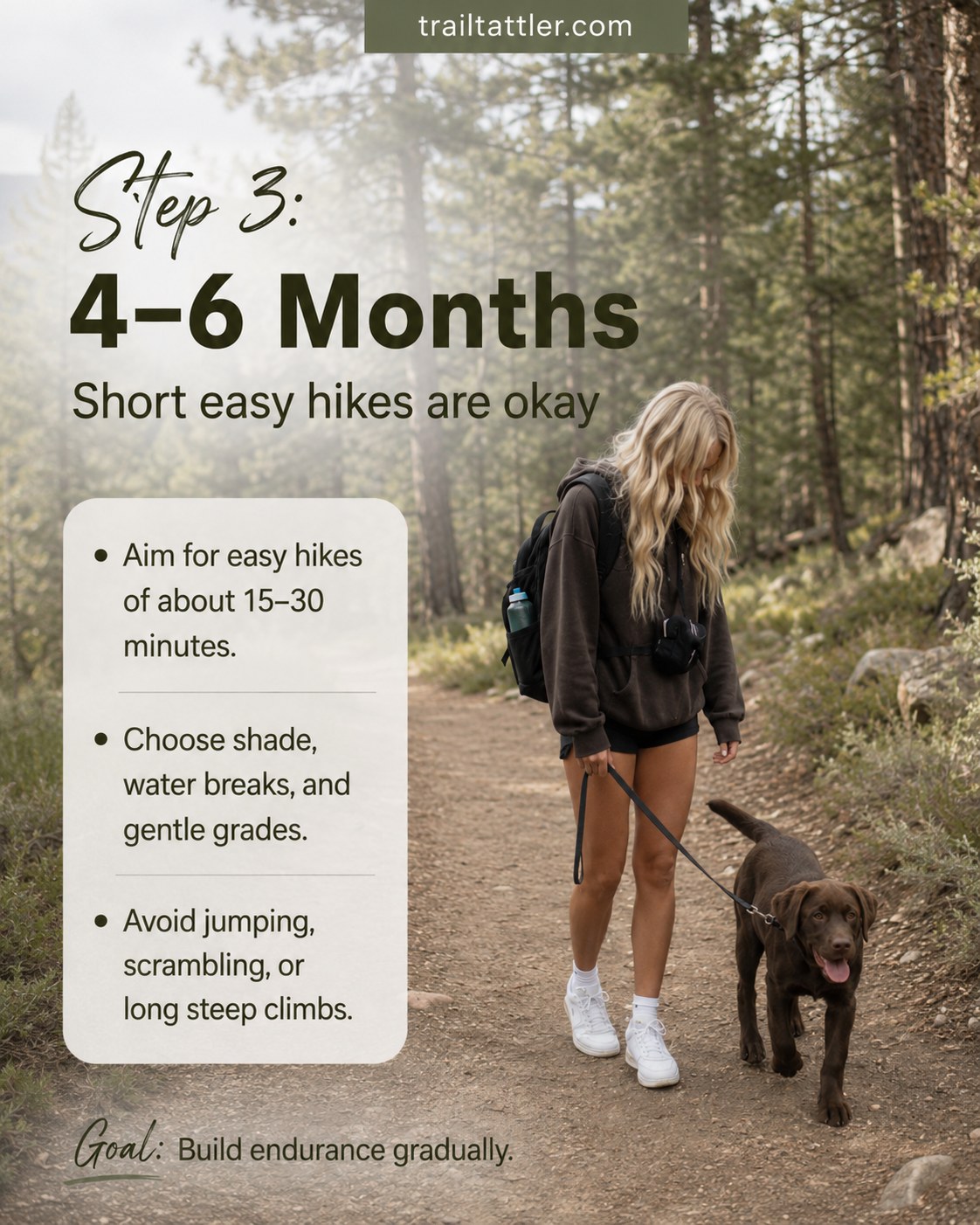
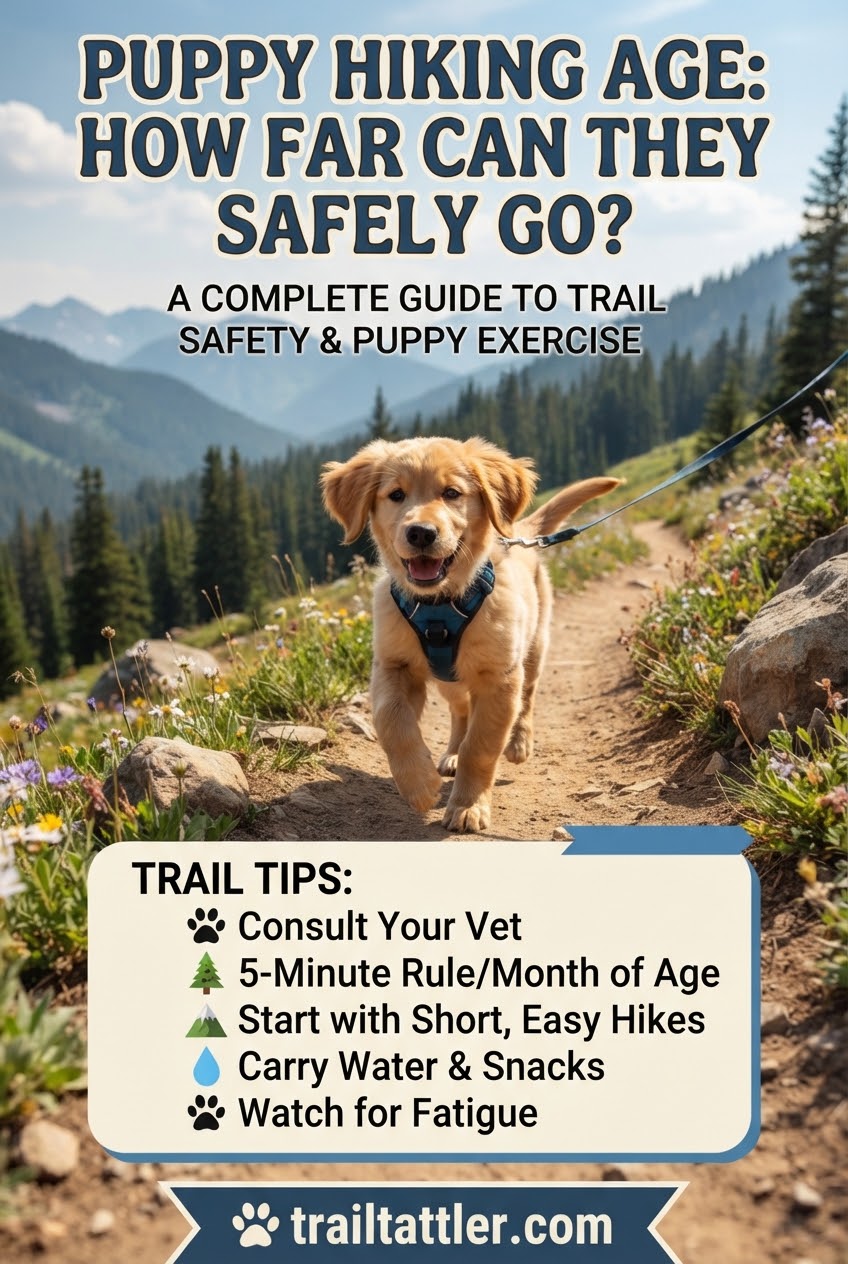
Now you can stretch to real, if modest, hikes — 15 to 30 minutes on gentle grades, with shade and water breaks built in rather than added as an afterthought. Paw pads are still toughening up at this stage, the same way a new pair of boots needs break-in miles before a big trip; I spent eight years fitting boots and the parallel holds up better than you'd think.
- Choose shade over exposure — young dogs overheat faster than adults.
- Avoid jumping off rocks or logs — growth plates are still forming and repeated impact isn't worth it.
- Skip scrambling and steep climbs entirely — save those trails for a year or more from now.
This is the stage where a lot of people get impatient. Don't. It's a few months, not a career.
6–9 Months: Graduating to Beginner Hikes
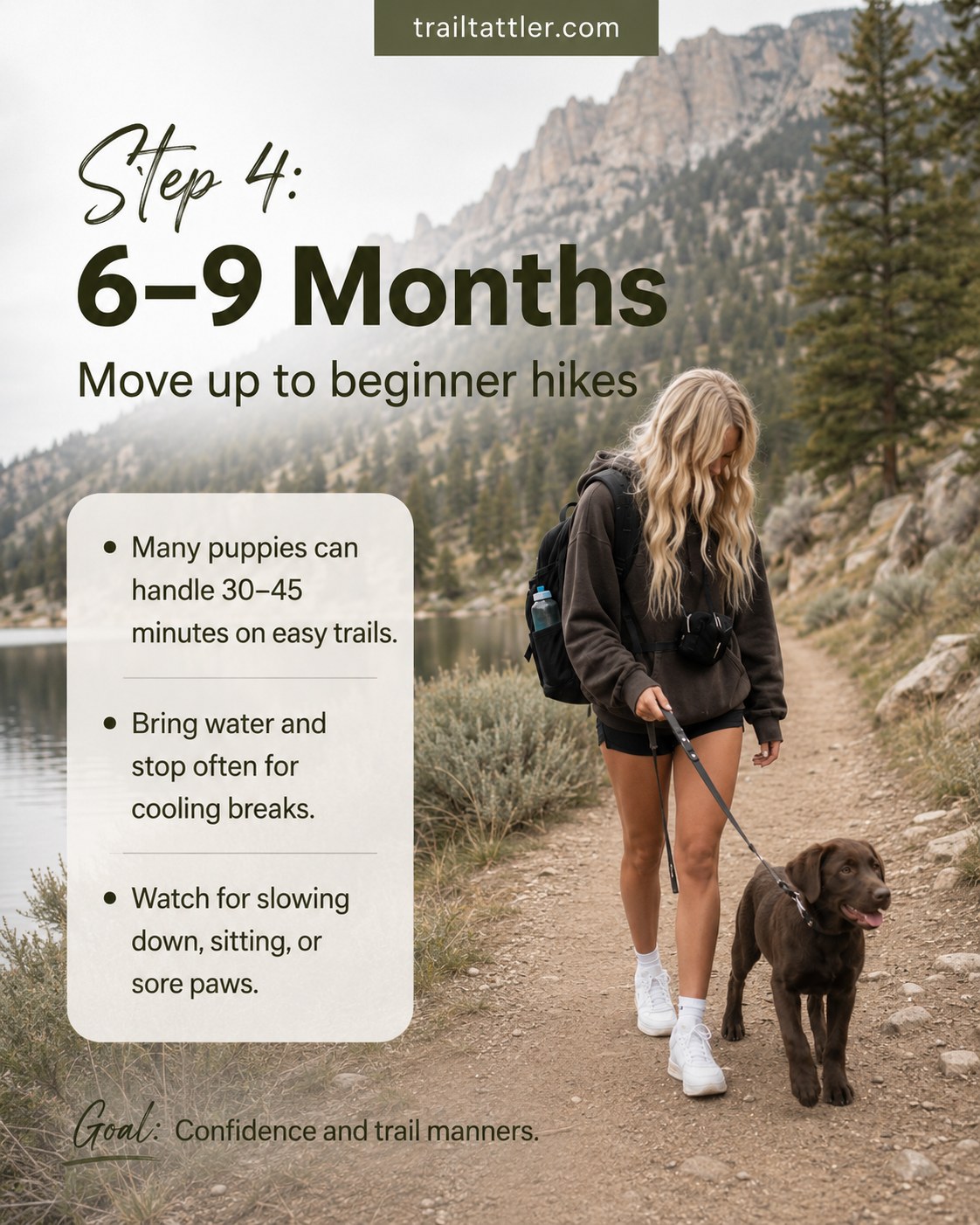
Many puppies can now handle 30 to 45 minutes on genuinely easy trails, and this is where I start applying the same turnaround thinking I use on my own hikes — except the trigger isn't the clock, it's the dog. Bring water for both of you and stop for cooling breaks before your puppy asks for them.
Signs it's time to head back
- Slowing down or lagging behind on the leash
- Sitting or lying down mid-trail
- Sore, hot, or tender paws when you check them
None of these are emergencies, but all of them mean you turn around, not push on because the trailhead is close. That's the same rule I'd give a hiking partner, and it applies equally to a dog who can't tell you in words.
9–12 Months: Adding Distance, Not Difficulty
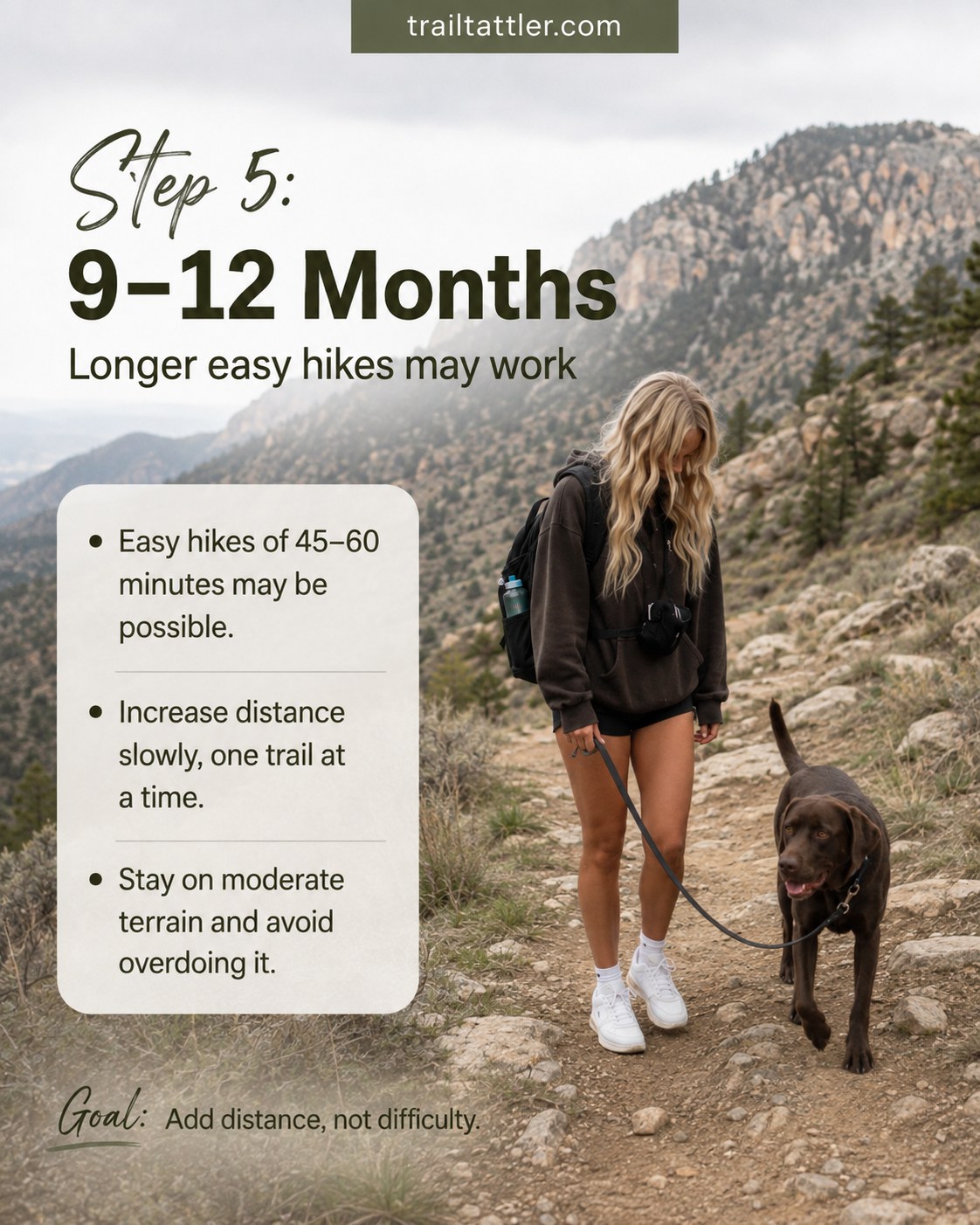
At this point easy hikes of 45 to 60 minutes may be possible for a lot of dogs, but the operative word is easy. This is where I see people make the mistake of chasing bigger elevation gain because the mileage is going well — wrong variable. Increase distance slowly, one trail at a time, and keep the terrain moderate rather than technical.
- One new trail, one new distance: don't stack both increases in the same outing.
- Watch recovery, not just performance: a dog who's stiff or unusually tired the next day just told you the last hike was too much.
This is also a reasonable age to start carrying a small collapsible bowl and extra water for the dog as a standing item in your pack — not just for hot days.
12–18 Months: Most Dogs Are Ready for Moderate Hikes
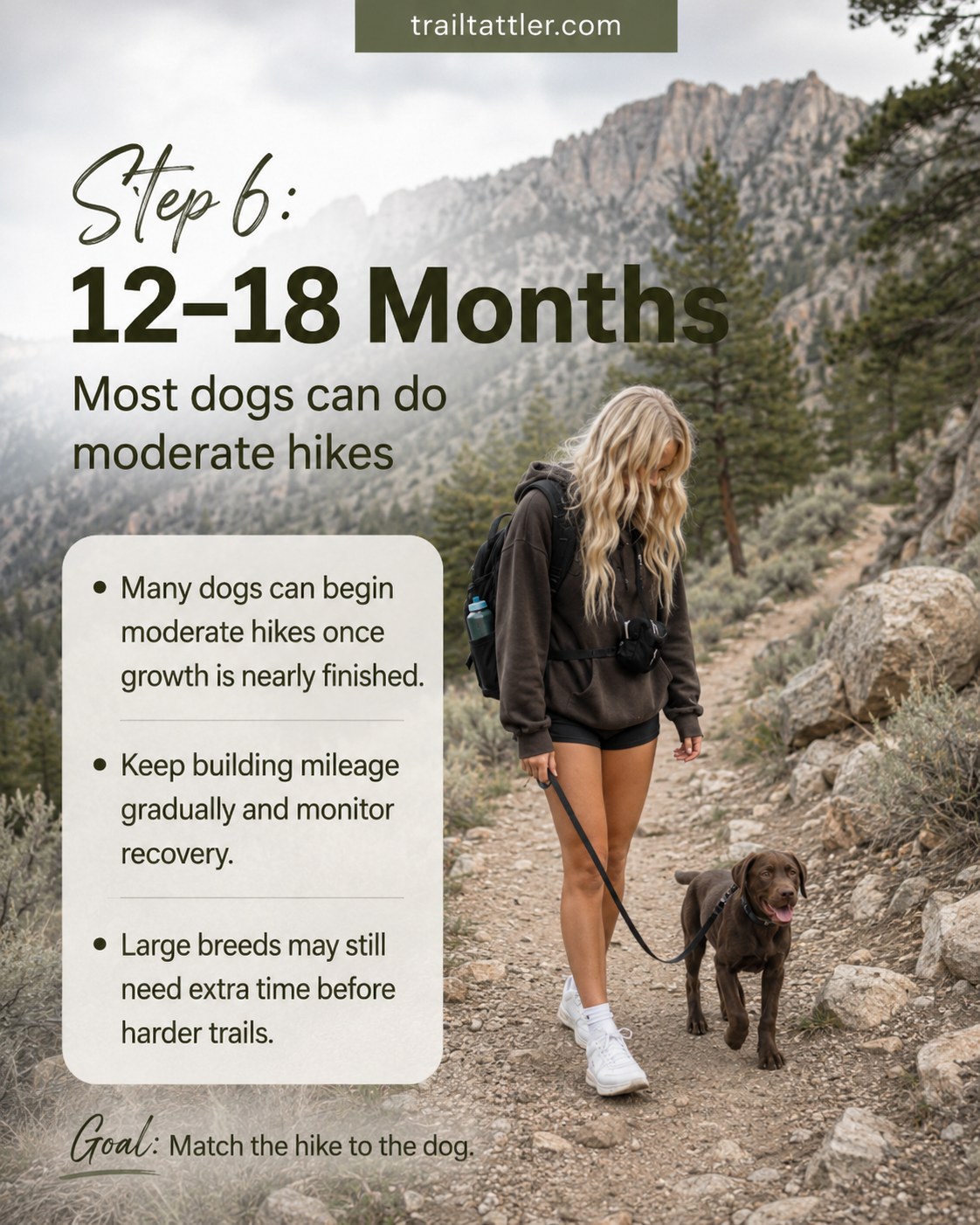
For a lot of breeds, growth is nearly finished by now, and moderate hikes become realistic — though I'd translate that word the same way I do for human hikers: real numbers, not a vibe. Start with modest elevation gain per mile and build mileage gradually while watching how your dog recovers.
- Medium and small breeds are often physically mature enough for this by the early end of the range.
- Large breeds may still need extra time before their joints are ready for harder trails, even if their energy says otherwise.
My own dog is a medium podenco mix, all muscle and opinions, and he matured on the faster end of this window — a Great Dane puppy the same age would not be.
18–24 Months: Large Breeds Reach Trail-Ready
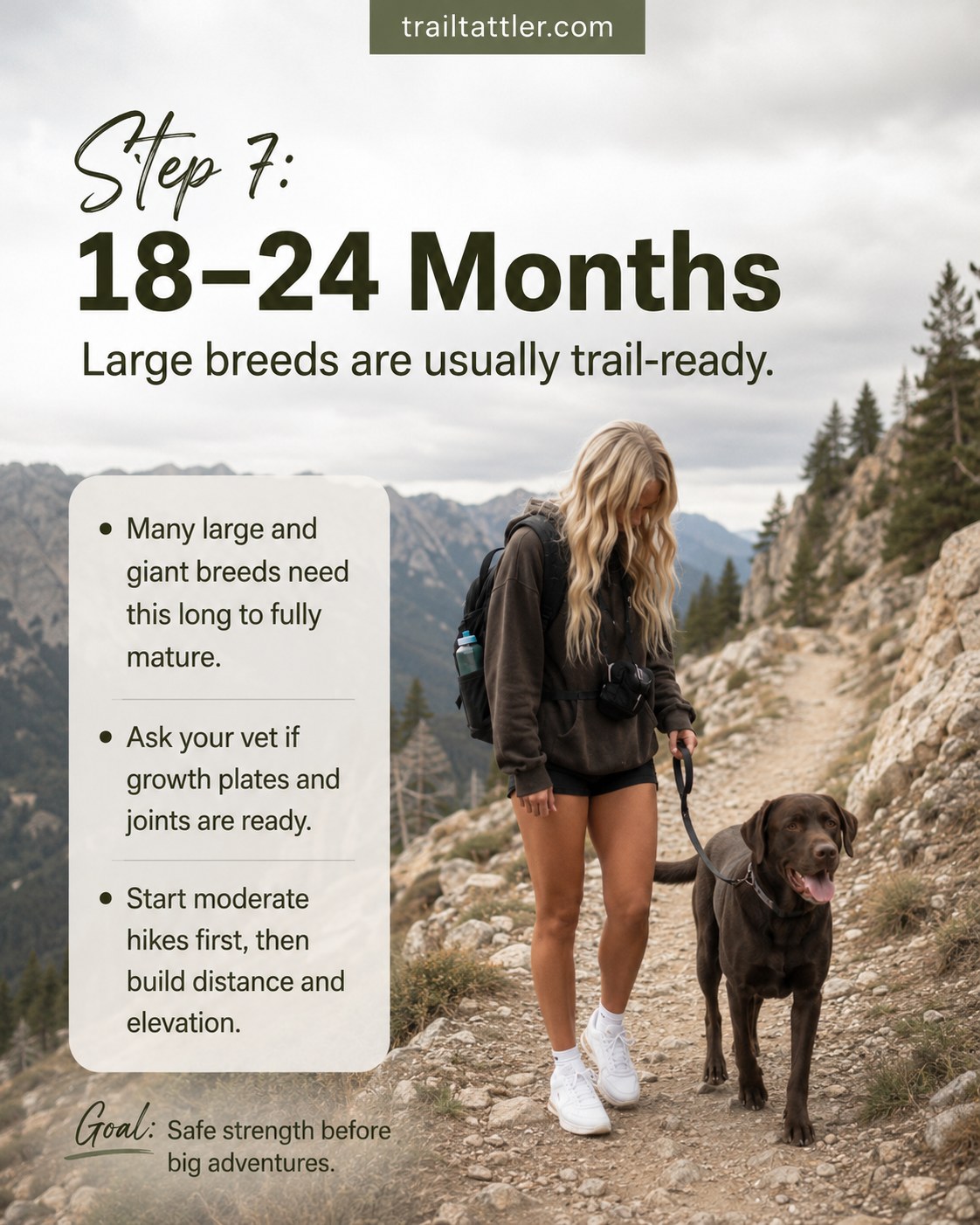
This is the stage where large and giant breeds typically catch up to where smaller dogs were months earlier. Growth plates in big dogs close later, and that's not a guideline to shrug off — it's an actual skeletal timeline your vet can check.
- Ask your vet whether growth plates and joints are ready before committing to serious mileage or elevation.
- Start with moderate hikes even once cleared, rather than jumping straight to the hardest trail on your list.
- Build distance and elevation gradually from there, the same way you'd condition a new hiking partner of any species.
A dog who's finally cleared for real trails is exactly the dog you don't want sidelined by an overuse injury in month one.
Before Every Hike: The Check That Matters More Than Age
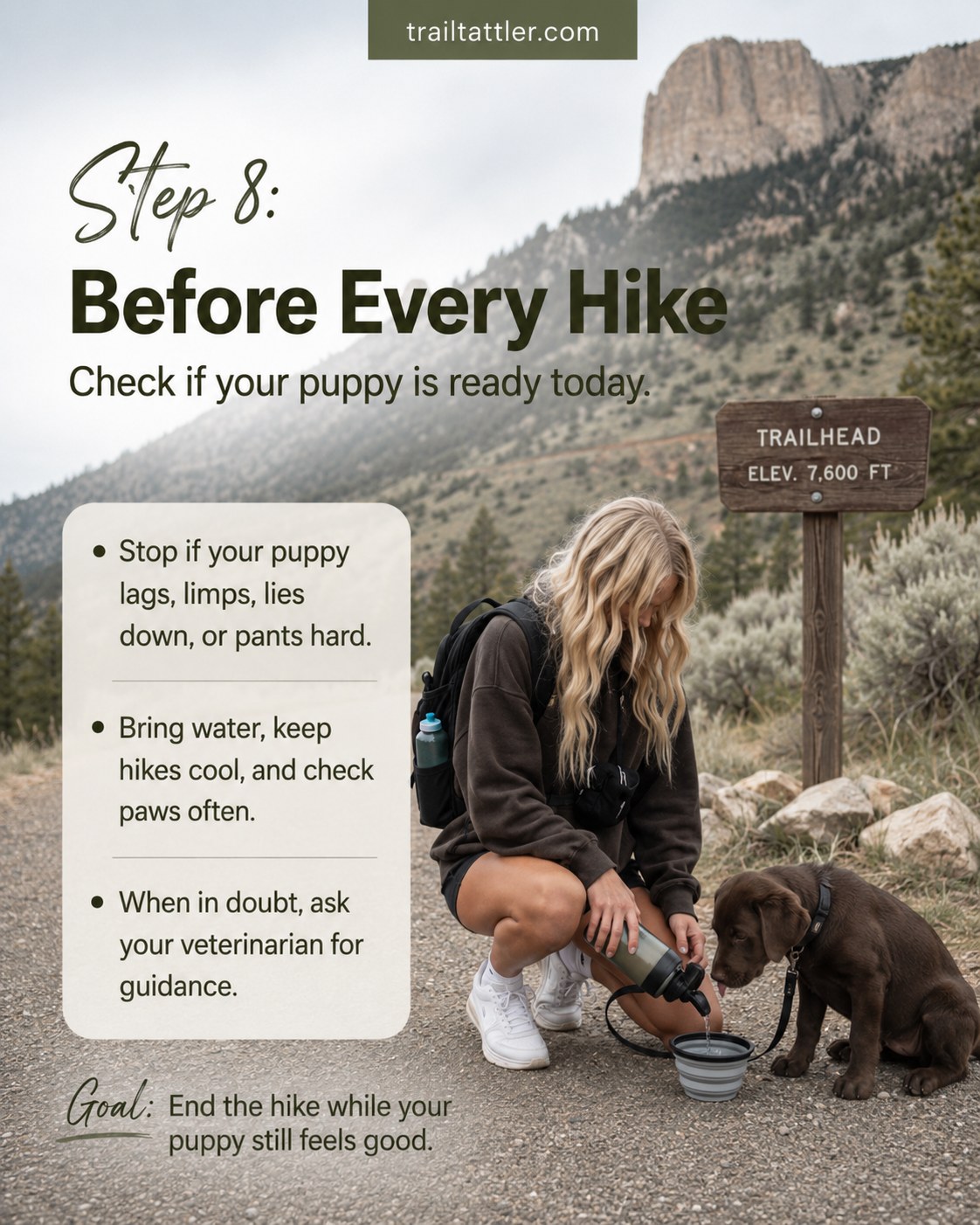
Here's the thing the age chart can't tell you: readiness changes day to day, long after your dog is technically an adult. I run a version of this check before every hike, mine or Figo's, because the same SAR habit applies — assess before you commit, not after something goes wrong.
- Stop if your dog lags, limps, lies down, or pants hard — these are the same red flags at two years old as they are at six months.
- Bring water and check paws often, especially on hot rock or sun-exposed trail.
- When in doubt, call your vet, not the internet.
Worth saying plainly here too: most U.S. national parks don't allow dogs on trails at all, so check the specific park before you drive out expecting otherwise — I've had that conversation at more than one trailhead.
None of these windows are a guarantee — they're a starting point, and your vet knows your dog's breed and build better than any chart does. What's stayed true across every stage with Figo is that the dog tells you what it can handle, if you're paying attention instead of chasing the mileage you had planned.

Frequently Asked Questions
Can I take my 8-week-old puppy on a real trail?
No, not yet. Stick to home, yard, and short walks while vaccines finish and your puppy builds basic leash and socialization skills first.
How do I know if a hike was too much for my puppy?
Watch for slowing down, sitting mid-trail, sore paws, or unusual stiffness the next day. Any of those means the previous distance or terrain was too much.
Do large breed puppies really need almost two years before hiking hard trails?
Many do. Large and giant breeds have growth plates that close later than small and medium breeds, so ask your vet before pushing distance or elevation.
Are dogs allowed on trails in national parks?
Usually not. Most U.S. national parks prohibit dogs on trails entirely, so check the specific park's rules before you plan a hike around your dog.