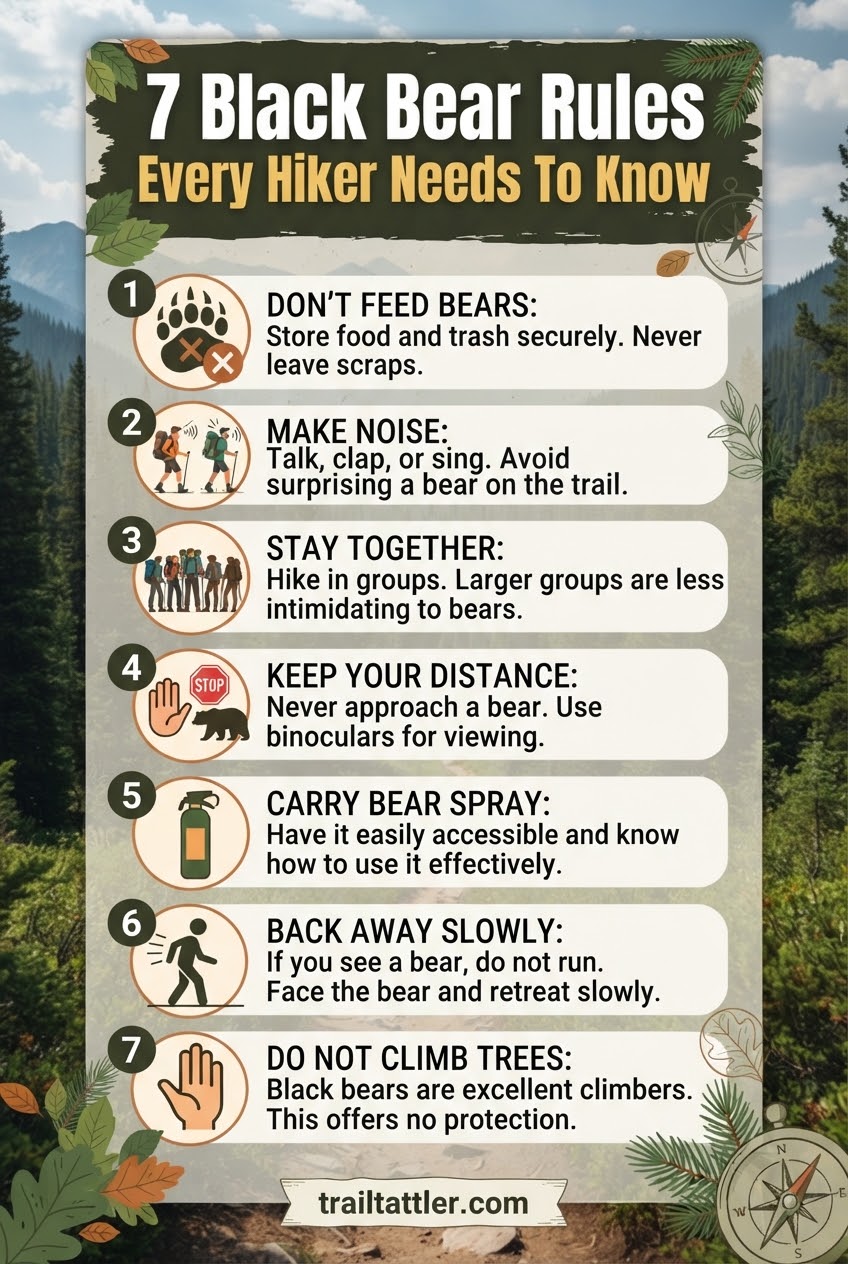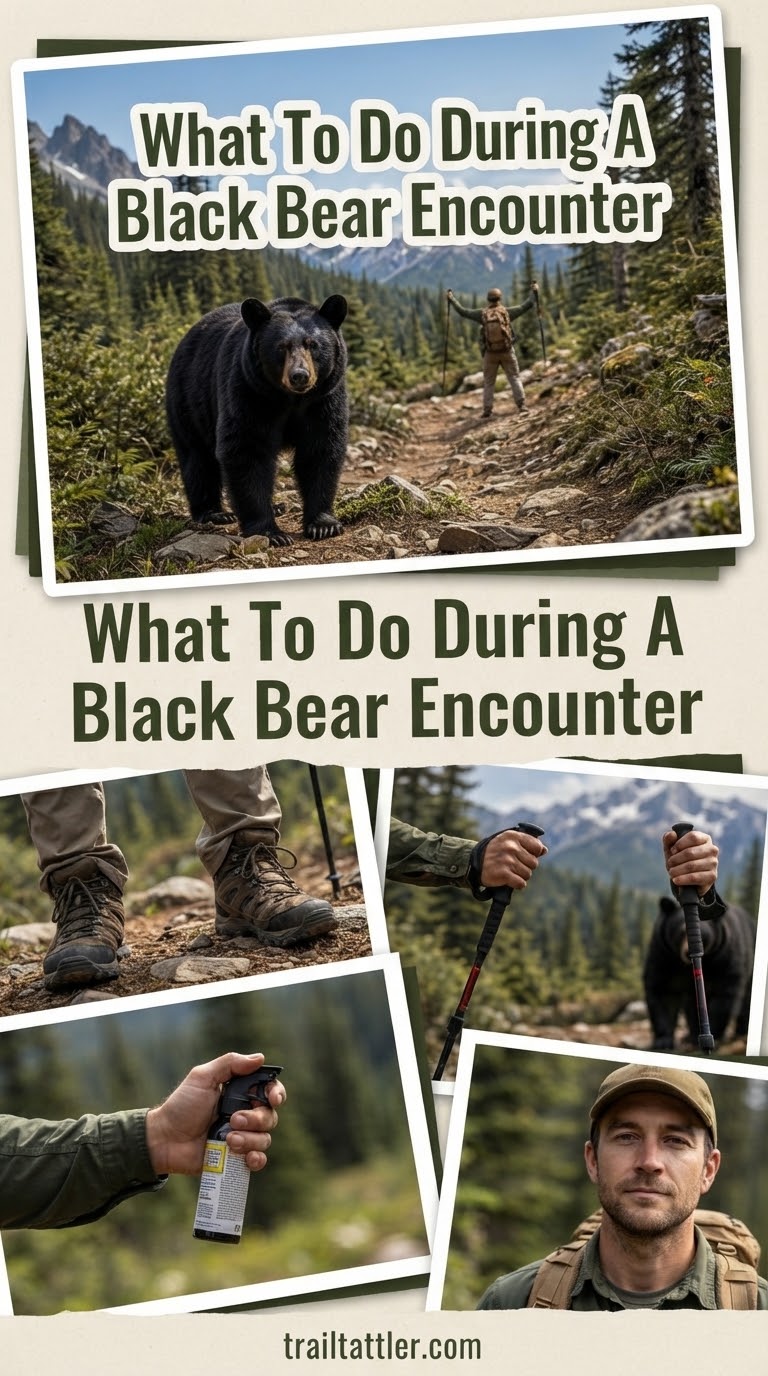
I've had three decent black bear sightings in the Smokies over the years, and every one of them started the same way: mid-stride, brain catching up half a second after my eyes did. There's a lot of bad advice floating around about bears — most of it borrowed from grizzly country and applied wrong — so here's the actual sequence, step by step, the way I'd walk a nervous hiker through it on the trail.
Stop and Read the Situation Before You Do Anything Else
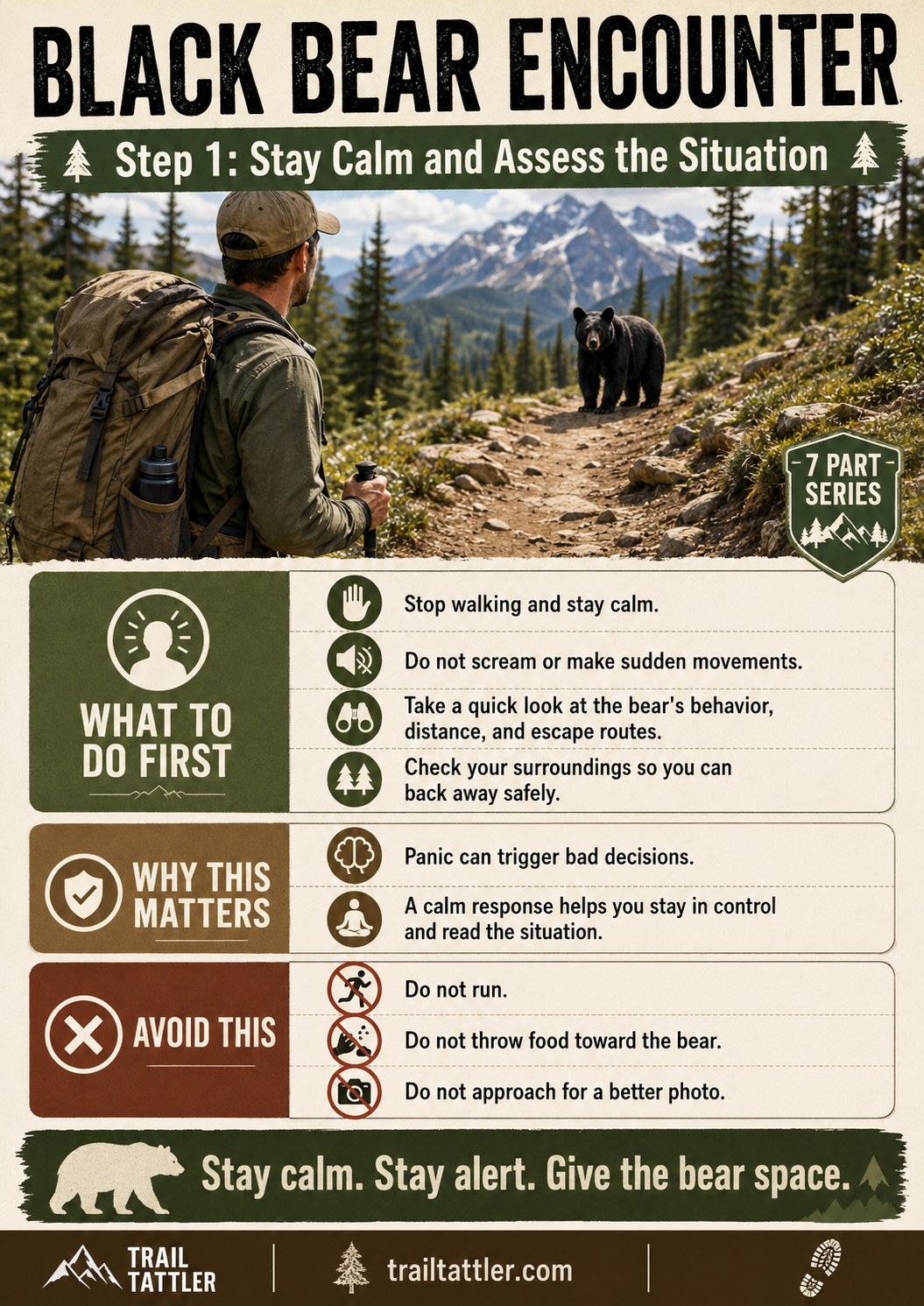
The first move isn't a move at all. Stop walking, stop talking loudly, and take stock before your body decides for you. Every bad bear encounter I've heard about from other hikers started with someone reacting before they'd actually looked at what was in front of them.
- Distance matters more than anything else — a bear at eighty yards grazing on berries is a completely different situation than one at fifteen feet on the same tread you're standing on.
- Watch the behavior, not just the animal — is it looking at you, ignoring you, or moving with purpose in a direction that isn't yours?
- Check your own footing — know where the open ground behind you is, because that's your route in about ninety seconds.
Panic is what turns a sighting into an incident. I've watched people bolt at wildlife that hadn't even noticed them yet, and that's the one move that reliably makes things worse.
Talk to It Like You Mean It, and Make Yourself Bigger
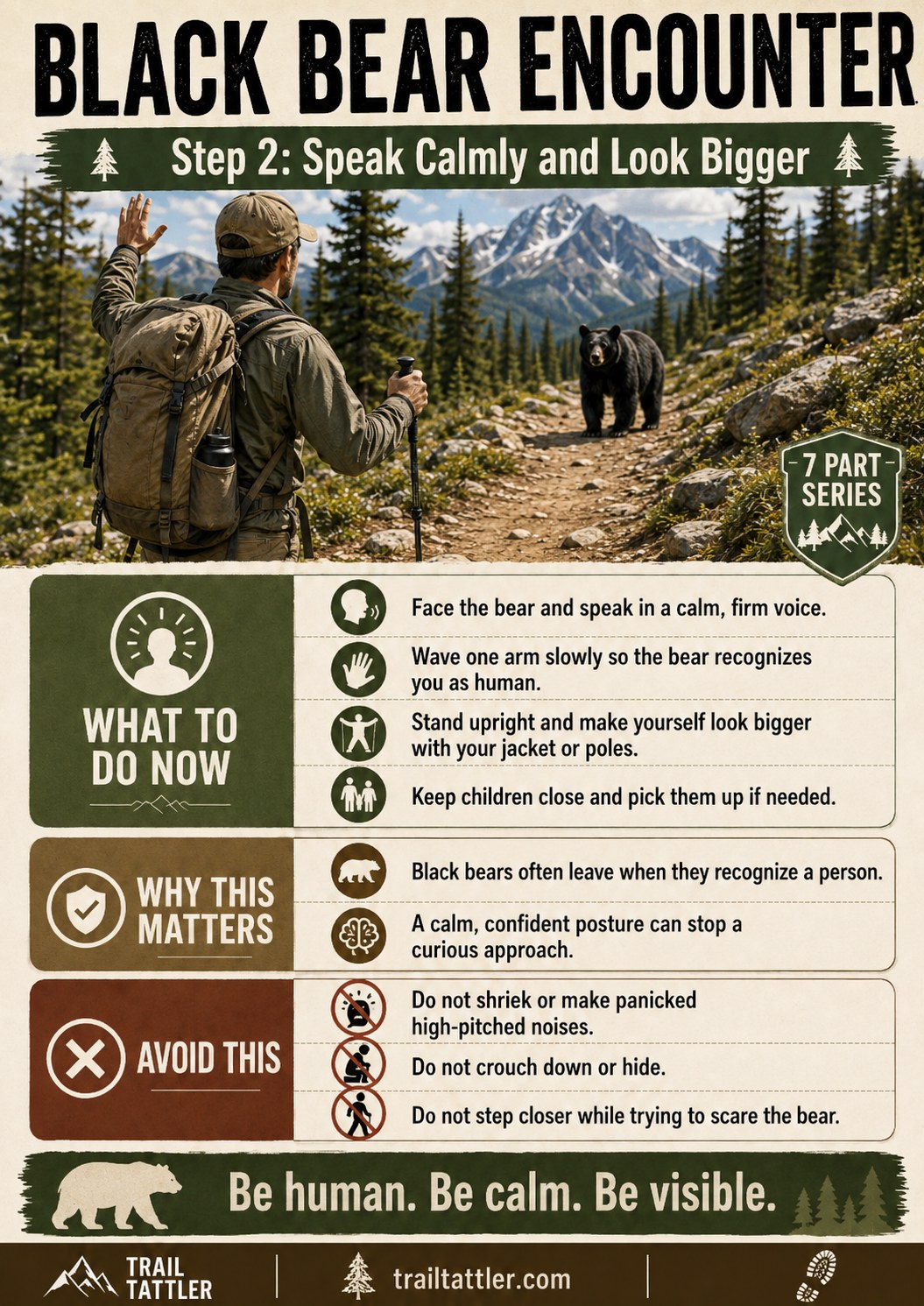
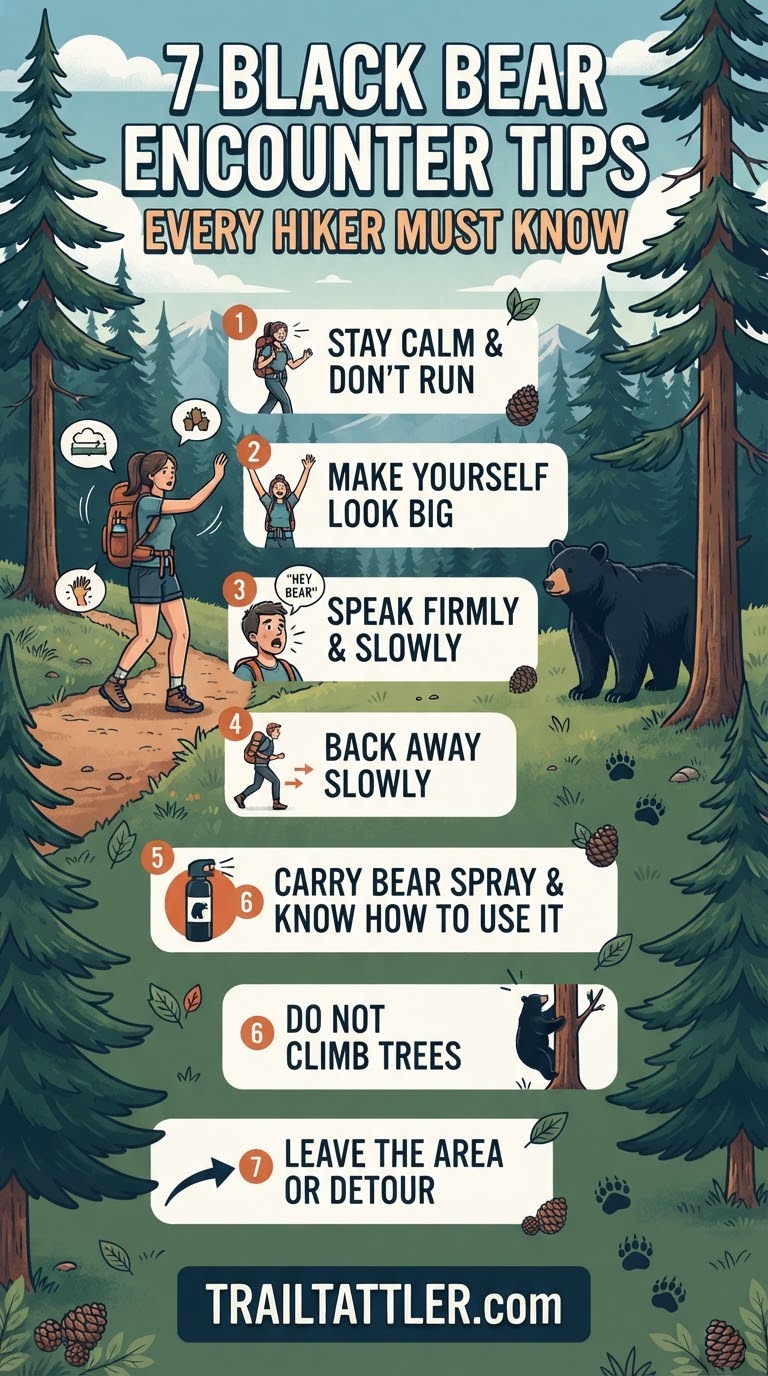
Once you've clocked the distance and the bear knows you're there, the job is to remove any doubt about what it's looking at. Face the bear, stand up straight, and use a calm, firm voice — not a scream.
A bear that already recognizes you as human usually just leaves. The whole point of standing tall and talking is closing the gap on that recognition as fast as possible.
What actually works here:
- Speak in full sentences, not yelps — something like "Hey bear, I'm human, I'm leaving" said steadily.
- Raise a jacket or your trekking poles overhead to add height and silhouette.
- Get kids or smaller members of your group close in and behind you, calmly, not in a scramble.
Crouching down or going quiet to avoid attention is the instinct a lot of people have, and it's backwards — it reads to the bear as prey behavior, which is exactly the impression you don't want to give.
Retreat Without Turning Your Back
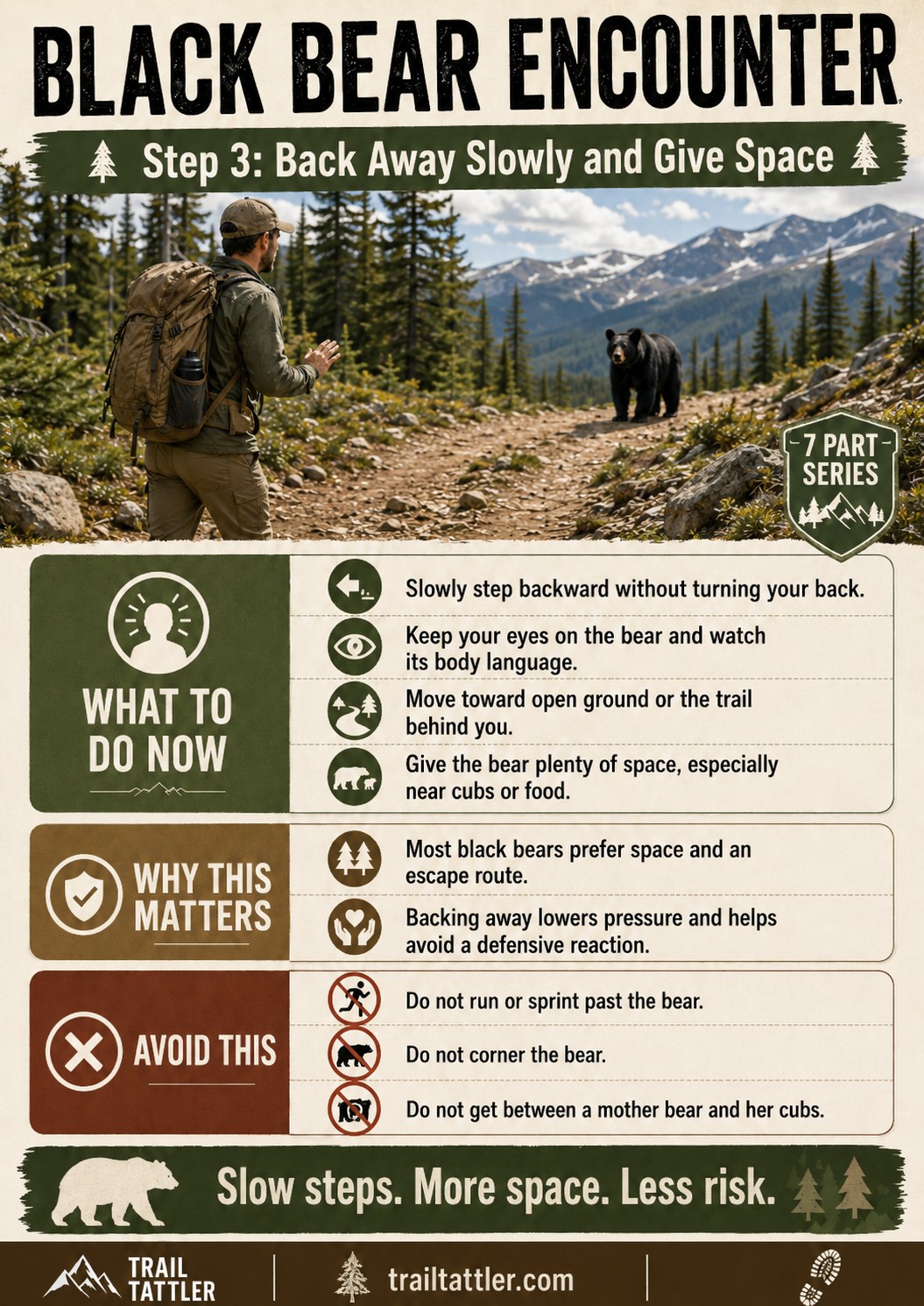
This is the step people botch by rushing it. Backing away is slow, deliberate, and eyes-forward the entire time.
- Step backward, not sideways or forward — you're widening distance, not repositioning for a photo.
- Keep watching the bear's body language as you go — ears, posture, whether it's tracking you or losing interest.
- Aim for open trail or terrain you already scouted in step one, not into brush where you can't see what else is around you.
Give extra room — a lot of it — if there's any hint of cubs nearby or a food source the bear is guarding. Most black bears want an exit as badly as you do; your job is to leave one open for both of you. What you're avoiding is getting boxed in between the bear and something it's protecting, which is the single most common setup for a defensive response.
Bunch Up and Get the Spray Out
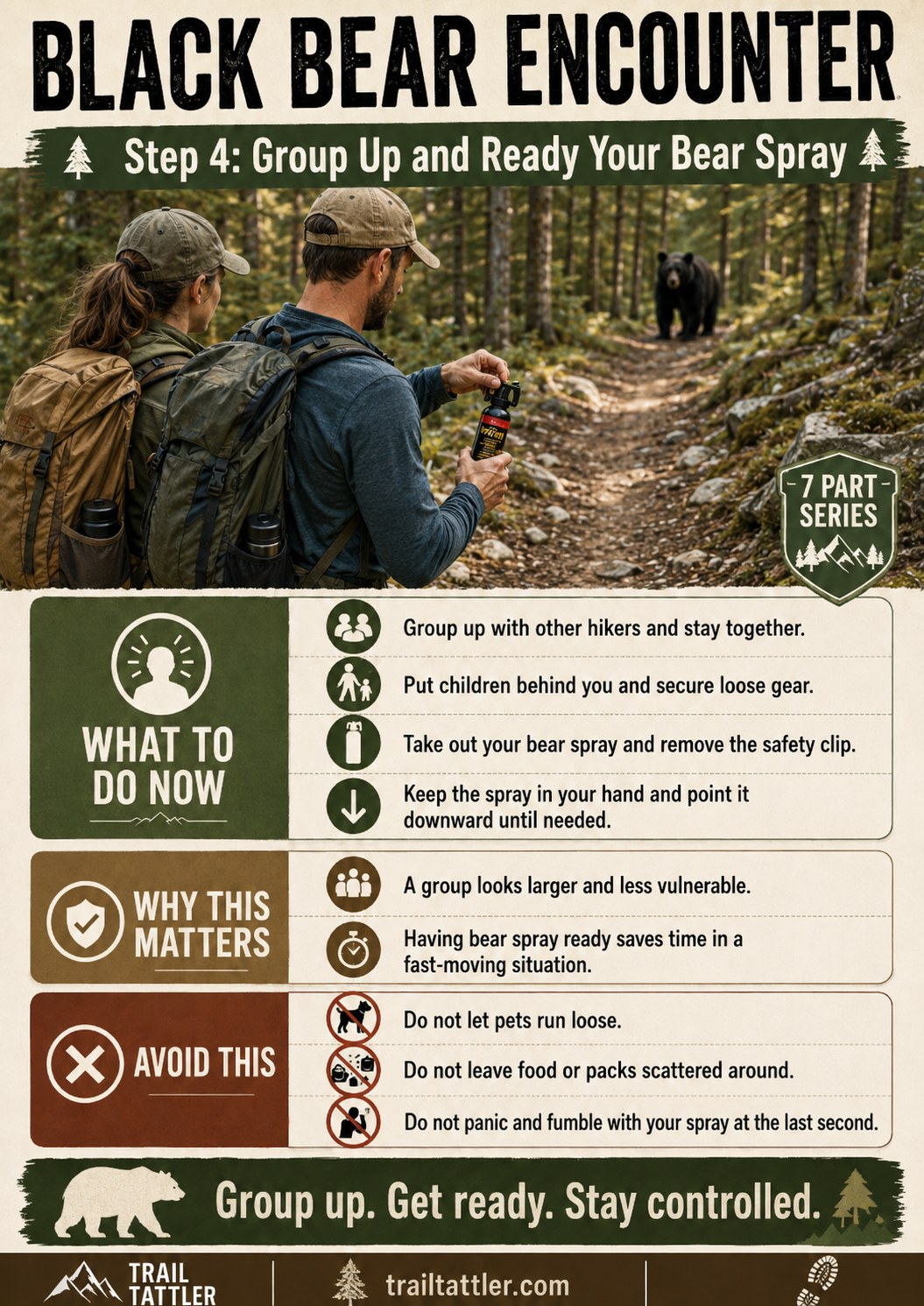
If the distance isn't closing on its own and there's more than one of you, this is where the group does its job. Bodies together look bigger and less vulnerable than the same people scattered across thirty feet of trail — bears read a group the same way a lot of predators do.
This is also where I'll say plainly: if you've got a dog with you off leash, this is exactly why leash rules in bear country aren't bureaucratic nonsense. A loose dog can bolt toward the bear, get chased, and bring the problem straight back to you. Get it close, get it leashed, and keep your pack contents together instead of scattered on the ground.
- Take the safety clip off your bear spray now, not later — fumbling with it in the moment costs seconds you don't have.
- Hold it low and ready, pointed down, not waving it around.
- Secure loose gear and children so nothing draws separate attention.
Getting ready doesn't mean the encounter is escalating — it means you're not caught flat-footed if it does.
If It Keeps Coming, Hold Your Ground
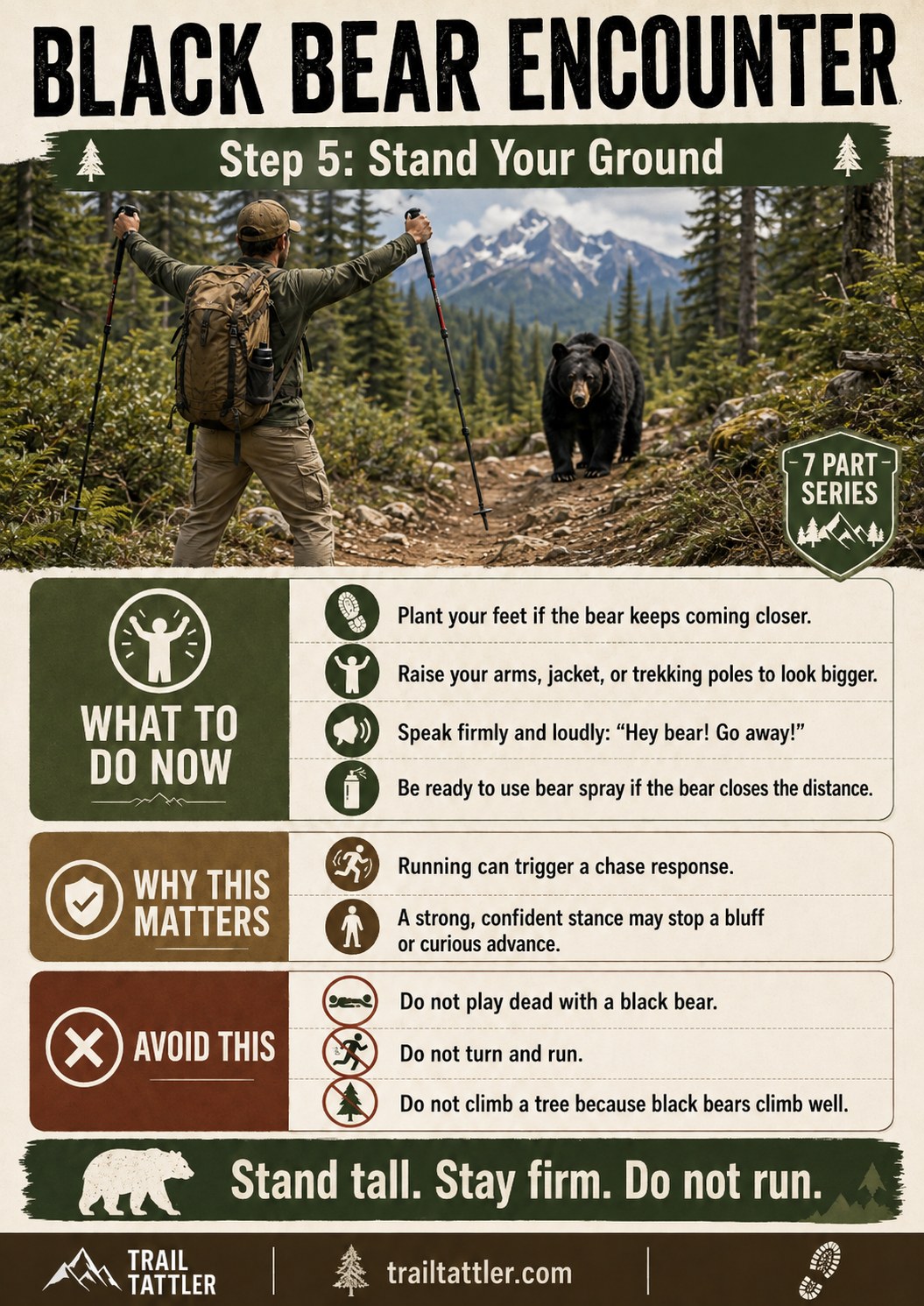
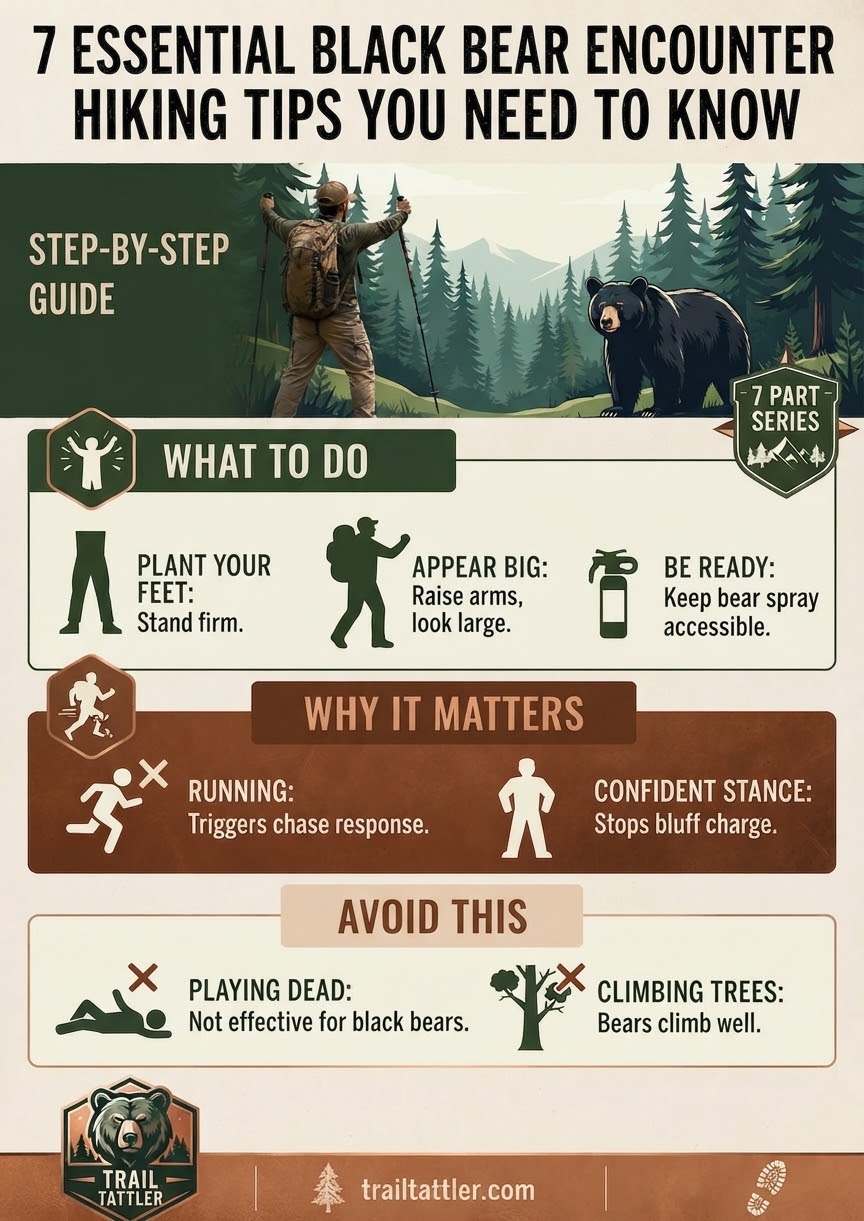
A bear that keeps closing distance despite everything above is a different situation, and the instinct to run is exactly the wrong one. Running triggers a chase response in an animal that can outrun you on a bad day and outclimb you on every day — black bears are genuinely good climbers, so a tree is not the escape plan some people think it is.
Plant your feet. Raise your arms, jacket, or poles again to look as large as possible, and say it firmly — "Hey bear, go away" — loud enough to mean it. A confident stance stops a lot of bluff charges and curious approaches before they go any further.
What you don't do here: play dead. That guidance belongs to grizzly encounters where submission can end a defensive attack — it's the wrong move for a black bear, and worth knowing the difference before you're standing there deciding under pressure.
Deploying Bear Spray the Right Way
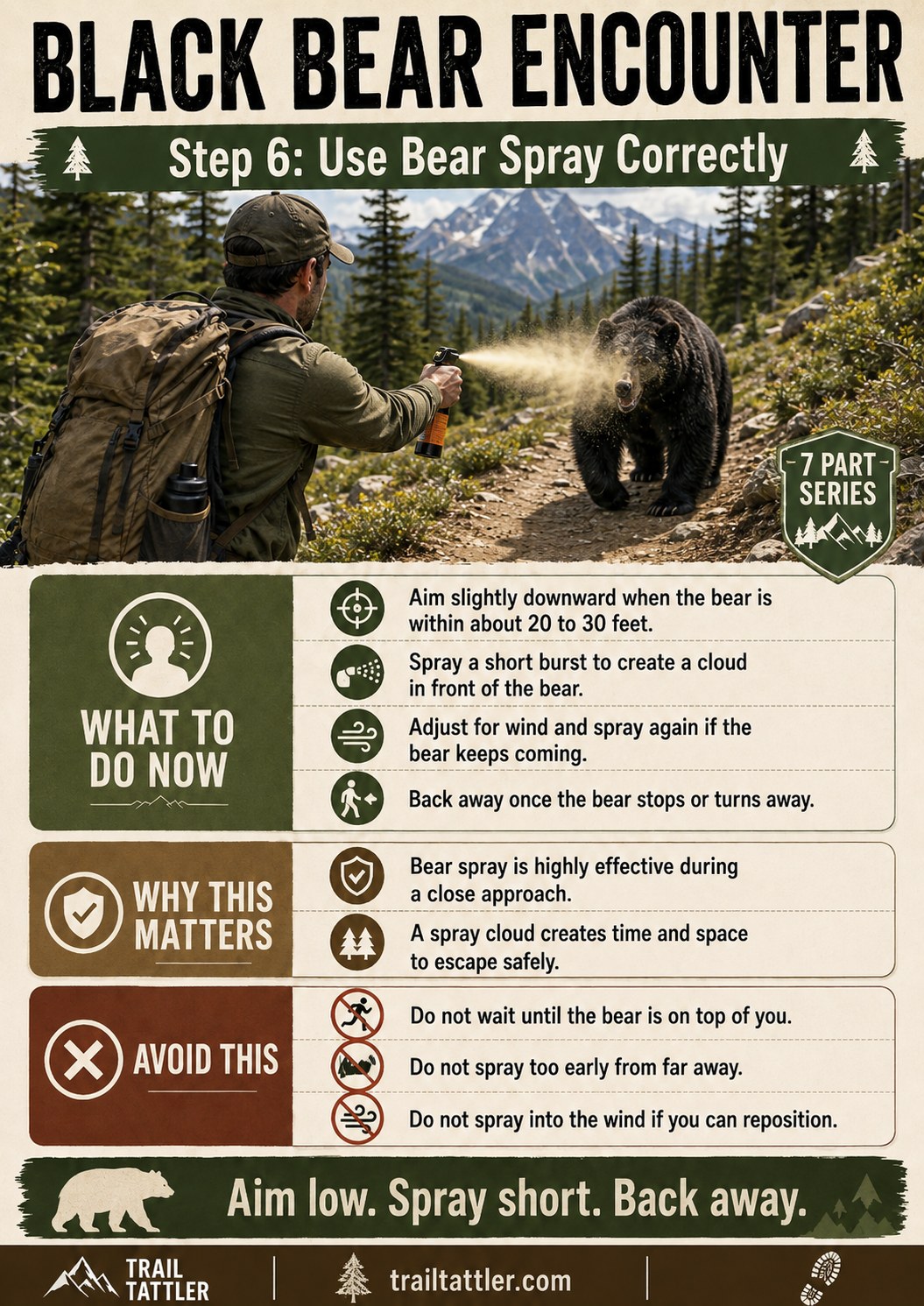
From the retail years, I can tell you the number one failure with bear spray isn't the product — it's that people carry it expired, buried at the bottom of a pack, or never practiced the motion once before they needed it. A dummy can, sprayed once in your backyard, is worth doing before your trip.
When the bear closes to roughly 20-30 feet:
- Aim slightly downward, not straight at its face — you're creating a cloud it has to walk through, not landing a direct hit.
- Short burst, not a continuous stream — you likely have less canister than you think, and a sustained spray empties it fast.
- Check the wind before you fire — spraying straight into a headwind puts the cloud back on you.
- Back away as it turns or stops, rather than standing to watch.
Waiting until the bear is nearly on top of you shrinks your margin to almost nothing — the spray needs time and distance to do its job.
If Contact Happens, Fight Back — Then Report It
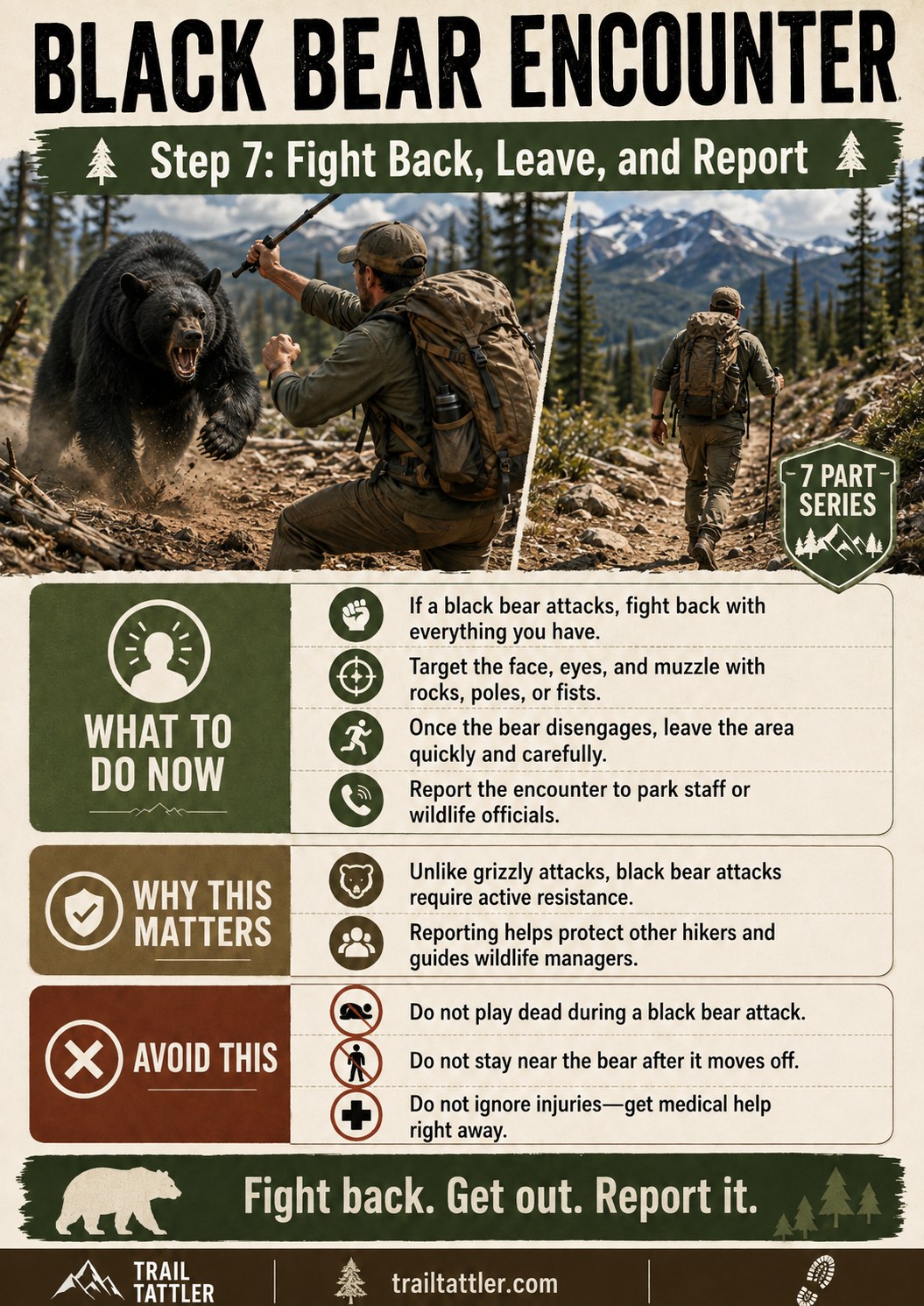
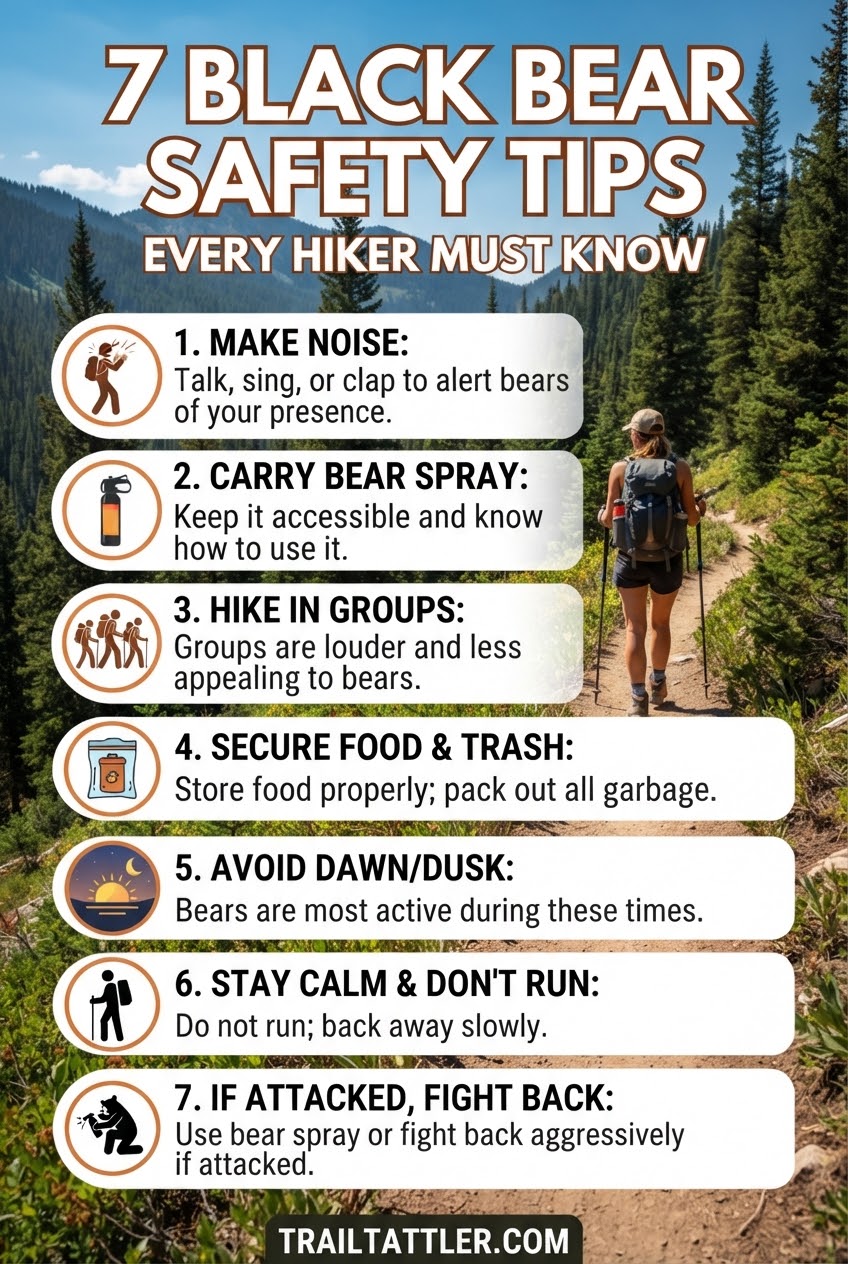
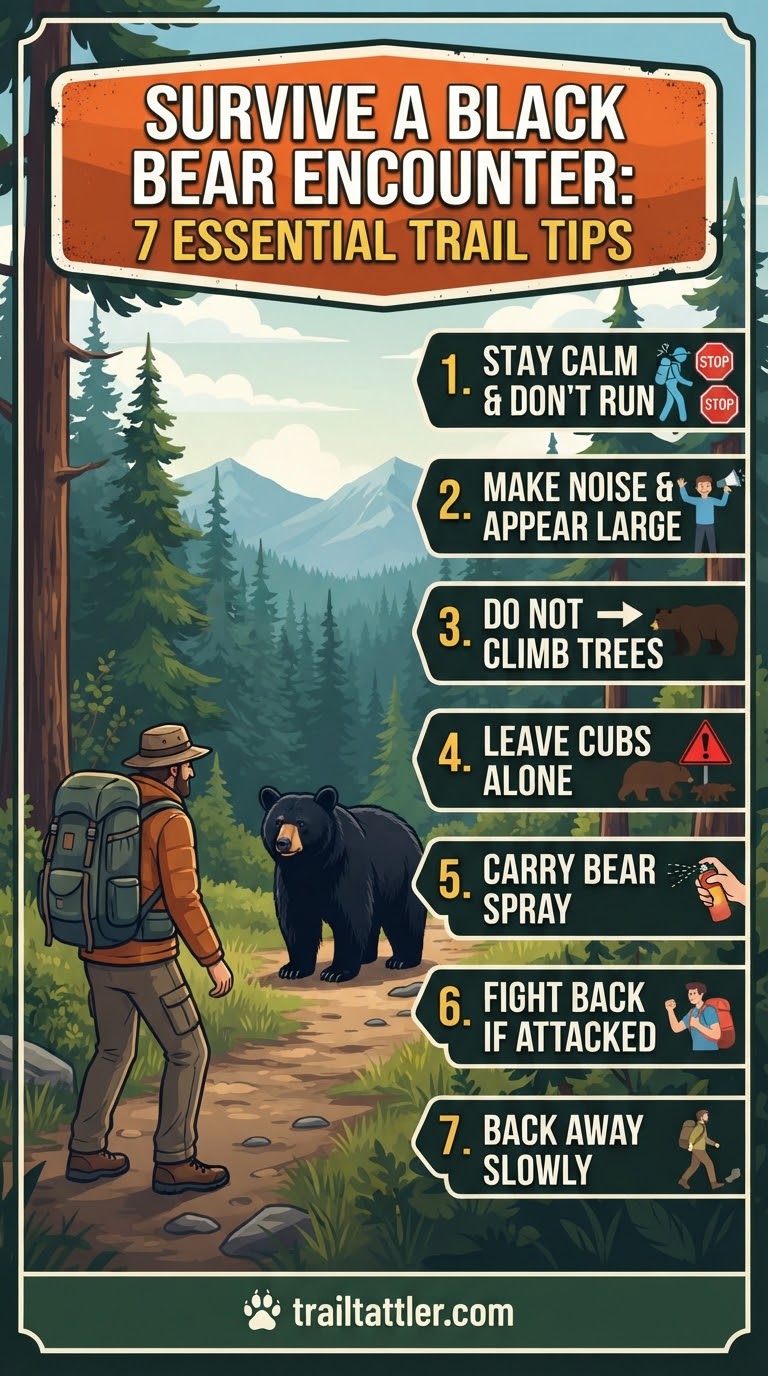
This is the part where black bears and grizzlies split completely, and it's the single most important distinction in this whole sequence. With a grizzly, playing dead can end a defensive attack. With a black bear, an actual attack calls for active, aggressive resistance — target the face, eyes, and muzzle with whatever you have, rocks, poles, fists, and keep going until it disengages.
- Don't play dead — it doesn't work with this species and this kind of attack.
- Leave the area promptly once the bear breaks off, rather than lingering.
- Get medical help for any injury, even one that looks minor at first.
- Report the encounter to rangers or wildlife officials — this is how agencies track problem bears and adjust closures, and it protects the next hiker on that same trail.
True attacks are rare. Almost every black bear encounter I've had or heard about from other hikers ends at step one or two, with the bear simply moving off once it's clocked you as human. But knowing where this ladder ends matters, because the response is genuinely different from the grizzly advice most people have half-absorbed from somewhere else.
None of this is complicated once you've walked through it slowly instead of in the moment. Most encounters end at 'stop and assess' — the bear moves off, you get a story instead of an incident. Carry the spray where you can actually reach it, and tell someone where you're headed before you go.


Your Questions, Answered
Should I play dead if a black bear attacks?
No. Playing dead is grizzly-specific advice. If a black bear makes actual contact, fight back aggressively, targeting the face and eyes, until it disengages.
Is bear spray better than a firearm for black bear encounters?
Bear spray has a strong track record for stopping close encounters quickly and doesn't require the same precision under stress that a firearm does. Carry it accessible, know your wind, and practice the motion before you need it for real.
Can I bring my dog on trails in black bear country?
Check the land agency first — many national parks don't allow dogs on trails at all, and where they do, leash rules exist partly because of exactly this scenario. A loose dog can provoke a chase that comes straight back to you.